

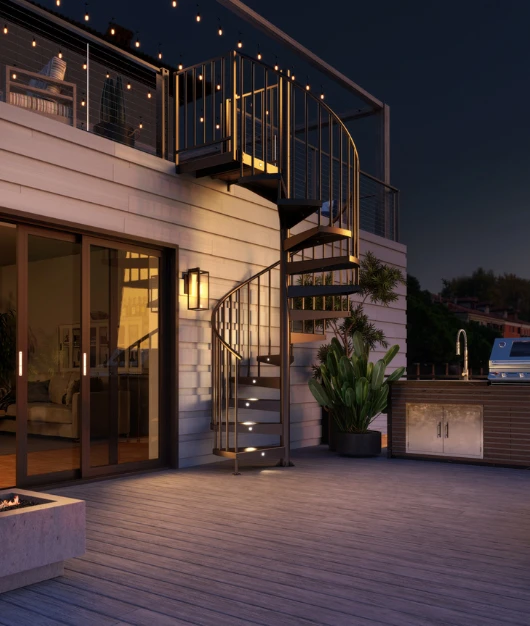
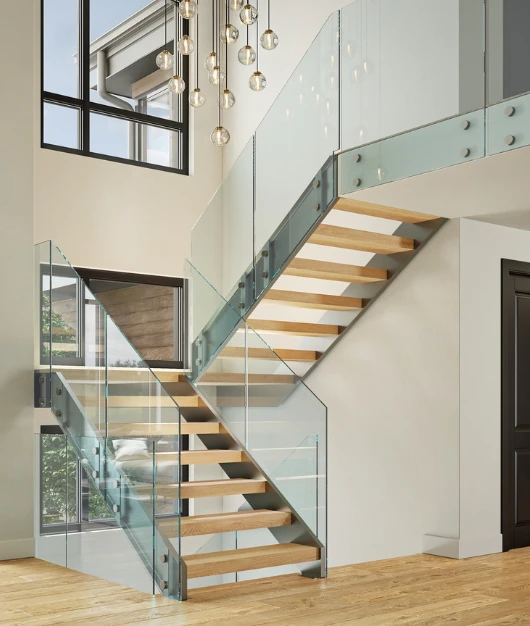
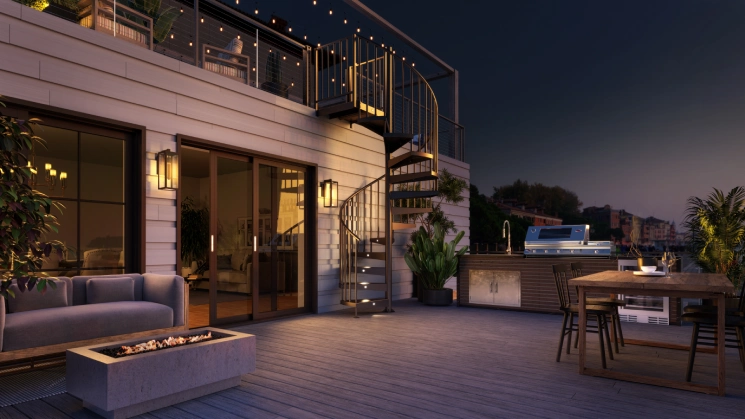
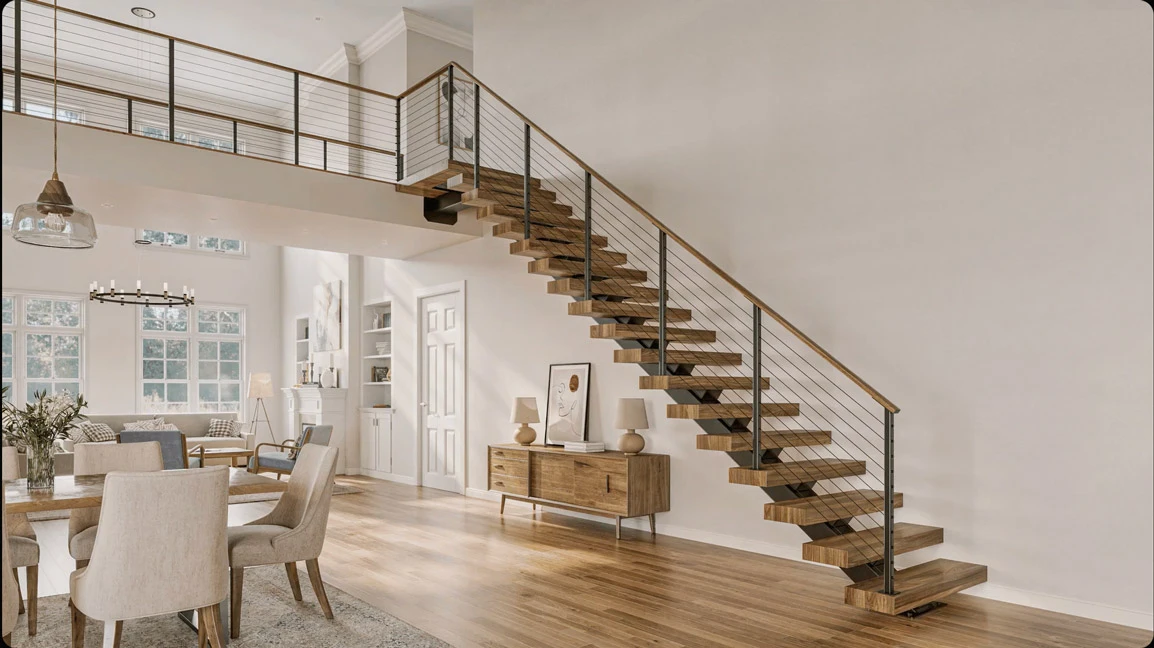
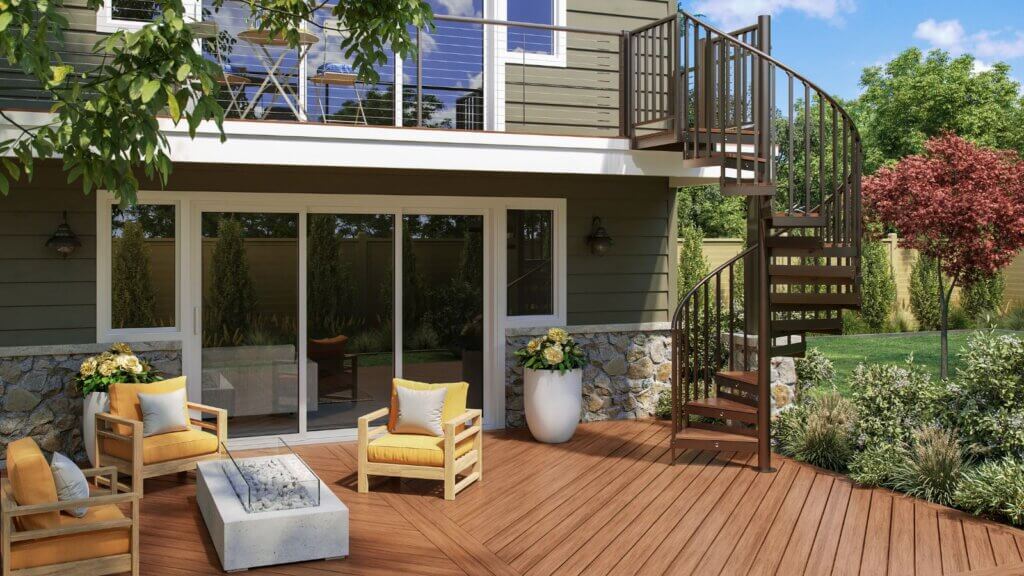
Powder-coated aluminum is our best overall starting point for low-maintenance outdoor deck and elevated-access stairs. Galvanized steel is a strong value option, while Trex® composite treads are worth comparing when you want the stair surface to coordinate with a Trex deck. The best material for outdoor stairs still depends on the complete system, exposure, and maintenance plan.
Whether you need outdoor spiral stairs for a deck, a patio connection, or coastal access, choose the structure and walking surface together. Rain, ice, salt, sunlight, drainage, and everyday traffic affect more than appearance.
Outdoor Stair Materials Quick Answer
Our recommendations for elevated outdoor access
- Best overall starting point: powder-coated aluminum. Compare it first when corrosion resistance and reduced upkeep are priorities.
- Best value option: hot-dip galvanized steel. Compare a suitable configuration when budget and durable metal construction lead the decision.
- Best tread option for coordinating with Trex decking: Trex composite. Pair the walking surface with a compatible engineered metal stair system.
- For outdoor spirals: start with the same aluminum-versus-galvanized comparison, then select diameter, railing, and metal or composite tread options for the site.
These are practical recommendations for prefabricated stairs serving raised decks and other elevated spaces. Concrete or stone may be a better fit for ground-supported entry or landscape steps.
How Do Common Outdoor Stair Materials Compare?
Separate the load-bearing structure from the tread or tread cover. Composite decking, for example, is a walking-surface choice that needs appropriate support; it is not a substitute for the stair’s structural frame.
| Material | Where it fits | Care and planning priorities |
|---|---|---|
| Powder-coated aluminum | Elevated decks, outdoor spirals, humid settings, and coastal projects. | Clean as directed; review salt exposure, finish damage, connections, and compatible hardware. |
| Hot-dip galvanized steel | Value-focused deck access, spiral stairs, and exterior utility access. | Check zinc protection, drainage, damaged areas, and exposure to deicing residues. |
| Composite treads | Walking surfaces coordinated with composite decking on a compatible stair frame. | Follow the product’s support, fastening, cleaning, heat, and winter-care requirements. |
| Exterior-suitable wood | Wood-focused designs where the owner accepts the necessary upkeep. | Specify the species and complete assembly for exposure; manage moisture and inspect surfaces and attachments. |
| Concrete | Ground-supported entry stairs or site-built steps. | Plan the foundation, drainage, surface texture, and local weather exposure with the project professional. |
| Stone | Landscape steps and ground-supported entrances. | Select an exterior-suitable stone, texture, base, and support arrangement for the site. |
There is no single defensible lifespan for every stair made from one material. Exposure, coating thickness, tread construction, drainage, workmanship, and maintenance can change service life substantially. Compare the actual system and its warranty rather than assigning a universal number of years.
Aluminum vs Galvanized Steel for Outdoor Stairs
Why aluminum is our best overall starting point
Aluminum spiral stairs are a useful first comparison for exposed decks and lower-maintenance projects. Aluminum develops a thin protective oxide layer when exposed to oxygen, as explained by the Aluminum Association. It does not form the iron rust associated with steel.
Aluminum can still corrode under adverse conditions. Coastal exposure, trapped debris, damaged finishes, and unsuitable material combinations need attention. Powder coating is a dry-applied protective and decorative finish; it complements material selection rather than making any stair immune to its environment.
Why galvanized steel is a strong value option
Galvanized steel spiral stairs pair a steel structure with zinc protection. Hot-dip galvanizing coats steel by immersing it in molten zinc. Zinc provides a barrier and sacrificial protection, meaning it corrodes preferentially to help protect the steel. The American Galvanizers Association explains the protection mechanisms.
Bare galvanized steel has a characteristic finish, but galvanized does not have to mean an industrial appearance. A properly prepared paint or powder coating over galvanizing is a duplex system. Confirm availability and preparation requirements for the stair you are comparing.
What ASTM A123 and galvanizing longevity tell you
ASTM A123/A123M addresses hot-dip galvanized coatings on fabricated iron and steel products. Required coating thickness depends on the material category and steel thickness. Ask for the applicable specification; a general discussion of the standard does not establish that every stair component is certified to it.
The AGA’s time-to-first-maintenance chart gives an example of roughly 72 years in an industrial atmospheric environment for a 100-micrometer zinc coating on quarter-inch steel. That is a coating-and-environment example, not a Paragon stair lifespan guarantee.
The AGA’s guidance on interpreting the chart explains that first maintenance corresponds to about 5% surface rust, rather than the end of the steel’s service life. Marine exposure, coating thickness, and local conditions change the estimate; the example should not be applied to every stair or climate.
Which Outdoor Stair Materials Fit Your Climate?
| Climate or exposure | Materials to compare | What matters most |
|---|---|---|
| Rainy or humid | Powder-coated aluminum; galvanized steel; compatible composite treads. | Drainage, debris removal, surface traction, and access for cleaning. |
| Snowy or freezing | Exterior aluminum or galvanized systems with appropriate tread texture and drainage. | Safe snow removal, ice control, and treatments approved for every exposed component. |
| Hot and sunny | Exterior metal systems and composite options chosen with color and sun exposure in mind. | Surface temperature, shade, footwear, and the exact tread product. |
| Coastal or salt air | Powder-coated aluminum as the starting point; review any steel components separately. | Salt removal, finish condition, compatible hardware, and the complete assembly. |
Coastal and salt-air properties
For beach-house spiral stairs, start with powder-coated aluminum and review the whole bill of materials. A corrosion-resistant tread does not eliminate the need to assess the center column, hardware, railing, and connections. Follow the supplier’s cleaning schedule for the actual exposure.
Hot and sunny locations
Metal, composite, wood, and masonry walking surfaces can all become uncomfortable in direct sun. Compare color, shading, exposure duration, and the exact product. Trex notes that even its heat-mitigating decking can become hot in direct sun, particularly darker colors. Do not assume every composite stair option includes that technology.
Snow, ice, and winter maintenance
Remove snow and debris using tools approved for the tread surface. Use only a deicer or traction treatment approved for both the treads and the metal structure. A product permitted on composite decking may still be unsuitable for surrounding coatings, hardware, or other stair parts.
Where the care instructions call for rinsing salt residue, do so when conditions permit without creating refreezing or another slippery surface. Inspect coatings and connections after winter. Sand and calcium magnesium acetate should not be treated as universal recommendations without checking compatibility.
What Is the Best Material for Outdoor Stair Treads?
Choose a tread designed for outdoor use, with suitable traction, drainage, and support. Raised texture, grating, or perforation can be useful features, but no surface is slip-proof in ice, algae, or accumulated debris.
Trex composite treads for deck coordination
The Trex® Spiral Stairs Collection brings composite walking surfaces to outdoor spiral systems. It is a useful option when you want to coordinate the stair with an existing Trex deck and avoid routine wood-style staining or sealing.
Composite treads do not replace the structural metal system, and lower maintenance does not mean no cleaning. Trex’s care guidance notes that dirt and pollen can support surface mold. Remove debris and follow the instructions for the exact decking line.
Trex’s current care page permits a plastic shovel and certain chloride deicers for specified decking products. That decking guidance is not blanket approval for a mixed-material spiral stair. Confirm the complete system’s winter instructions with Paragon before choosing a treatment.
A tread selection checklist
- Confirm the tread and cover are approved for the selected stair system.
- Review grip in expected rain, footwear, and seasonal conditions.
- Check how water drains and where leaves or snow may collect.
- Consider sun exposure and contact with bare feet or paws.
- Compare cleaning, snow-removal, and coating-care instructions before ordering.
Which Material Is Best for an Outdoor Spiral Staircase?
Use the same hierarchy: powder-coated aluminum is the overall starting point; galvanized steel is the value comparison; Trex composite is a tread option for deck coordination. Spirals can suit deck and patio access, balcony connections, and rooftop access where a long straight flight would consume useful space.
The Essential Outdoor as a verified product example
The Essential Outdoor Spiral Stair combines a hot-dip galvanized steel center column, heavy-duty powder-coated treads, and stainless steel hardware. Specify the tread substrate and finish for your selected configuration when comparing it with aluminum or all-galvanized designs.
Review this model’s specific protective-finish and limited-warranty requirements. Paragon’s general warranty details include lifetime metal-fabrication coverage for applicable products, but also list separate terms for The Essential Outdoor. Do not assume one warranty applies to every product, finish, or component.
What Code Details Matter for Exterior Stairs?
Under 2021 IRC R303.8, exterior stairs need an artificial light source at the top landing. Stairs accessing a basement from outdoor grade also need a source at the bottom landing. Confirm the adopted edition and local requirements.
For conventional residential flights, the 2021 IRC sets a 10-inch minimum rectangular tread depth and 7¾-inch maximum riser height. Spiral stairs use separate provisions, including a 6¾-inch minimum tread depth at the walkline and 9½-inch maximum rise. A textured material does not substitute for compliant geometry, handrails, guards, and landings.
References: SMA illustrated 2021 IRC guidance on treads, risers, and spiral stairways.
How Should You Compare Outdoor Stair Costs?
Compare quotes for the same floor height, diameter or width, railing, treads, and finish. Galvanized steel is our value comparison, but a particular aluminum or composite configuration may include different features. Material names alone cannot explain the final price.
Include delivery, support and opening preparation, assembly labor, finish work required by the manufacturer, and ongoing cleaning. Ask which components can be maintained or replaced and which warranty terms apply to the actual climate and model.
Choose Materials for Your Climate and Space
Paragon’s SMA-certified designers and in-house design and engineering teams can help you compare outdoor stair systems. Share the location, floor height, available footprint, salt or snow exposure, and any deck finish you want to coordinate.
Request project-specific pricing or explore your stair design options.
FAQs About the Best Material for Outdoor Stairs
What is the best material for outdoor stairs overall?
Powder-coated aluminum is our best overall starting point for low-maintenance deck and elevated-access stairs. Galvanized steel is a strong value comparison, and Trex composite treads are an option for coordinating with a Trex deck. The complete system must suit the exposure and project.
Is aluminum or galvanized steel better for coastal stairs?
Start by comparing powder-coated aluminum for coastal access because corrosion resistance is a priority. Aluminum is not immune to corrosion. Review salt exposure, coatings, hardware, steel components, and the manufacturer’s care requirements before deciding.
What is the best material for an outdoor spiral staircase?
Start with powder-coated aluminum for reduced upkeep and compare galvanized steel for value. Select metal or compatible composite treads according to exposure, traction, and deck coordination. A combination of materials is not automatically better; evaluate every component.
Do metal outdoor stairs get hot in the sun?
Yes, metal treads can become hot in direct sun. Composite and other outdoor surfaces can also heat up. Review the specific tread product, color, shade, and expected use by bare feet or paws rather than assuming a material will stay cool.
Are composite stair treads slippery when wet?
They can be slippery when wet or covered with algae, dirt, or ice. Choose an approved exterior tread configuration, keep it clean, and follow the manufacturer’s care instructions. Composite material alone does not guarantee traction in every condition.
Can I use rock salt on outdoor stairs?
Only use a winter treatment approved for the complete stair system. Trex permits certain chloride deicers on specified decking, but the metal frame, coating, and hardware may have different requirements. Confirm compatibility and follow residue-removal instructions when conditions allow.
How long do galvanized outdoor stairs last?
There is no single lifespan for every galvanized stair. Coating thickness, exposure, drainage, damage, and maintenance all matter. AGA time-to-first-maintenance estimates describe particular zinc coatings and environments; they are not product lifespan guarantees.
Does Paragon sell The Essential Outdoor Spiral Stair?
Yes. Paragon publishes The Essential Outdoor Spiral Stair with a galvanized steel center column, powder-coated treads, and stainless steel hardware. Check the selected configuration and its specific finish and limited-warranty requirements before ordering.


