




Spiral Stairs by Use
Residential Spiral Staircases
A residential spiral staircase connects levels of a home while using a compact footprint. It can lead to a basement, loft, second floor, or deck; with the right configuration and local approval, it may serve as a main or secondary stair. Paragon Stairs has built residential spiral stairs since 1947, with designs for indoor and outdoor spaces. Explore the products below, then work with a designer to check your measurements, discuss code requirements, and see your proposed stair in a 3D model.

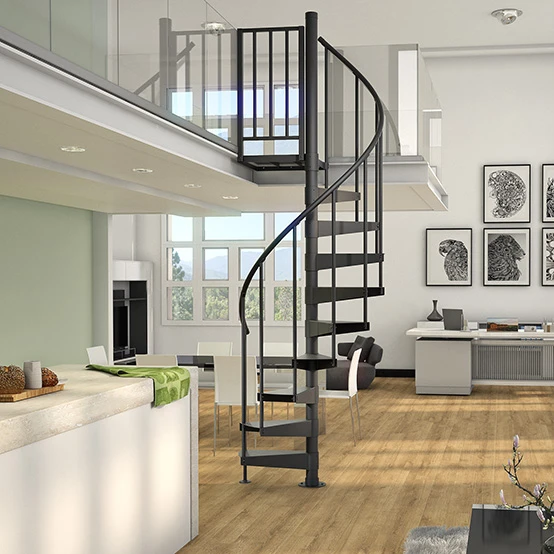


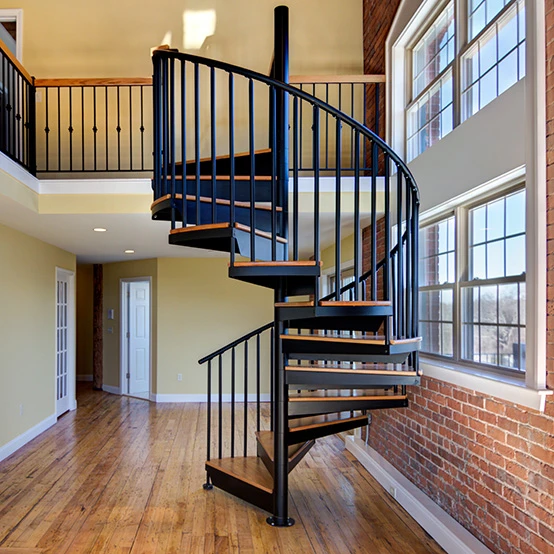
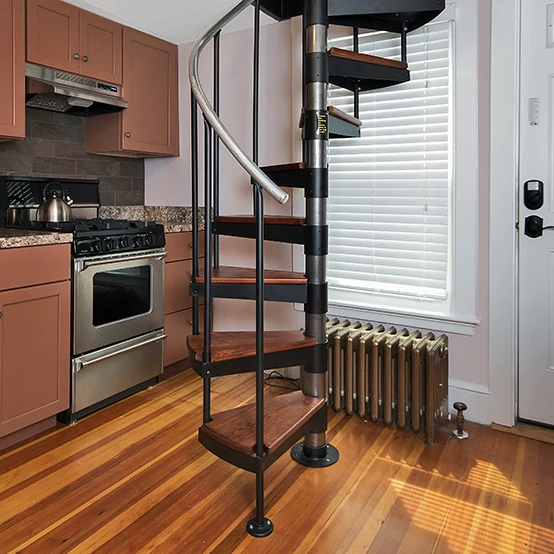


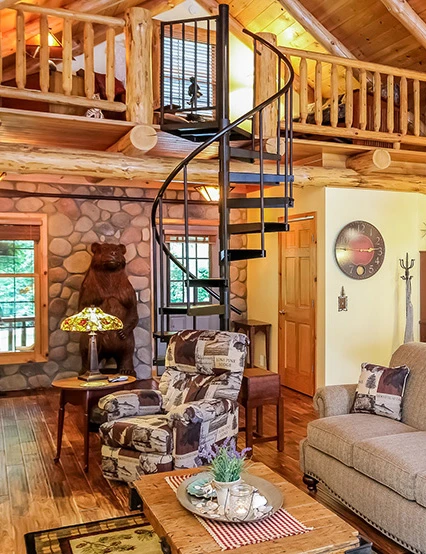
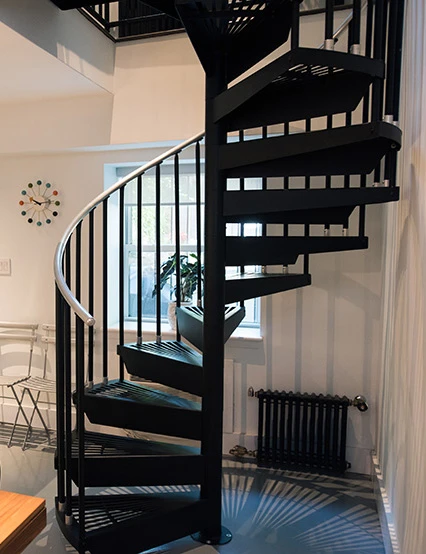
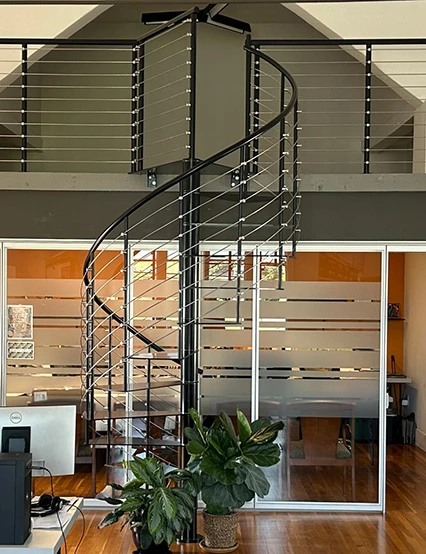
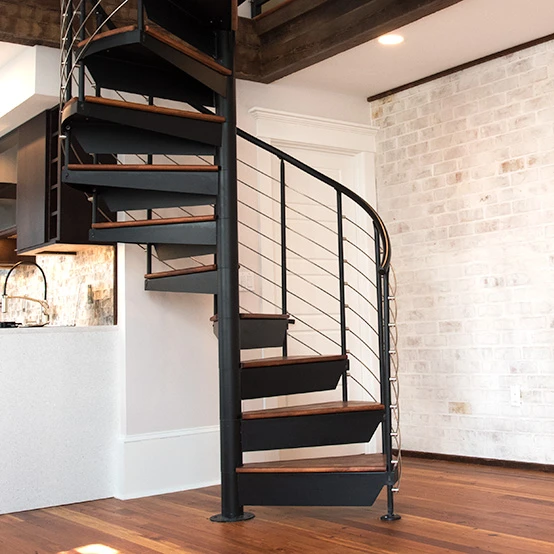
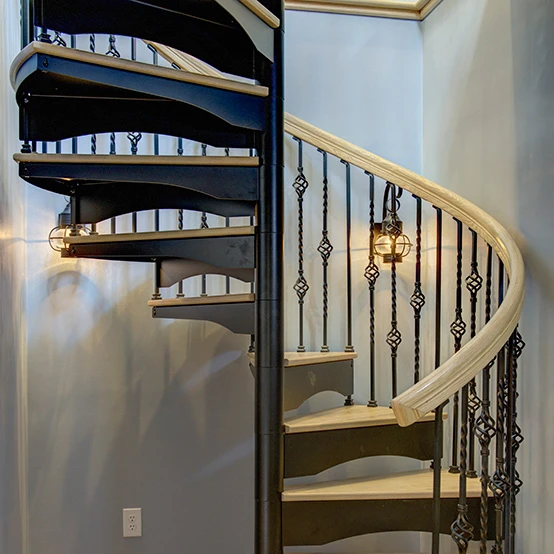
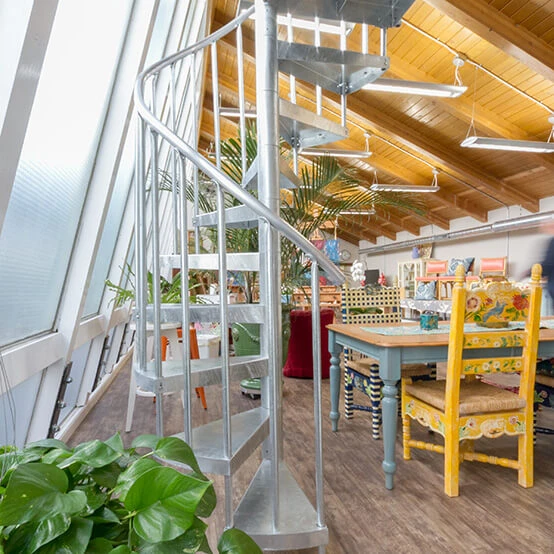
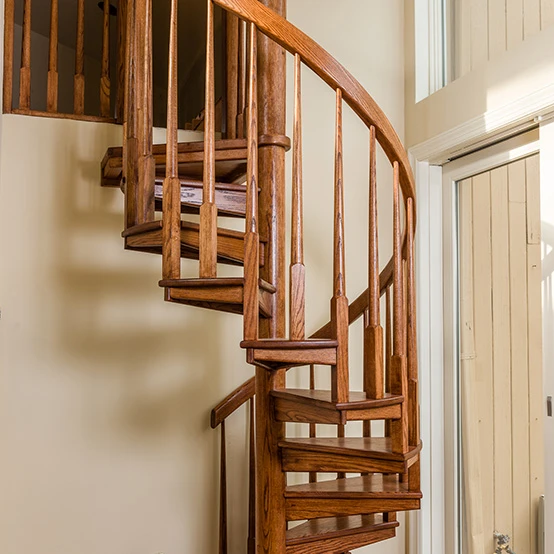
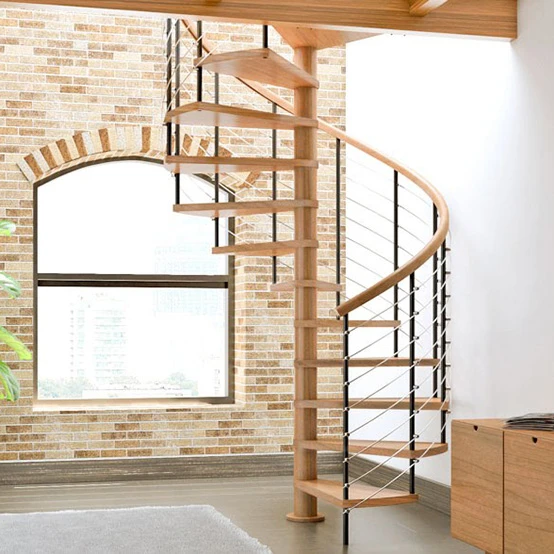
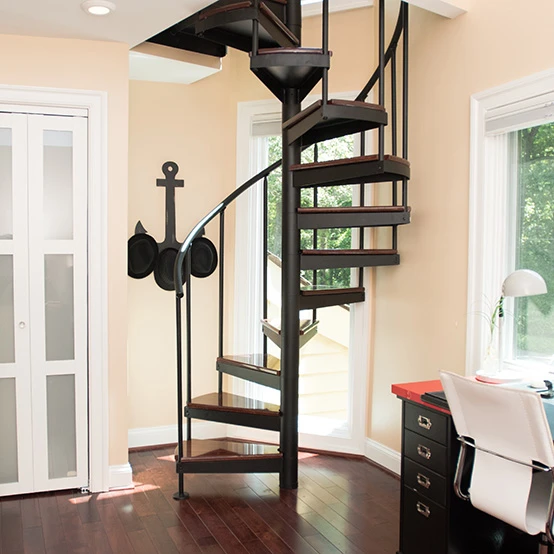
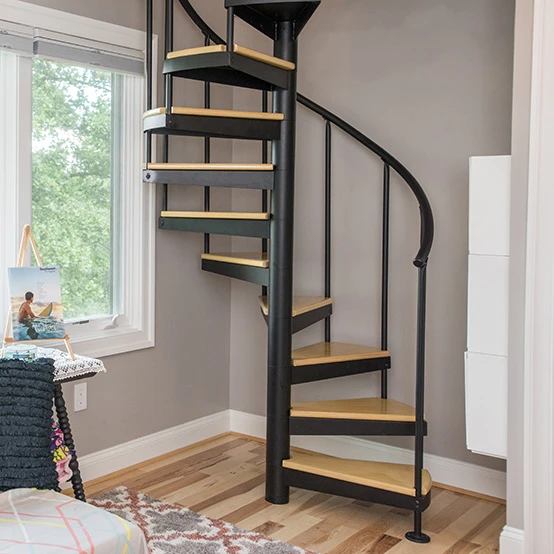


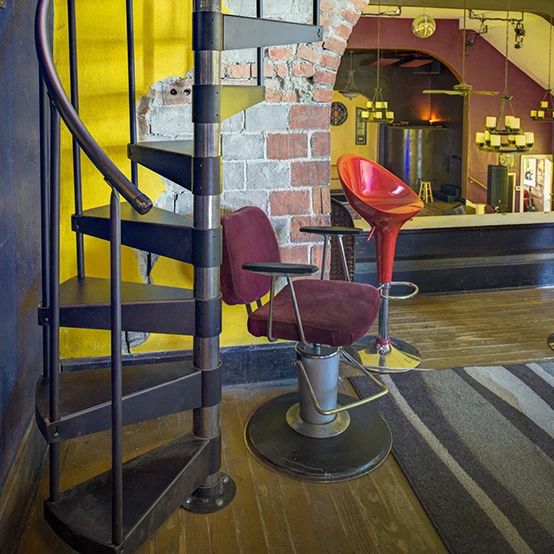

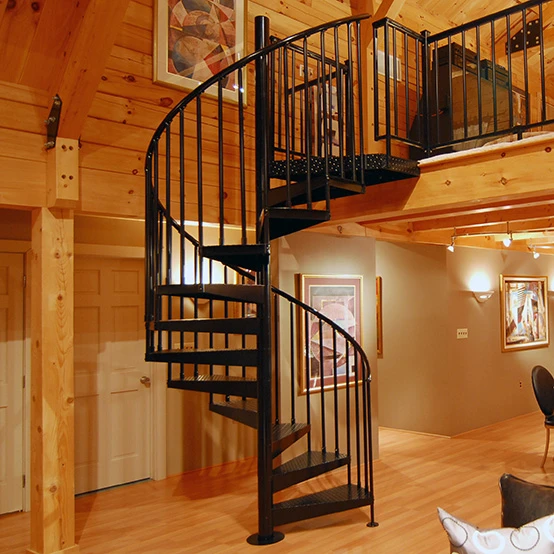
Can You Have a Spiral Staircase in Your House?
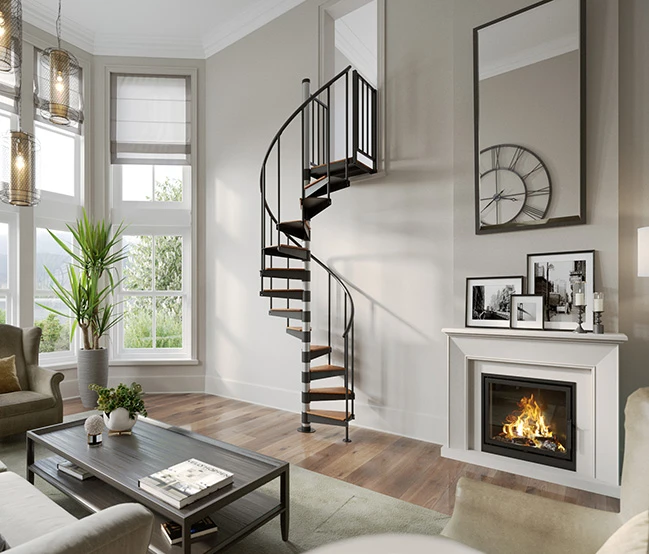
Yes. The International Residential Code (IRC) includes provisions for spiral staircases in homes. A spiral may be suitable as the main connection between floors when the complete stair meets the requirements adopted for that home. The stair’s size, treads, headroom, handrail, landing, and intended use all matter, so confirm your plans with your local building department before ordering.
Under the 2021 IRC, the spiral-stair dimensions in Section R311.7.10.1 include the following:
| Requirement | 2021 IRC spiral-stair provision |
|---|---|
| Clear width at and below the handrail | At least 26 inches |
| Tread depth at the walkline | At least 6¾ inches |
| Rise between treads | No more than 9½ inches |
| Headroom | At least 6 feet 6 inches |
| Treads | Identical throughout the stair |
The walkline is the path around the curve where tread depth is measured. These figures are a planning reference, not approval of a particular product or installation. Paragon’s designers can help you evaluate a configuration; the local building authority determines the applicable rules. See Paragon’s spiral staircase building code guide for more planning information.
Where Does a Spiral Staircase Work Best in a Home?
A spiral staircase works well where a long straight run would take valuable floor space or interrupt the room’s layout. Common residential locations include basements, lofts, attics, upper floors, garages, and decks. Choose the stair for how often you will use it, what you will carry on it, and whether it is the only route between those levels.
| Location | Planning priority | Where to explore |
|---|---|---|
| Basement | Check the floor opening, headroom, moisture conditions, and whether this is the only access. | Indoor spiral stairs |
| Loft or mezzanine | Connect levels while preserving floor space below. | Loft spiral stairs |
| Attic | Confirm the attic’s use and applicable access requirements. | Attic spiral stairs |
| Main living levels | Prioritize a comfortable diameter, everyday access, and a route for large items. | Multistory spiral stairs |
| Deck or balcony | Choose materials and finishes for outdoor exposure. | Deck spiral stairs |
Planning a spiral staircase to a basement
A spiral staircase to a basement can free up space on both levels, but the opening and headroom need careful measurement. Record the finished floor-to-floor height, the size of the opening above, and any beams, doors, or utilities near the proposed stair. A designer should also know whether the basement is finished living space, a workshop, or storage, and whether the spiral will be its only interior access.
Basement conditions can affect the material and finish you choose. If the space is damp, discuss that exposure with your designer rather than selecting an indoor finish on appearance alone. A wider walking path may also be useful if you expect to carry laundry, tools, or other items between floors. Confirm the complete basement spiral staircase plan with your local building department before altering the floor opening.
What Size Spiral Staircase Does a Home Need?
The right residential stair diameter depends on the available space and how the stair will be used. Paragon lists standard diameters from 3 feet 6 inches to 6 feet. Smaller diameters preserve more floor area, while larger diameters provide more walking room. For a frequently used or main stair, begin by evaluating a 5-foot diameter or larger with your designer.
| Paragon stair diameter | Published clear walking path | Minimum finished opening listed by Paragon |
|---|---|---|
| 3’6″ | 17 inches | 44 × 44 inches |
| 4’6″ | 23 inches | 56 × 56 inches |
| 5’0″ | 26 inches | 62 × 62 inches |
| 6’0″ | 32 inches | 74 × 74 inches |
These are general published dimensions, not confirmation that a particular stair meets local code. A smaller stair is not automatically exempt because it serves a secondary space. Have your designer verify the chosen model and opening.
The finished opening generally needs to be larger than the stair diameter so there is room to use the handrail. Review Paragon’s diameter and opening guide before finalizing your plans.
Which Materials Suit Indoor and Outdoor Residential Stairs?
Indoor and outdoor residential stairs face different conditions. For an interior, steel offers a range of clean designs, while wood brings warmth to a living room or loft. Forged-iron details can suit a traditional or Victorian-inspired home. The Classic, The Artisan, and The Curator show how different those indoor looks can be.
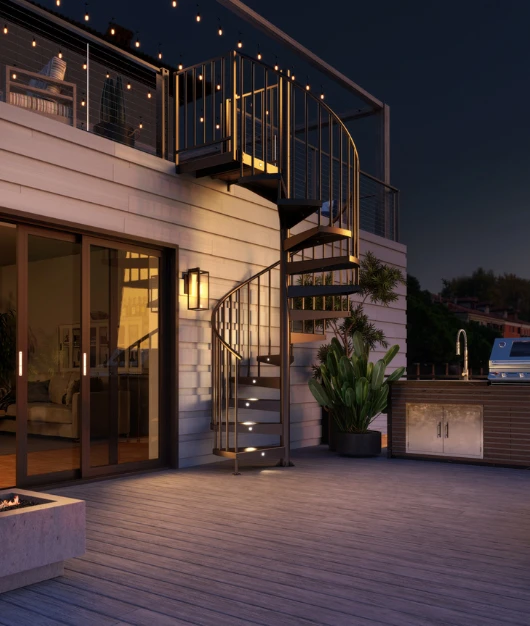
For a deck or other exposed location, explore aluminum and galvanized steel options. The Retreat illustrates an aluminum outdoor stair; The Hampton offers a galvanized look. Ask a designer to match the material and finish to your site, especially if the stair will face frequent moisture or coastal conditions. Compare the full outdoor spiral stairs range for more options.
Can You Replace an Existing Staircase with a Spiral?
Yes, a spiral staircase replacement can change how floor space is used, but it needs more planning than choosing a product from the grid. A contractor may need to remove the old stair, alter or reinforce the floor opening, and prepare the landing and attachment points. Discuss permits and structural work with your local building department before construction begins.
If the new spiral will be the only stair between living levels, its complete configuration needs to meet the applicable requirements for that use. Think about everyday movement as well: spiral stairs are less convenient for carrying large furniture, so plan another route for bulky items. Bring the existing opening measurements and photos to your design consultation so Paragon can help you assess what will fit.
How Much Does a Residential Spiral Staircase Cost?
Residential spiral staircase cost depends on diameter, floor-to-floor height, material, finish, tread type, railing, and landing details. Installation can add a separate cost, particularly if a contractor must change the floor opening or remove an existing stair. The $–$$$$ filter above the grid is a useful way to compare products, but your selected configuration determines the final price.
A spiral staircase kit may suit a prepared site and a homeowner comfortable with assembly. If you are comparing available kits, browse Quick Ship stairs; for a project with particular materials or design details, share your priorities through Paragon’s design-to-your-budget process. Request quick pricing for an estimate based on your measurements without relying on a general price range.
Does a Spiral Staircase Add or Reduce Home Value?
There is no universal resale outcome for a house with a spiral staircase. Its effect depends on how well it fits the home, whether it provides practical access, and what future buyers need. An undersized stair used for frequent access or a stair that makes moving large items difficult may be less appealing than one planned for everyday use.
If resale matters to your decision, focus on appropriate sizing, local code requirements, and the stair’s place in the overall floor plan. A local real estate professional can advise on buyer preferences in your market; a stair designer can help with the measurements and configuration.
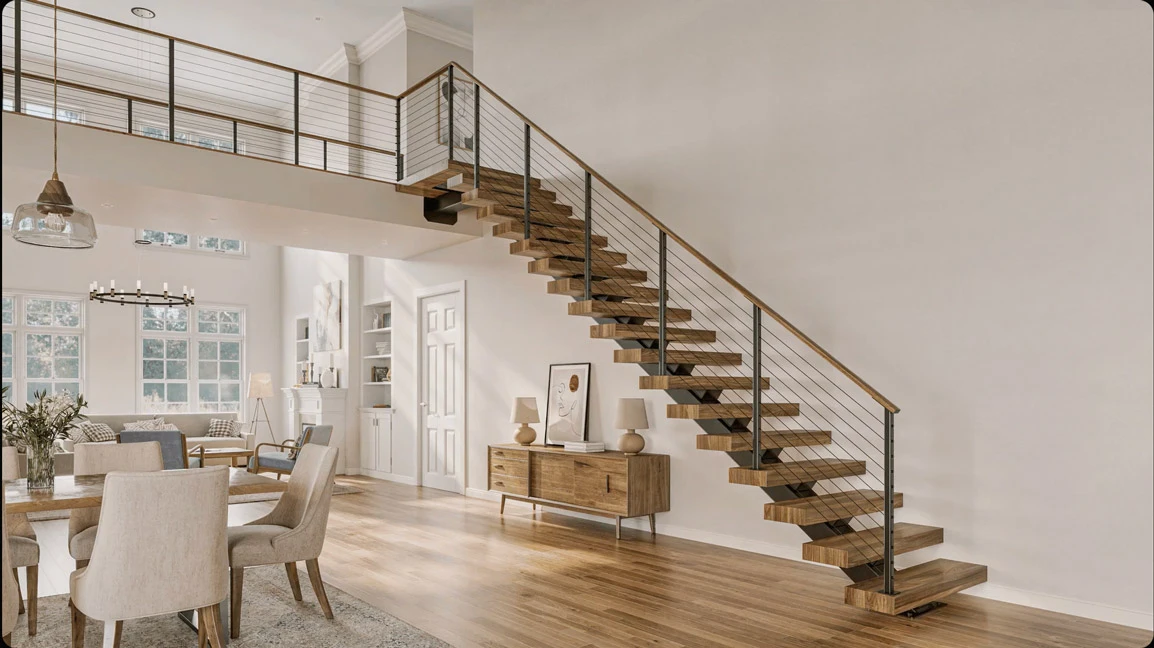
Prefer a straight run? Explore residential floating stairs. For more spiral options, browse all spiral stairs.
Frequently Asked Questions
Can you have a spiral staircase in a house?
Yes. The IRC includes provisions for spiral staircases in homes, and a properly configured spiral may serve as a main or secondary stair. Confirm the complete design against the code adopted in your location.
What are the downsides of having a spiral staircase?
A spiral usually has a narrower walking path than a straight stair, and carrying large furniture on it can be difficult. Consider a larger diameter for frequent use and plan another route for bulky items.
Does a spiral staircase devalue a house?
There is no universal effect on home value. Usability, placement, local requirements, and buyer preferences matter more than the stair type alone.
What is the 27 rule for stairs?
The “27 rule” refers to a rule of thumb about the relationship between a stair’s riser height and tread depth. It is not a substitute for building code, and spiral stairs have specific dimensional provisions that should be checked for your project.
Can a spiral staircase be the only staircase in a house?
It may be, if the complete stair and its installation meet the requirements adopted for that home. Check the proposed diameter, tread depth, headroom, handrail, and other applicable details with your local building department.
Do I need a permit for a residential spiral staircase?
Permit requirements depend on the location and scope of work, particularly if you are changing a floor opening or replacing an existing stair. Ask your local building department what it requires before ordering or starting construction.
Can I install a residential spiral staircase myself?
Some Paragon kits are designed for homeowner assembly, but the work required varies by stair and site. Review Paragon’s installation information and use qualified help for structural, electrical, or other work outside your experience.
Why Paragon
See How Paragon Delivers a Best in Class Experience

Customized to Your Budget
Our friendly stair designers can work with you to customize your stair solution to fit your budget.

Complimentary Consultation
Our friendly designers can meet with you virtually to get you a FREE 3D model and accurate pricing.

Limited Lifetime Guarantee
We back our stairs with the only lifetime warranty on metal fabrication in the stair industry.

50,000 Satisfied Customers
See how we have improved the homes and lives of our clients.