

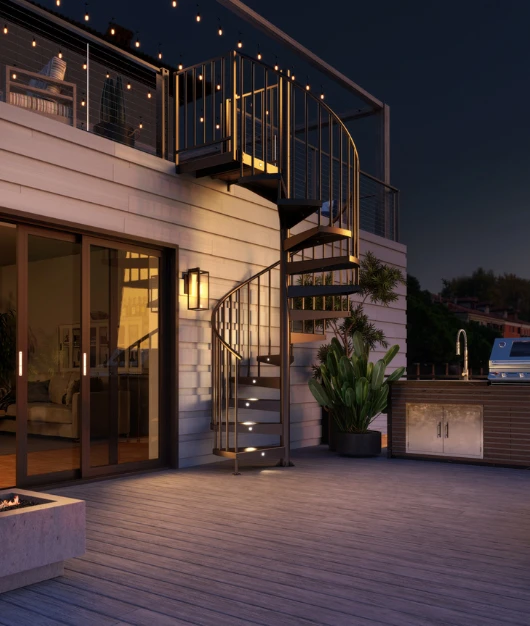
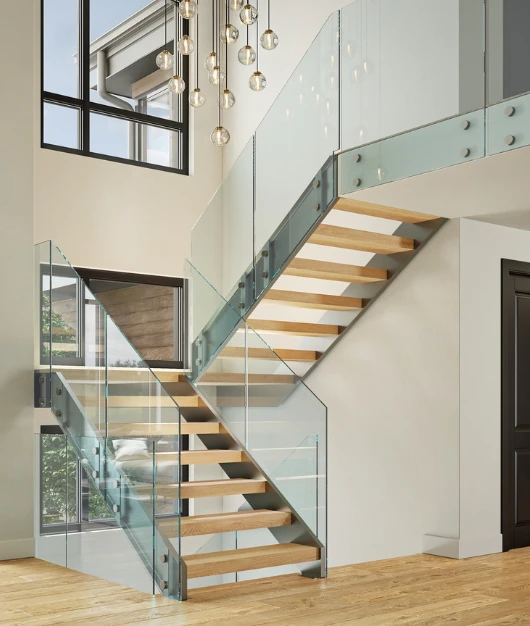
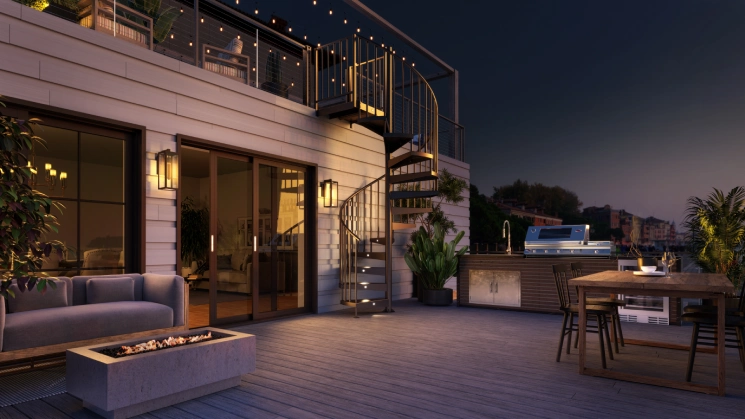
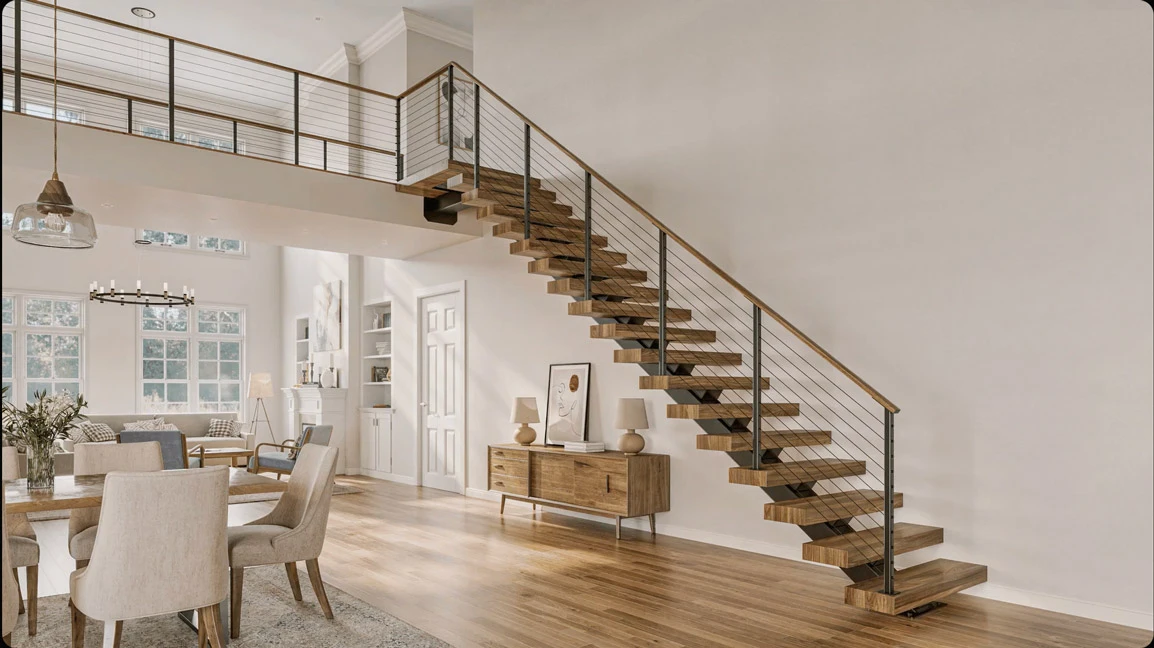

Once you’ve decided a spiral staircase is the right fit for your space, the next question is how it should be built. A spiral stair kit ships as prefabricated components that are assembled on site, while a welded spiral staircase is custom fabricated to your exact project drawings and delivered in larger finished sections. Kits usually win on cost, speed, shipping, and ease of installation. Welded stairs are best when the project calls for fully bespoke geometry, seamless detailing, or a highly custom architectural look.
The right choice depends on what matters most for your project: price, installation complexity, lead time, shipping access, adjustability, customization, and finished appearance.
Quick Takeaways
- A spiral stair kit is a modular, prefabricated system you assemble on site. A welded spiral stair is custom fabricated as finished sections.
- Kits are usually the lower-cost, faster, and more DIY-friendly option for homes, lofts, decks, basements, and light commercial spaces.
- Welded custom stairs are best for highly bespoke architectural projects, unusual diameters, seamless aesthetics, or special structural requirements.
- Kits ship compactly and offer field adjustability. Welded stairs ship as larger sections and are fixed once fabricated.
- Both options can meet IRC and IBC code requirements. The choice is about fit, schedule, budget, and design goals.
What’s the Difference Between a Kit and a Welded Spiral Stair?
The difference between a kit and a welded spiral stair is how the stair is built, shipped, and installed.
A spiral staircase kit, also called a modular spiral stair or prefab spiral stair, is a prefabricated system made from standardized components. These typically include the center column, pie-shaped treads, balusters, railing, landing, and installation hardware. The parts ship compactly and are bolted together on site. No field welding is required by the installer.
A welded spiral staircase, also called a custom spiral stair, is fabricated to project-specific drawings. The stair components are welded into finished sub-assemblies at the factory, then shipped closer to ready-to-set. Instead of assembling individual treads and rails one piece at a time, the installer is placing larger fabricated sections.
Both are real, engineered, code-capable staircases. One is not automatically safer or more proper than the other. The main difference is whether the stair is built from a configurable modular system or custom fabricated for a specific architectural condition.
Paragon manufactures both modular spiral stair systems and fully custom welded spiral stairs in-house. That means the right recommendation is based on the project, not on pushing one build method over another.
Kit vs. Welded Spiral Stairs at a Glance
| Factor | Kit (Modular Prefab) | Welded (Custom Fabricated) |
|---|---|---|
| Price | Lower entry cost; bolt-together system | Higher; reflects custom fabrication labor |
| Installation | DIY-friendly; assembles on site with hand tools | Professional installation or rigging often required |
| Lead Time | Faster; many components are stock or quick-ship | Longer; built to order per approved drawings |
| Shipping | Flat-packs into compact freight or parcel shipment | Large pre-assembled sections require freight planning |
| Adjustability | Field-adjustable height and rotation within system range | Fixed at fabrication; remakes can be costly |
| Customization | Wide options within the system catalog | Virtually unlimited bespoke geometry |
| Appearance | Clean, consistent, modern | Seamless welds and one-of-a-kind architectural detailing |
How Do They Compare on Price?
Spiral stair kits are generally the more budget-friendly choice.
A kit costs less because the components are standardized and produced as part of an engineered system. The bolt-together assembly also reduces custom fabrication labor and can simplify installation. For homeowners, that often means a more approachable project budget. For contractors, it can mean fewer labor and logistics variables to manage on site.
Welded spiral stairs carry a higher cost because each stair is built to unique drawings. The price reflects custom engineering, fabrication time, welding labor, finish work, and the additional planning required to deliver and install larger sections.
That premium can be justified on the right project. If an architect needs a specific diameter, a custom radius, special detailing, or an architectural profile that a modular catalog cannot achieve, a welded stair may be the most efficient path to the intended result.
Final price for either option depends on diameter, floor-to-floor height, material, finish, tread type, railing style, and code requirements. Instead of relying on rough estimates, use Paragon’s Build Your Stair tool or speak with a designer to compare accurate options for your space.
Which Is Easier to Install?
Spiral stair kits are designed for easier installation, while welded spiral stairs usually require professional installation.
A kit is built to go together predictably on site. The center column is set first, then the treads stack around it one by one. Balusters, railing, and landing components are secured with included hardware. Many homeowners can complete a spiral staircase kit installation with common hand tools and help from another person.
Modular does not mean flimsy or complicated. It means the stair has been engineered as a repeatable system, with components designed to align and fasten together in the field.
Welded spiral stairs are different because the sections are larger, heavier, and less forgiving during placement. Contractors may need additional crew members, rigging, special access planning, or lifting equipment depending on the project. For commercial jobs or showcase architectural spaces, that can be a normal part of the installation plan.
For many residential spaces, lofts, decks, and basements, an install-friendly kit such as Paragon’s spiral stair systems can deliver the needed function and finished look without the added logistics of custom welded sections.
Lead Time and Shipping: What to Expect
Kits generally ship faster and pack smaller. Welded spiral stairs take longer to fabricate and require more delivery planning.
Lead time is shorter for many spiral staircase kits because the parts are based on existing system components. Even when you select diameter, tread material, railing, color, and finish, the stair is still built from a proven modular platform.
Welded stairs follow a more custom process. The project typically requires drawings, approvals, fabrication, finishing, and coordination before shipment. For contractors managing a construction schedule, that timeline should be planned early.
What Affects Your Lead Time?
- Customization level: Standard kit selections usually move faster than fully custom geometry.
- Drawing approvals: Welded stairs depend on accurate drawings and sign-off before fabrication.
- Material and finish: Specialty finishes, tread materials, or railing details can affect production timing.
- Site access: Tight delivery paths can add planning time, especially for welded sections.
Shipping is also different. Kits flat-pack into compact freight and, in some cases, smaller parcel-sized shipments. This can simplify delivery to homes, job sites, and tighter spaces.
Welded stairs ship as large pre-assembled sections. That can require freight access, unloading equipment, and a clear path to the installation area. Confirm doorways, stairwells, elevators, site access, and staging space before fabrication begins.
Adjustability and Customization Compared
Kits offer field adjustability plus wide catalog customization. Welded stairs offer near-unlimited bespoke customization, but they do not offer the same field flexibility once fabricated.
A modular spiral stair kit is engineered to accommodate a defined range of field conditions. Floor-to-floor height, stair rotation, and landing position can often be adjusted or fine-tuned during assembly. This is a major advantage when measurements shift slightly or when a site condition is discovered during installation.
That field forgiveness matters. A homeowner may discover that finished flooring changed the final height. A contractor may find that framing or landing conditions differ slightly from the original plan. A modular system can often absorb those small changes more easily than a welded stair.
A welded stair is fixed once it is fabricated. If a measurement is wrong or a field condition changes after production, corrections can be expensive and slow. That is why exact field measurements and drawing approvals are so important for custom welded work.
Welded stairs lead when the design requires something outside standard options. Custom fabrication can achieve unusual diameters, specialized structural details, seamless welded joints, custom railing forms, and distinctive architectural profiles.
Still, modern spiral stair kits are not one-size-fits-all. Paragon’s modular stair systems can be configured by diameter, height, tread material, finish, railing style, and use case. For many projects, that is enough customization to create a stair that feels personal without the cost or timeline of full custom fabrication.
You can explore available configurations through the Build Your Stair tool or compare options with a Paragon designer.
Do They Look Different?
From a normal viewing distance, a high-quality kit and a welded spiral stair can look very similar. The main differences are in the seams, connection details, and how unusual the geometry can be.
A quality spiral stair kit has a clean, consistent, modern appearance. The bolted connections are engineered into the design, and the finished stair can feel polished in residential, deck, loft, basement, and light commercial settings.
A welded spiral stair can create a more seamless look because many connections are welded before delivery. It also allows for custom shapes and details that are not available in a modular catalog. That is why welded stairs are often selected for showcase spaces, architect-led projects, and one-of-a-kind interiors.
For most spaces, the kit option provides the finished look customers want with less cost and less complexity. For spaces where the stair itself is the architectural centerpiece, welded may be worth the investment.
Which Spiral Stair Should You Choose?
Choose a spiral stair kit for most projects. Choose a welded spiral stair for highly custom architectural applications.
Choose a Spiral Stair Kit If…
- You want a lower overall project cost.
- You want faster delivery.
- You prefer DIY-friendly or simplified installation.
- You need field adjustability during assembly.
- Your project fits within a strong catalog of sizes, materials, finishes, and railing options.
- You are adding access to a loft, deck, basement, mezzanine, attic, or light commercial space.
Choose a Welded Spiral Stair If…
- Your project requires bespoke geometry.
- You need an unusual diameter or a custom layout.
- You want seamless welded detailing.
- The staircase is intended to be a major architectural focal point.
- You have special load, design, or site requirements.
- Your budget and timeline support custom fabrication.
Both options can be engineered for code compliance and long-term durability. The smartest path is to match the build method to the job, not to assume one is always better than the other.
Paragon’s design team can help homeowners, builders, and architects compare kit and welded options based on the exact space, budget, timeline, and design intent.
Frequently Asked Questions
Are spiral stair kits as strong as welded ones?
Yes. A properly engineered and assembled spiral stair kit can meet the same building code requirements as a welded staircase. Strength comes from engineering, material quality, and correct installation, not only from whether the connections are bolted or welded.
Can I install a spiral staircase kit myself?
Often, yes. Spiral staircase kits are designed for assembly with common hand tools and help from another person, and many homeowners complete the installation themselves. Larger diameters, taller rises, commercial applications, or more complex site conditions may be easier with a professional installer.
Why does a welded custom spiral staircase cost more?
A welded custom spiral staircase costs more because it is fabricated to unique project drawings. The added engineering, welding, fabrication labor, finishing, and installation planning drive the higher price. The premium buys bespoke geometry and architectural detailing, not necessarily more durability.
Do spiral stair kits meet building code?
Yes. Quality spiral stair kits are engineered to meet applicable IRC and IBC spiral stair requirements, including tread depth, riser height, and clear width standards. Always confirm final requirements with your local authority having jurisdiction because local code amendments can apply.
Need Help Choosing?
For most projects, a spiral stair kit delivers the look, performance, and code compliance you need with lower cost, faster delivery, and easier installation. Welded spiral stairs remain the right choice for highly custom architectural work where unique geometry and seamless detailing matter most.
Not sure which fits your space? Our SMA-certified designers can help you compare options and get accurate pricing for your project.


