

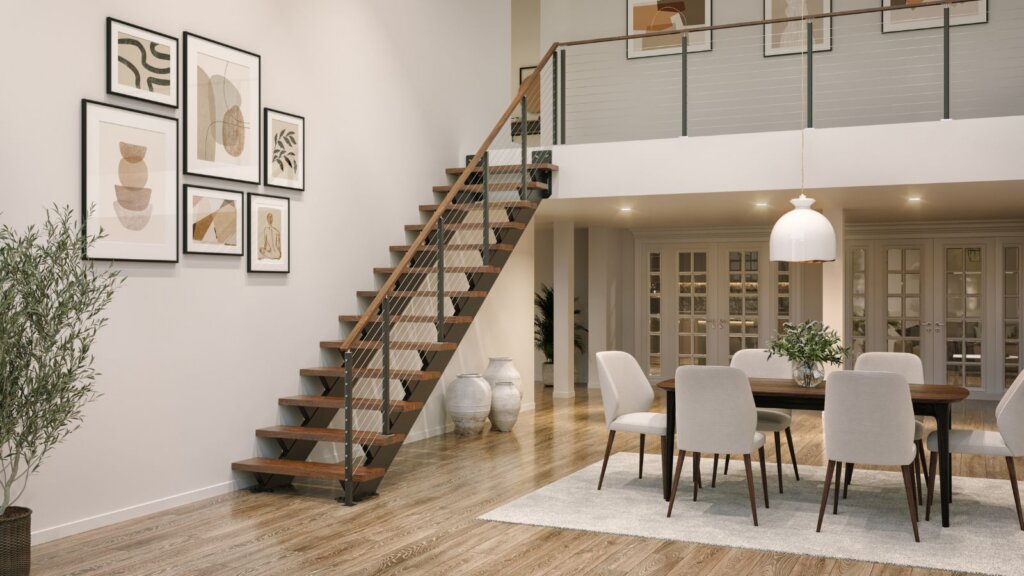
Staircase Budget Guide: What Actually Drives the Price?
The biggest factors that affect staircase pricing are stair type, materials, stair height, railing choices, customization, code requirements, and engineering considerations. Understanding these cost drivers can help you compare quotes more accurately and choose a stair solution that fits your project goals and budget.
Why Do Staircase Prices Vary So Much?
Staircase pricing can vary widely because every project has different requirements. A compact spiral stair for a loft is very different from a custom floating staircase in a main entryway. An outdoor deck stair has different material needs than an interior statement stair. Even two stairs that look similar at first can have very different costs once height, finish, railing style, code requirements, and design details are included.
That is why the best staircase budget guide is not just a list of price ranges. It should help you understand what actually drives the final cost, so you can make smarter decisions before requesting a quote.
At a Glance: Biggest Staircase Cost Drivers
| Cost Driver | Budget Impact | Why It Matters |
|---|---|---|
| Stair Type | High | Spiral, floating, straight, and custom stairs have different material and engineering needs. |
| Materials | High | Steel, aluminum, wood, cable railing, and custom finishes all affect cost. |
| Stair Height | Medium | Taller stairs usually require more treads, railing, and structural material. |
| Railings | Medium to High | Railing style, infill, and finish can significantly change the total project price. |
| Customization | Medium to High | Custom colors, layouts, dimensions, and design details add complexity. |
| Code Requirements & Engineering | Medium to High | Building codes, project requirements, and engineering considerations can affect staircase design and overall project cost. |
How Much Does a Staircase Cost?
There is no single staircase price that applies to every project. A staircase can be a practical access solution, a compact space-saving feature, or a custom architectural centerpiece. Each of those goals leads to a different budget.
In general, spiral stairs are often a more budget-friendly option because they use a compact footprint and efficient structure. Floating stairs are usually a more premium option because they require more engineering, customization, and finish detail. Fully custom staircases tend to have the highest price range because they are designed around unique project requirements.
General Staircase Budget Comparison
| Stair Type | Typical Budget Level | Best For |
|---|---|---|
| Spiral Stair | Lower to Mid | Compact spaces, lofts, decks, patios, and secondary access. |
| Prefab Stair System | Mid | Projects that need a reliable stair solution with fewer custom variables. |
| Floating Stair | Mid to Premium | Modern interiors, open floor plans, and statement stair designs. |
| Fully Custom Staircase | Premium | Unique layouts, specialty materials, and highly specific design goals. |
Factor #1: Stair Type
The type of staircase you choose is one of the biggest pricing factors. A spiral stair, floating stair, and traditional straight stair are built differently, which means they have different material requirements, engineering needs, and design options.
Spiral Stairs
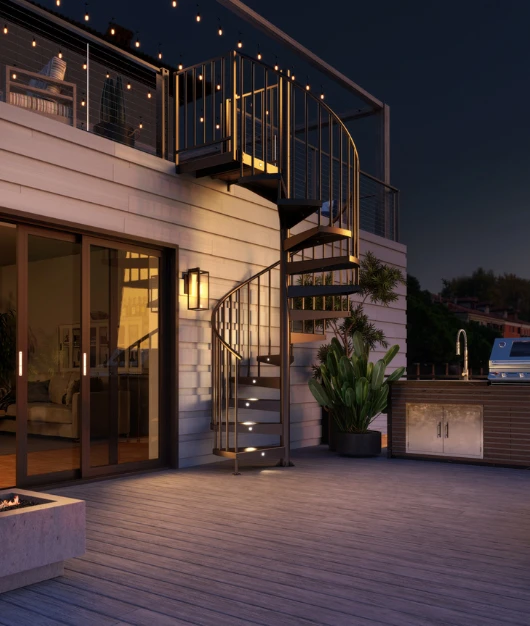
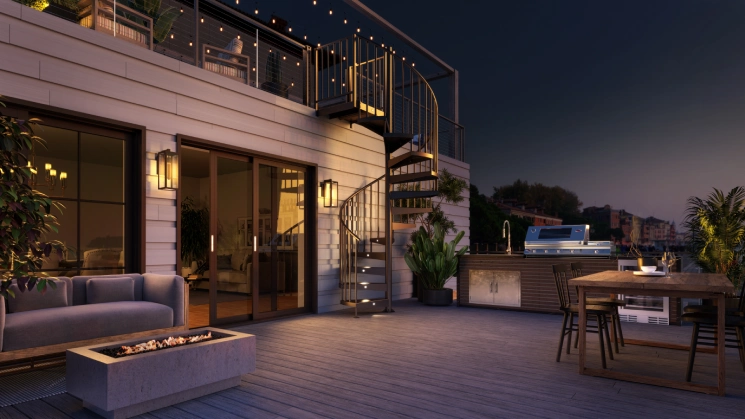
Spiral stairs are often one of the most efficient stair options from both a space and budget perspective. Their compact circular footprint reduces the amount of floor space needed, and their center column structure creates an efficient path between levels.
They are commonly used for lofts, decks, patios, balconies, small homes, ADUs, and secondary access points. For homeowners who need a practical stair without taking over the room or outdoor area, a spiral stair can offer strong value.
Floating Stairs
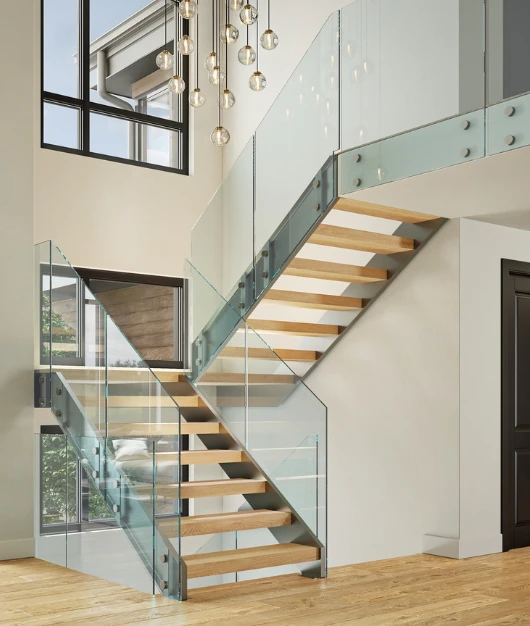
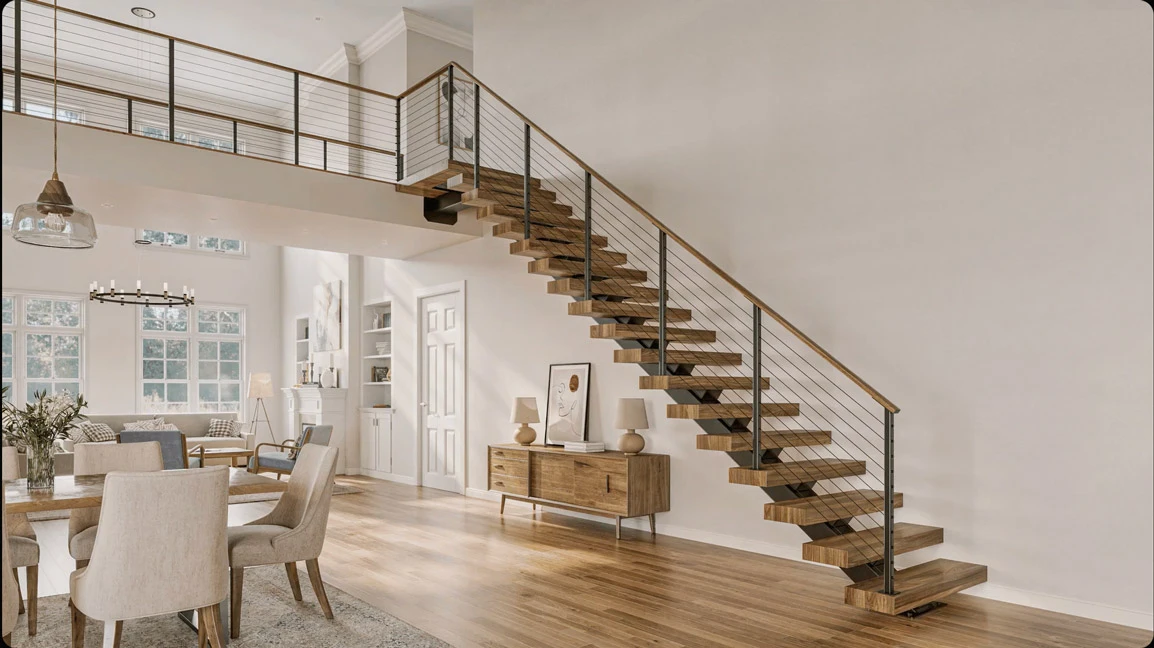
Floating stairs are typically more premium because they are designed to create an open, architectural look. They often involve more structural planning, higher-end materials, and more finish customization.
For projects where the staircase is a focal point, such as a modern entryway or open-concept living space, floating stairs can add significant design value. The higher cost often reflects the engineering and craftsmanship needed to create that visual effect.
Spiral vs. Floating Stair Budget Comparison
| Project Priority | Often Better Fit | Why |
|---|---|---|
| Lower overall budget | Spiral Stair | Efficient structure and compact footprint can help control project cost. |
| Small space | Spiral Stair | Requires less floor space than many traditional stair layouts. |
| Architectural statement | Floating Stair | Creates a high-end open design with strong visual impact. |
| Outdoor deck access | Spiral Stair | Saves patio or yard space while providing durable access. |
| Luxury interior design | Floating Stair | Supports a premium design-forward look in open interior spaces. |
Factor #2: Materials
Material selection has a major impact on staircase pricing. The right material depends on whether the stair is indoors or outdoors, how much maintenance you want, what style you prefer, and what environmental conditions the stair needs to handle.
Galvanized Steel
Galvanized steel is often a budget-friendly exterior stair option. It provides durability for outdoor use while keeping the project more cost-conscious than many premium material selections.
Powder Coated Steel
Powder coated steel adds a more finished look and gives homeowners more color flexibility. It is a strong choice when appearance matters but durability is still a priority.
Aluminum
Aluminum is a popular material for outdoor stairs because it is lightweight and naturally corrosion resistant. It is often used for projects in wet, coastal, or low-maintenance environments.
Wood Components
Wood can add warmth and character to an interior stair. The final cost depends on the wood species, tread style, finish, and whether the stair is part of a more customized design.
Budget Tip
When comparing materials, consider more than the upfront price. Outdoor stairs should be evaluated based on durability, maintenance, weather exposure, and long-term value.
Factor #3: Stair Height
Stair height affects the number of treads, the amount of railing, and the total material needed. A taller stair generally requires more components than a shorter stair, which can increase the price.
For spiral stairs, accurate floor-to-floor height is especially important because it helps determine tread count, rotation, and overall layout. For floating stairs, height can also affect engineering and structural planning.
How Stair Height Affects Budget
| Project Detail | How It Affects Price |
|---|---|
| More vertical rise | Usually requires more treads and more railing. |
| Higher deck or loft | May require additional planning for landings, code, and layout. |
| Incorrect measurements | Can lead to delays, redesigns, or avoidable project issues. |
Factor #4: Railings and Design Details
Railings are another major staircase pricing factor. The railing system affects safety, code compliance, appearance, and material cost. A simple railing will usually have a different price than a cable, rod, glass, or custom railing system.
Many homeowners focus on the stair structure first, but railings can significantly influence the final quote. This is especially true for modern stair designs where the railing is part of the overall visual statement.
Common Railing Choices That Affect Budget
- Standard balusters
- Cable railing
- Rod railing
- Glass railing
- Custom handrails
- Powder coated railing finishes
Factor #5: Customization
Customization gives you more control over the final look and fit of your staircase, but it can also increase the price. Custom dimensions, colors, finishes, railing details, and structural requirements all add planning and production complexity.
The key is deciding which custom features truly matter for your project. A stair expert can help you understand where customization adds value and where a more standard configuration may save money.
Customization and Budget Impact
| Customization Option | Typical Budget Impact |
|---|---|
| Standard finish | Low |
| Custom color | Medium |
| Custom railing infill | Medium to High |
| Custom dimensions | Medium to High |
| Fully custom layout | High |
Factor #6: Code Requirements and Engineering
Building code requirements can influence staircase pricing because they affect dimensions, railing specifications, tread spacing, landings, and overall stair design. Requirements can vary depending on whether the staircase is interior or exterior, residential or commercial, and where the project is located.
Engineering considerations can also affect the final budget. Projects with unique layouts, larger spans, custom dimensions, or specialized design goals may require additional planning to ensure the staircase performs safely and meets project requirements.
Factors That May Affect Stair Design Requirements
- Project location and applicable building codes
- Residential versus commercial applications
- Stair height and overall dimensions
- Railing and guardrail requirements
- Landing requirements
- Custom layouts or unique project conditions
Expert Planning Note
Understanding code requirements early can help avoid redesigns, delays, and unexpected costs later in the project. Working with an experienced staircase manufacturer can make it easier to identify important requirements before ordering.
How to Build a Smarter Staircase Budget
The best way to budget for a staircase is to define your priorities before comparing quotes. Are you trying to save space? Create a design statement? Improve outdoor access? Meet a tight budget? Each goal can point you toward a different stair type and material package.
Once you know what matters most, it becomes easier to compare options based on value instead of price alone.
Staircase Budget Planning Checklist
- Measure your floor-to-floor height.
- Identify whether the stair will be indoors or outdoors.
- Decide whether space savings or visual impact matters most.
- Compare stair types before choosing materials.
- Think through railing style and finish preferences.
- Review applicable code requirements early in the planning process.
- Request a detailed quote based on your actual project details.
How Paragon Stairs Helps You Understand Pricing
Paragon Stairs helps homeowners, builders, and designers compare stair types, materials, dimensions, code considerations, and customization options before committing to a project. Instead of guessing what your stair might cost, you can work with a stair expert to understand which factors are driving the price and where you have flexibility.
That guidance is especially helpful when comparing spiral stairs, floating stairs, outdoor stairs, and custom stair systems. A clear quote helps you see what is included, what can be adjusted, and which solution best fits your budget.
What Actually Drives Staircase Pricing?
Staircase pricing is driven by the combination of design, materials, height, railings, customization, code requirements, and engineering considerations. The more complex the stair, the more important it is to understand each cost driver before making a decision.
For a budget-friendly, space-saving solution, spiral stairs are often a strong option. For a premium architectural focal point, floating stairs may be the better fit. For outdoor projects, material selection and durability should be major parts of the conversation.
Need Help Budgeting Your Stair Project?
Paragon Stairs can help you compare staircase options, understand what affects pricing, and choose a stair solution that fits your space, style, and budget. Whether you are considering a spiral stair, floating stair, or outdoor stair system, a detailed quote can help you plan with confidence.
Start by requesting a quote or speaking with a Paragon stair expert.
FAQs About Staircase Pricing
What factors affect staircase pricing?
The biggest factors that affect staircase pricing are stair type, materials, height, railing style, customization, code requirements, and engineering considerations.
Are spiral stairs cheaper than floating stairs?
Spiral stairs are often more budget-friendly than floating stairs because they use a compact footprint and efficient structure. Floating stairs are usually more premium because they require more engineering, customization, and finish detail.
Does stair height affect cost?
Yes. Taller stairs usually require more treads, more railing, and more material, which can increase the overall price.
Do custom stair features add to the price?
Yes. Custom colors, dimensions, railing systems, finishes, and layouts can increase the cost because they add design and production complexity.
Do building codes affect staircase cost?
Yes. Building code requirements can influence staircase dimensions, railing specifications, landings, and other design details that may affect the overall project budget.


