


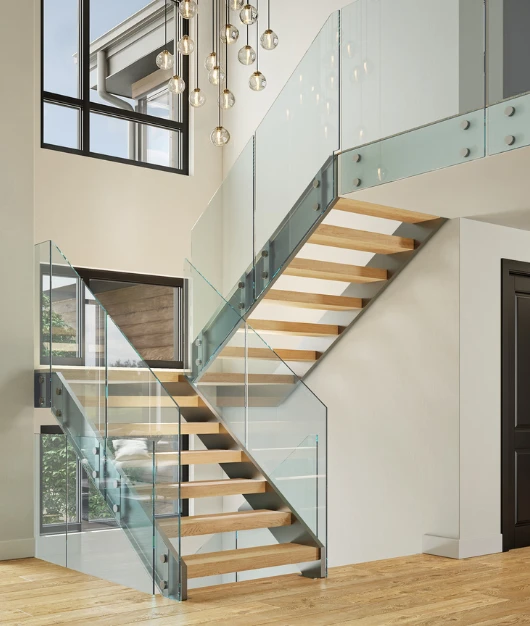

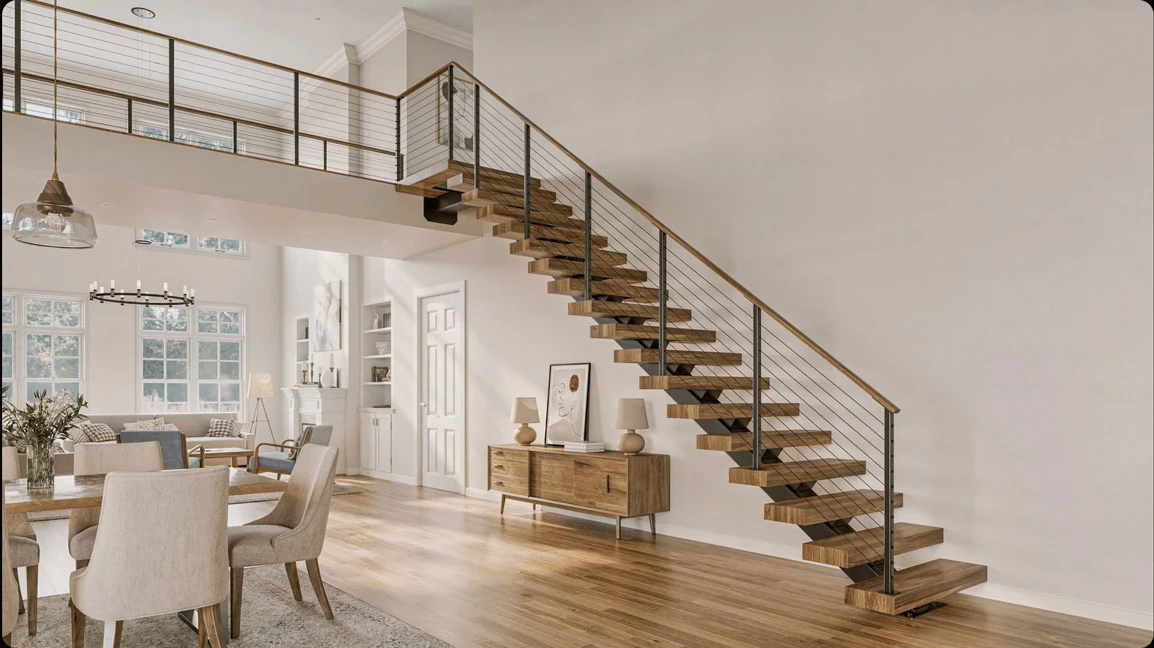
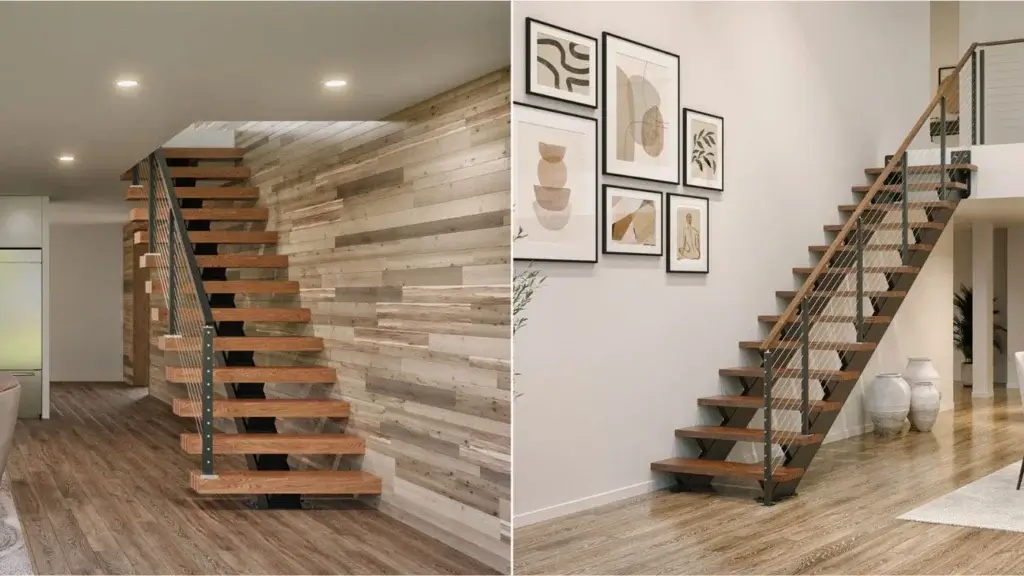
Mono stringer and dual stringer floating stairs differ mainly in how they are supported and how they look in a space. A mono stringer stair uses a single central beam, creating a more minimal and open appearance. Dual stringer floating stairs use two structural supports on either side, resulting in a more substantial and framed look. The right choice depends on your design goals, stair width, structural conditions, and how prominent you want the staircase to feel in your home.
Comparing floating stair styles? Explore Paragon’s mono stringer floating stairs and double stringer floating stairs to see how different structures impact design, openness, and installation.
Mono Stringer vs Dual Stringer Floating Stairs at a Glance
A mono stringer floating stair uses one central support beam, while a dual stringer floating stair uses two supports along the sides of the treads. This difference affects the stair’s appearance, structure, and how it fits into different types of homes.
| Feature | Mono Stringer Floating Stairs | Dual Stringer Floating Stairs |
|---|---|---|
| Appearance | Minimal, open, modern | Structured, balanced, more substantial |
| Support Structure | Single central beam | Two side supports |
| Installation Complexity | Precision-heavy alignment | More distributed structural support |
| Design Style | Ultra-modern, minimalist | Contemporary, slightly more architectural |
| Typical Applications | Open-concept homes, feature stairs | Wider stairs, structured layouts |
What Are Mono Stringer Floating Stairs?
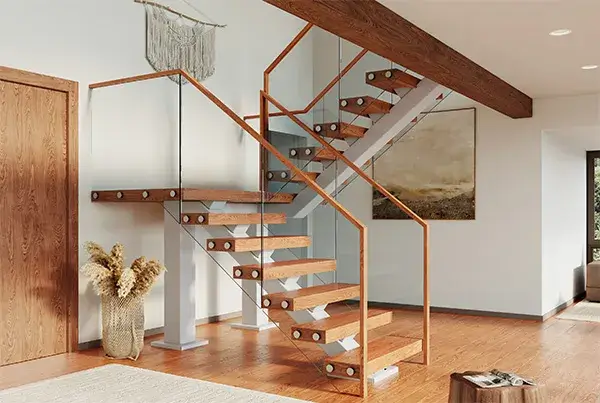 Mono stringer floating stairs are supported by a single central beam, usually made of steel, that runs beneath the treads. This design minimizes visible structure and creates a clean, open look.
- Single central support
- Clean architectural lines
- Open sightlines
- Modern aesthetic
- Minimal visible structure
A steel mono stringer staircase is often chosen when homeowners want the stair to feel as light and unobtrusive as possible while still functioning as a central design element.
What Are Dual Stringer Floating Stairs?
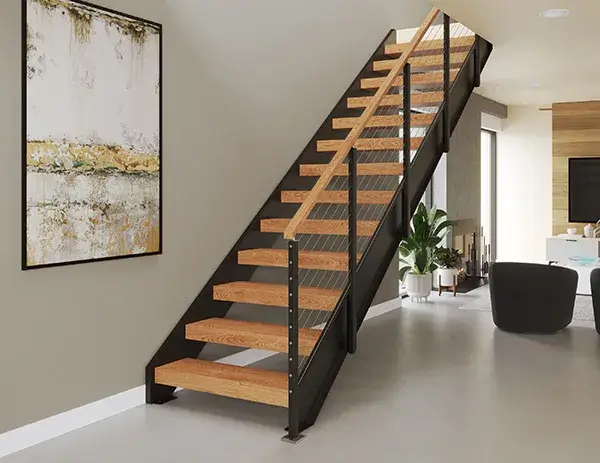 Dual stringer floating stairs, also known as double stringer floating stairs, use two structural supports along the sides of the treads. This creates a more framed and balanced appearance compared to a mono stringer design.
- Two visible supports
- Stronger framed appearance
- Balanced visual structure
- Better support for wider stairs
- More substantial architectural feel
A double stringer steel staircase often works well when the stair needs to feel more grounded or when the overall design calls for stronger visual symmetry.
Main Design Differences Between Mono and Dual Stringer Floating Stairs
Visual Openness and Minimalism
Mono stringer floating stairs create a more open and minimal look because the support structure is reduced to a single line. This makes them a strong fit for ultra-modern interiors and spaces where maintaining sightlines is important. Dual stringer floating stairs still feel modern, but they introduce more visible structure. This can make the stair feel more anchored within the space rather than visually disappearing.
Architectural Presence and Stair Profile
A mono stringer stair tends to feel lighter and more sculptural. The structure blends into the background, allowing the treads and railing to define the design. Dual stringer stairs create a stronger architectural presence. The two support lines frame the staircase, which can make it feel more intentional and substantial, especially in larger homes or wider stair layouts.
What to Consider:
The choice between mono and dual stringer stairs is not just visual. It affects how the stair interacts with the space. Paragon systems are designed with both structure and layout in mind, helping ensure the final stair feels intentional rather than forced into the design.
Structural Differences and Engineering Considerations
How Mono Stringer Floating Stairs Are Supported
Mono stringer floating stairs rely on a single beam to carry the load of the treads and users. The treads are attached directly to this central support, which distributes weight along one structural line. This approach requires precise engineering because all forces are concentrated through one support element. Alignment, connection points, and anchoring conditions are critical.
How Dual Stringer Floating Stairs Are Supported
Dual stringer floating stairs distribute weight across two structural supports, one on each side of the treads. This creates a wider structural stance and can change how the stair feels underfoot. Because the load is shared, the system can feel more stable in certain configurations, especially for wider stairs or layouts where additional structural distribution is beneficial.
Why This Matters:
Floating stairs require precise engineering regardless of style. Many issues arise when structural planning is treated as an afterthought. Paragon’s in-house engineering team designs each system based on your layout and conditions, helping reduce on-site guesswork and installation challenges.
Mono Stringer vs Dual Stringer Floating Stairs: Pros and Cons
Mono Stringer Floating Stairs Pros and Cons
| Pros | Cons |
|---|---|
| ✓ Creates a highly minimal, modern look | ✕ Requires precise engineering and installation |
| ✓ Maximizes openness and light flow | ✕ Can feel less substantial in wider stair spans |
| ✓ Works well as a sculptural focal point | ✕ May not suit every home style |
| ✓ Offers a cleaner architectural profile | ✕ Minimal appearance can still require premium detailing |
Dual Stringer Floating Stairs Pros and Cons
| Pros | Cons |
|---|---|
| ✓ Creates a more structured and balanced appearance | ✕ Less visually minimal than a mono stringer stair |
| ✓ Often works well for wider staircases | ✕ Introduces more visible structure |
| ✓ Can feel more grounded and substantial | ✕ Has a heavier visual impact in smaller spaces |
| ✓ Fits contemporary spaces that are less minimalist | ✕ May reduce the “floating” effect compared to mono stringer stairs |
Installation and Construction Differences
Installation Complexity of Mono Stringer Floating Stairs
Mono stringer stairs require careful alignment because the entire stair depends on one central support. Small inaccuracies can affect the entire system, so precise fabrication and installation planning are critical.
Installation Complexity of Dual Stringer Floating Stairs
Dual stringer stairs distribute alignment across two supports, which changes installation dynamics. While this can help balance the structure, it also introduces the need to ensure both sides are perfectly aligned and anchored.
Where Projects Go Wrong:
Floating stair installations can become complicated when details are left to be resolved on-site. Paragon’s engineered systems are designed ahead of time with detailed plans, helping contractors install with confidence instead of making structural decisions during the build.
Cost Considerations: Mono Stringer vs Dual Stringer Floating Stairs
What Affects the Price of Each Stair Type
Cost is influenced by steel fabrication, tread materials, railing type, finish level, and installation complexity. Wider stairs, premium wood species, and glass railing systems can increase total project cost regardless of stringer style.
When Mono Stringer Stairs May Cost More
Mono stringer floating stairs may cost more in some cases because achieving a minimal look often requires more precise engineering and detailing. Even though there is less visible structure, the system still needs to perform structurally. Dual stringer floating stairs may use more material, but the added structure can sometimes simplify certain aspects of fabrication depending on the design.
Comparing costs and styles? Browse Paragon’s floating stair options to see how different designs impact pricing, materials, and installation.
Questions to Ask Before Choosing a Stringer Style
- Do I want the stairs to feel minimal or more substantial?
- Is the staircase going in a small or large space?
- Will the stairs be a focal point or blend into the design?
- What railing style will I use?
- Is this a new construction project or a remodel?
- Do I prefer a stronger floating effect?
- What is my realistic budget?
- Does the home’s style favor a lighter or more framed staircase?
- Will the stair width influence the structure choice?
- What level of customization is required?
Mono Stringer vs Dual Stringer Floating Stairs: Which Should You Choose?
Choose Mono Stringer Floating Stairs If…
- You want the most minimal visual effect
- Your home has a modern or open-concept design
- You want more light and openness under the stairs
- You prefer a sculptural centerpiece
- You value a cleaner architectural line
Choose Dual Stringer Floating Stairs If…
- You want a more substantial stair profile
- You prefer stronger visual symmetry
- You are designing for a wider staircase
- Your home style is contemporary but less minimalist
- You want a floating look with more visible structure
Need help deciding? Paragon offers engineered floating stair systems designed for both style and performance, so you can choose a solution that fits your space and goals.
FAQs About Mono Stringer and Dual Stringer Floating Stairs
What is the difference between mono stringer and dual stringer floating stairs?
A mono stringer stair uses one central support beam, while a dual stringer stair uses two supports along the sides. This affects both the appearance and structural distribution of the staircase.
Which is better for a small space?
Mono stringer floating stairs are often better for small spaces because they create a more open and minimal look, allowing light to pass through more easily.
Are double stringer floating stairs the same as dual stringer stairs?
Yes, double stringer floating stairs and dual stringer floating stairs refer to the same design concept with two structural supports.
Which costs more: mono or dual stringer floating stairs?
Costs vary by project, but mono stringer stairs can sometimes cost more due to the precision engineering required to achieve a minimal look, while dual stringer stairs may use more material but distribute structural load differently.


