

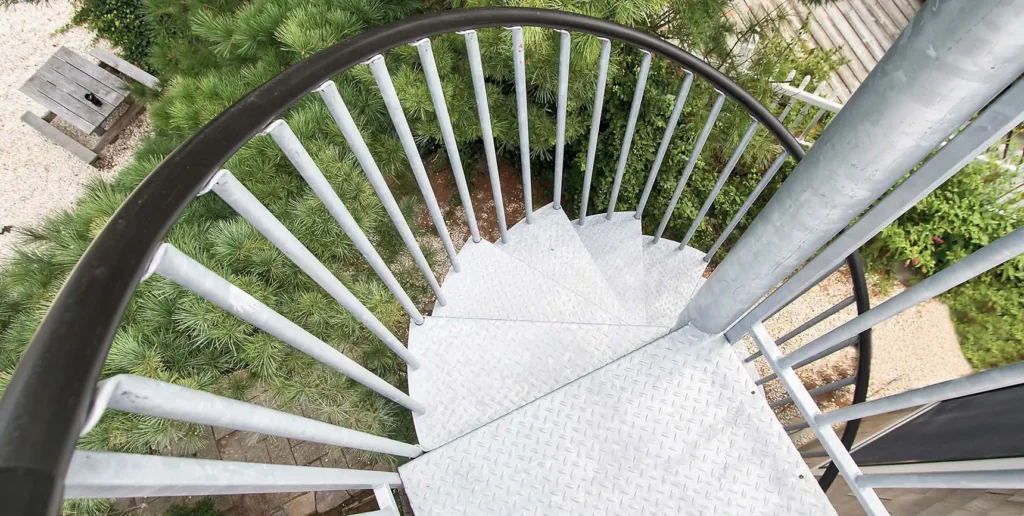
When outdoor space is limited, every design decision matters. Deck size, furniture placement, traffic flow, and stair location all compete for the same square footage. For homeowners with compact yards, choosing the right stair style can make the difference between a deck that feels open and one that feels crowded. Two options come up most often during planning: traditional straight-run deck stairs and deck spiral stairs. Both can work well, but they use space very differently. This guide breaks down how each performs in small-yard situations so you can make the most of your outdoor layout.
Key Takeaways
- Small yards magnify layout mistakes: Oversized stairs can eat into valuable deck and yard space.
- Straight stairs need room: A traditional run often extends farther into the yard than expected.
- Spiral stairs save space: A compact footprint helps preserve usable outdoor areas.
- Placement matters: Stair location affects furniture layouts and traffic flow.
- Design flexibility counts: Outdoor spiral stairs can solve space challenges without sacrificing function.
Why Stair Choice Matters More in Small Yards
In a large backyard, stairs can stretch out without much impact. In a small yard, they become one of the most dominant features in the layout.
Deck stairs affect:
- How much room is left for seating and dining
- Where foot traffic flows on and off the deck
- How open or boxed-in the yard feels
- Future landscaping or hardscape plans
Because stairs connect the deck to the yard, they influence both spaces at once. Choosing the wrong style can shrink both areas instead of enhancing them.
Straight Deck Stairs in Small Yards
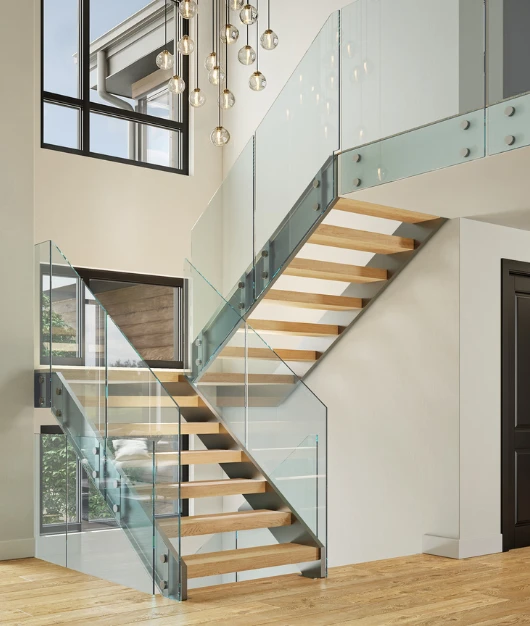
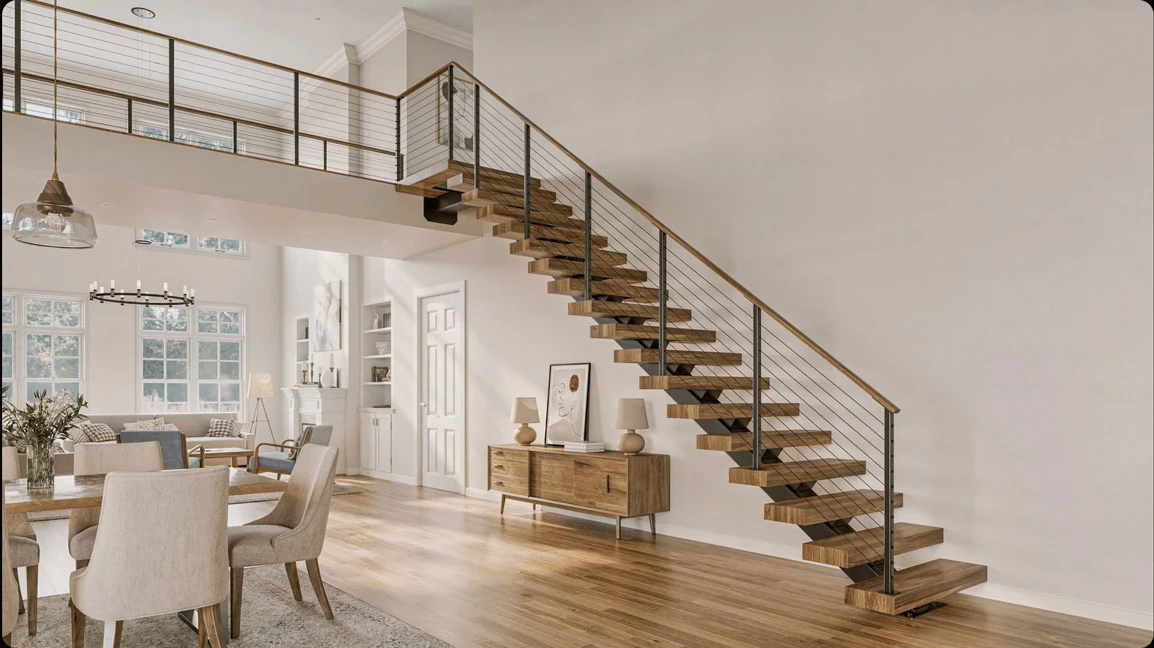
Traditional straight-run stairs are familiar and easy to visualize. They typically descend in a single direction, sometimes with a landing, depending on deck height.
In small yards, straight stairs often:
- Extend deep into the yard, reducing usable lawn or patio space
- Require wider clearance at the base
- Create a visual barrier that divides the yard
- Limit where furniture can be placed on the deck edge
Straight stairs can still work in compact spaces, especially if the deck is low to the ground or the yard is long and narrow. However, they leave little flexibility once installed.
How Spiral Deck Stairs Change the Equation
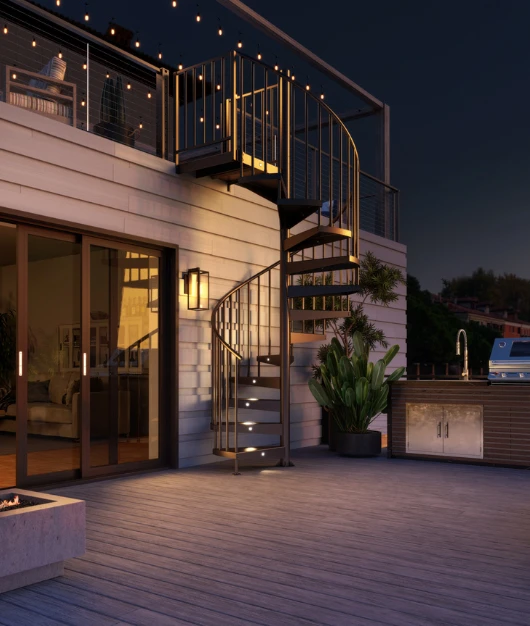
Outdoor spiral stairs approach the same problem differently. Instead of stretching out, the stair stacks its steps vertically around a central column.
For small yards, this creates clear advantages:
- A smaller footprint on the deck
- Minimal intrusion into the yard below
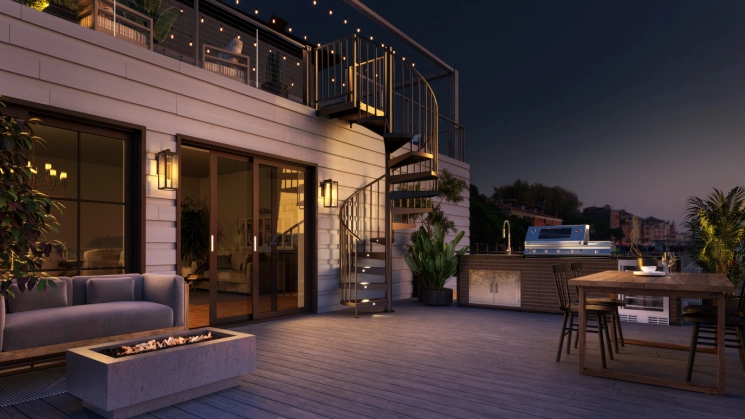
- More freedom to place furniture near the deck edge
- A cleaner transition between deck and ground level
Because the stair turns downward rather than outward, spiral designs preserve square footage where it matters most.
Download the Space-Saving Footprint Guide
See a clear spiral vs. straight-run footprint comparison and understand how much usable deck and yard space you can reclaim in a small-yard layout.
Deck Layout Flexibility and Furniture Placement
One of the biggest benefits of space saving deck stairs is how they open up layout options.
With a spiral stair, homeowners often find they can:
- Add seating near the deck edge without blocking traffic
- Create defined zones for dining and lounging
- Keep clear walking paths to doors and grills
- Use deck corners that would be awkward for straight stairs
In small decks, this flexibility can transform how the space is used day to day.
Yard Flow and Ground-Level Space
The area at the base of the stairs matters just as much as the deck above. In compact yards, straight stairs often land in the middle of the available space, interrupting movement and limiting landscaping options.
Spiral stairs typically:
- Land closer to the deck edge
- Leave more open ground for patios, gardens, or walkways
- Create a natural circulation path instead of a dead zone
This can be especially helpful in fenced yards, townhomes, or properties with setback restrictions.
Not Sure Which Stair Fits Your Yard?
Share your deck height and available space, and get guidance on stair placement that works with your layout instead of against it.
Comfort and Usability in Tight Spaces
Comfort matters, even when space is limited. Straight stairs often feel familiar, but they can feel steep or narrow when designers try to shrink them to fit a small yard.
Spiral stairs offer a consistent walking rhythm and a continuous handrail, which many homeowners find comfortable for everyday use. Choosing the right diameter helps balance compactness with ease of movement.
When Straight Stairs Still Make Sense
Straight stairs can be the right choice when:
- The yard is narrow but long enough to accommodate a run
- Large items are frequently carried up and down
- The deck height is low and space impact is minimal
- A traditional look is a priority
In these cases, careful sizing and placement are essential to avoid crowding the yard.
When Spiral Stairs Are the Better Fit
Spiral stairs often shine in small-yard situations where:
- Every square foot of deck space matters
- The yard footprint needs to stay open
- The deck connects to patios or walkways below
- Design flexibility is important
- Homeowners want a compact, intentional solution
For many compact properties, spirals provide access without compromise.
FAQ
Do spiral stairs really save space in small yards?
Yes. Spiral stairs use a compact circular footprint, which typically takes up far less horizontal space than a straight run.
Are spiral stairs comfortable for everyday use?
With the right diameter and handrail design, many homeowners find spiral stairs comfortable and easy to use daily.
Will a spiral stair work with my deck height?
Spiral stairs can be configured for a wide range of deck heights. Measuring accurately is the first step in choosing the right design.
Read More
- Outdoor Spiral Stairs: Explore designs built for exterior use.
- Aluminum Spiral Stairs: A low maintenance option for compact spaces.
- Featured Projects: See real installations in small yards.
Design a Stair That Fits Your Space
If your yard is tight but your deck plans are big, spiral stairs can help you make the most of what you have.


