

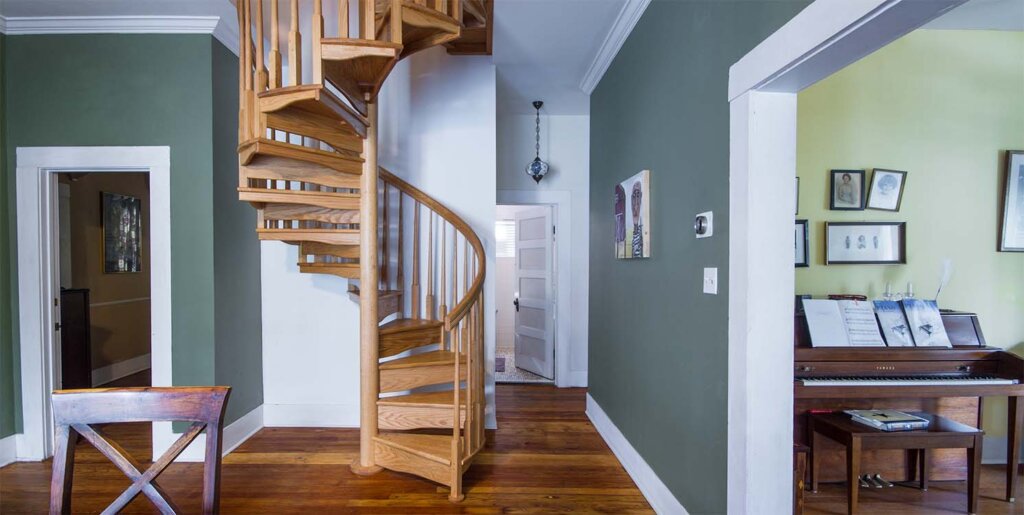
Not every staircase needs to serve as the main, everyday path between levels. In many homes and outdoor layouts, spiral stairs work best as secondary access points that support flow, preserve space, and add flexibility without dominating the design.
Understanding how spiral stairs function as secondary access helps homeowners plan layouts that feel intentional and efficient.
Key Takeaways
- Spiral stairs are often ideal for secondary access.
- They preserve space while maintaining functionality.
- Decks and multi-level layouts benefit from compact stairs.
- Secondary stairs support flexible circulation.
- Early planning helps integrate them seamlessly.
What Is Secondary Access?
Secondary access refers to stairways that provide an additional way to move between levels, rather than serving as the primary staircase used throughout the day.
These stairs often:
- Support convenience rather than constant traffic
- Connect outdoor spaces to the yard
- Provide access to lofts, offices, or bonus areas
Spiral stairs are well-suited for this role because of their compact footprint.
Why Spiral Stairs Work Well as Secondary Access
Spiral stairs naturally balance function and efficiency. Because they take up less horizontal space, they provide access without reshaping the entire layout.
As secondary stairs, spiral stairs help:
- Keep primary living areas open
- Avoid sacrificing usable floor or deck space
- Maintain cleaner circulation paths
This makes them a practical addition rather than a visual or spatial burden.
Decks and Outdoor Spaces
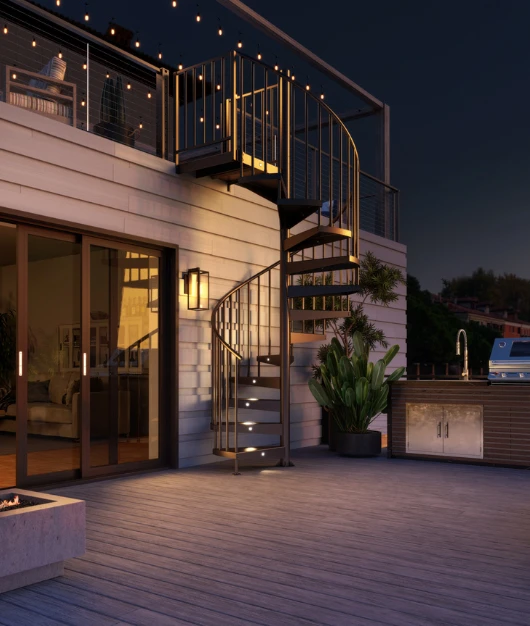
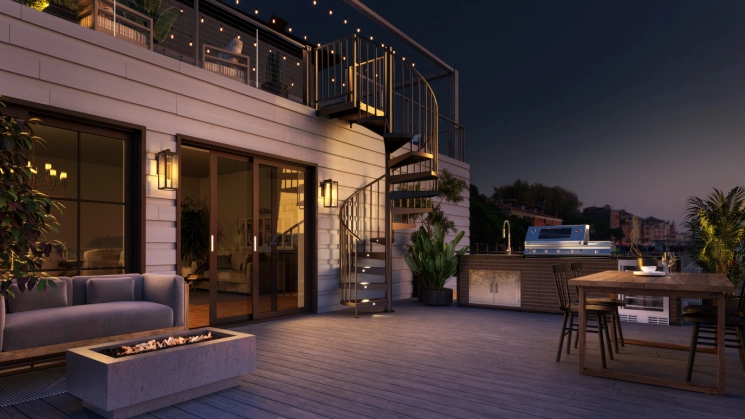
One of the most common uses of spiral stairs as secondary access is on decks. Rather than replacing a main entry, the stair offers a convenient connection between the deck and the yard.
Deck spiral stairs are often used to:
- Provide backyard access without crowding the deck
- Support entertaining and outdoor flow
- Preserve space for seating and gathering areas
This approach keeps the deck functional while improving accessibility.
Interior Secondary Staircases
Inside the home, spiral stairs are frequently used to access spaces that don’t require a full-size staircase.
Common interior secondary access points include:
- Lofts
- Home offices
- Bonus rooms
- Basements
In these situations, spiral stairs provide access while keeping the primary layout open and uncluttered.
Supporting Flexible Layouts
Secondary access stairs add flexibility to how a space is used. They allow movement between levels without forcing all traffic through a single path.
This flexibility can:
- Improve circulation during gatherings
- Support indoor–outdoor living
- Make multi-level spaces feel more connected
Spiral stairs contribute to this flexibility without demanding excess space.
Planning Placement Early
Like all stairs, spiral stairs work best when planned early. Identifying secondary access needs during the design phase helps ensure the stair feels intentional rather than added later.
Early planning considers:
- How the stair supports movement
- Where it fits naturally in the layout
- How it complements primary access points
Blending Function With Design
Because spiral stairs are visually distinctive, they often feel like a design feature even when serving a practical role. As secondary access, they strike a balance between usefulness and aesthetics.
This balance is one reason spiral stairs remain a popular choice in both homes and outdoor projects.
Plan Secondary Access With Confidence
Using spiral stairs as secondary access helps preserve space while improving how your home or deck functions.


