

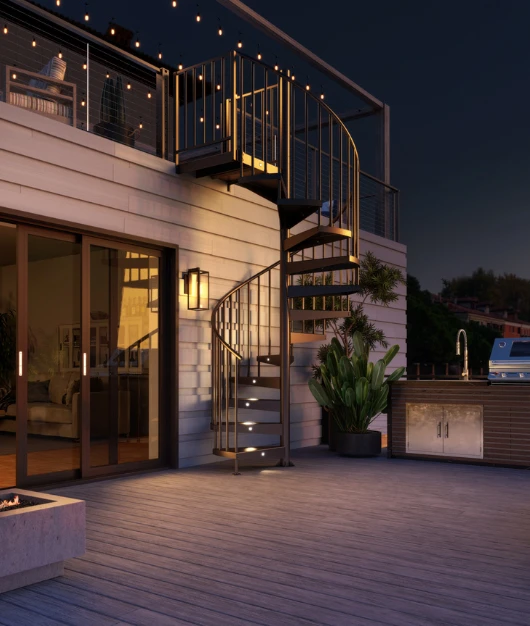

Floating stairs are staircases designed to look open, lightweight, and minimally supported. They are not actually suspended without structure. Instead, the “floating” effect comes from hidden or reduced structural elements, open risers, and streamlined railing designs that create a modern, airy appearance.
For homeowners, understanding what a floating staircase is matters because it affects more than style alone. Floating stair design influences how a room feels, how the stair must be engineered, what materials work best, and whether the layout, budget, and household needs make it the right fit.
Exploring modern stair options? Browse Paragon’s floating stairs to compare styles, materials, and engineered solutions designed for real homes.
What Is a Floating Staircase and How Does It Work?
A floating staircase is a stair system that uses concealed or visually minimal structural support to create a more open appearance than a traditional staircase. When people ask, “what is a floating staircase?” or “what are floating stairs?” they are usually referring to open-riser stairs that appear to have treads suspended in space.
In practice, floating stairs still rely on real structural support. The difference is that the support is often hidden within the wall, integrated into a mono stringer, or designed in a way that draws less visual attention than conventional framing.
Why They Are Called “Floating”
The name comes from the visual effect, not the engineering reality. A floating staircase is not actually unsupported. It is called “floating” because the stair treads appear to hover with little or no visible framing underneath.
This look is most often created with open risers, narrow profiles, and support systems that are tucked behind or beneath the walking surface. That is why modern floating stairs are commonly used in contemporary homes where clean lines and openness are priorities.
The Basic Structure Behind Floating Stairs
The structure behind a floating staircase depends on the stair type, the surrounding architecture, and the available support conditions. Common support methods include wall anchoring, mono stringers, central steel supports, and concealed framing integrated into nearby walls or floor systems.
A mono stringer stair uses one central structural beam below the treads. A cantilever-style stair often relies on deep structural anchoring into a wall. Other systems may combine steel framing with railing components that add stability while preserving a light visual profile.
Why This Matters:
Floating stairs may look simple, but the structural planning behind them is not. Many stair projects run into issues when support requirements are handled too late or treated like standard framing. Paragon’s in-house engineering team works directly with your layout, contractor, and design goals upfront, helping ensure your stair is structurally sound, code-compliant, and ready to install without last-minute surprises.
Open-Riser Design and Visual Effect
Open risers are one of the main reasons floating stairs feel visually lighter than traditional stairs. Because there is space between treads instead of a closed vertical riser, light can pass through the staircase and sightlines stay more open.
That difference matters in open-concept homes, smaller footprints, and interior remodels where a bulky stair could make the room feel darker or more crowded. A floating staircase does not add square footage, but it can make a space feel larger and more connected.
Common Types of Floating Stairs
There is no single floating staircase design. Several structural approaches can create the floating look, and each has different visual and practical tradeoffs.
Mono Stringer Floating Stairs
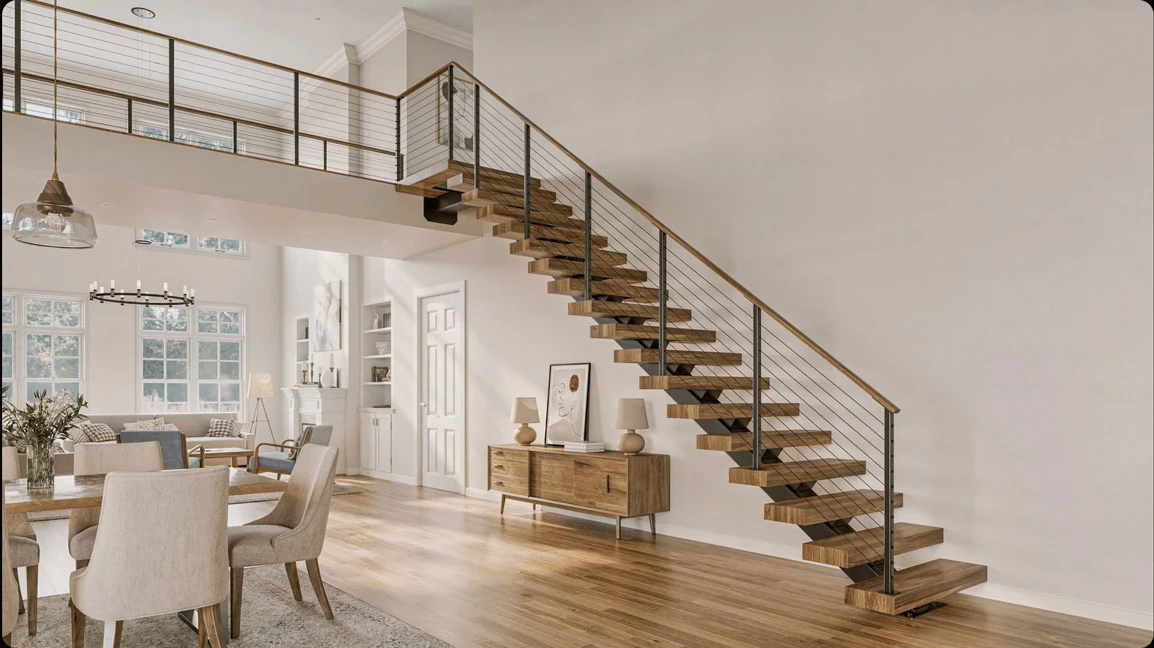
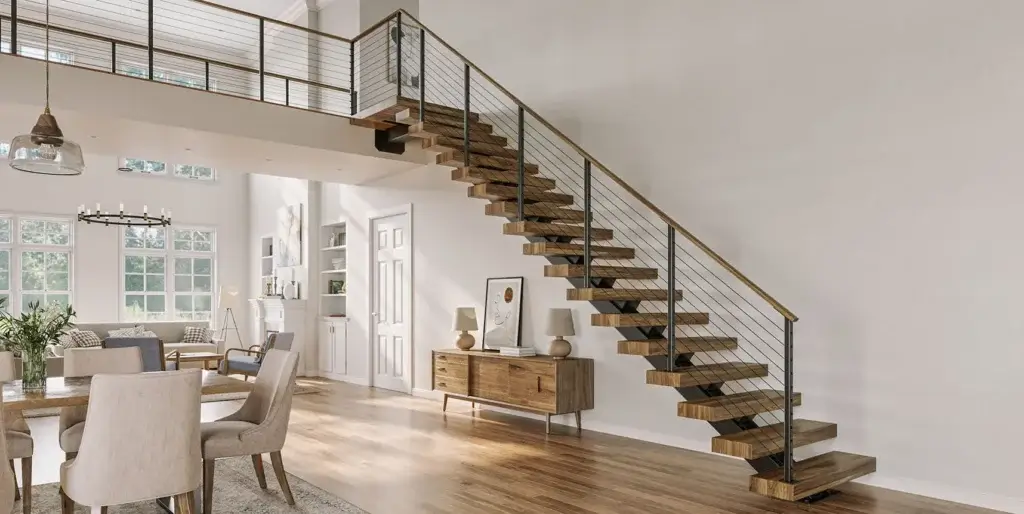
Mono stringer floating stairs use a single beam, usually steel, positioned under the center of the treads. This is one of the most common floating stair designs because it offers a strong structural solution while maintaining a sleek profile.
A mono stringer stair is often a good fit when homeowners want a modern look without relying on a heavily reinforced wall. It can work well in remodels, new builds, and open-concept interiors where the stair needs to feel architectural but still practical for everyday use.
Cantilever-Style Floating Stairs
Cantilever-style floating stairs are designed so the treads project outward from a wall with little or no visible support below. This is the look many homeowners picture first when they think about high-end contemporary stairs.
The tradeoff is that cantilever-style systems are usually more structurally demanding. They often require careful early planning, substantial wall support, and close coordination with the surrounding framing. They are typically better suited for projects where the home is being designed or heavily remodeled around the stair.
Floating Stairs with Glass Railings
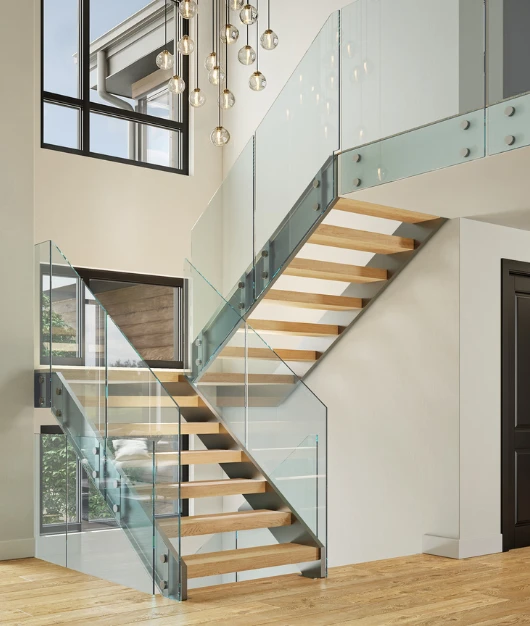
A glass railing staircase often amplifies the floating effect because the railing remains visually unobtrusive. Glass allows sightlines to pass through the stair and helps preserve a clean, open feel.
This option is popular in luxury interiors and homes where the staircase is meant to be a major focal point. Glass can create a premium look, but homeowners should also consider cleaning visibility, fingerprint maintenance, and how the glass detailing fits the rest of the space.
Floating Stairs with Metal or Cable Railings
Cable railing stairs and slim metal railing systems are another popular match for floating stairs. Cable infill supports a contemporary look without the full visual enclosure of glass, while simple metal railings can work well in modern, industrial, or transitional interiors.
These railing types can offer a cleaner and often more practical balance of appearance, durability, and maintenance. The best fit depends on the home’s style, household needs, and the degree of openness the homeowner wants to achieve.
| Floating Stair Type | Visual Style | Structural Complexity | Best Fit |
|---|---|---|---|
| Mono Stringer Floating Stairs | Clean, modern, balanced | Moderate | New builds, remodels, everyday residential use |
| Cantilever-Style Floating Stairs | Minimal, dramatic, high-end | High | Architectural feature projects with strong wall support |
| Floating Stairs with Glass Railings | Ultra-open, premium, contemporary | Moderate to High | Luxury interiors and light-filled spaces |
| Floating Stairs with Cable or Metal Railings | Modern, streamlined, practical | Moderate | Homes wanting a modern look with easier upkeep |
Floating Stairs Explained by Materials
Floating stair materials affect more than appearance. They influence durability, structural performance, maintenance, and how the stair fits the home’s style. A wood tread on a steel floating staircase creates a very different result than a stair built with all-metal elements or glass-heavy detailing.
Wood Floating Stair Treads
Wood floating stairs are popular because they combine modern structure with warmth and texture. White oak, red oak, walnut, and maple are common tread options, depending on the desired color, grain, and finish style.
Wood treads can soften the look of a steel floating staircase and help it feel more residential. They work especially well in homes that want modern lines without feeling cold or overly industrial. Homeowners should still think about wear patterns, finish durability, and how the wood tone coordinates with the flooring and nearby millwork.
Steel Floating Stair Structures
Steel is one of the most common floating stair materials because it offers strength, rigidity, and design flexibility. It is frequently used for mono stringers, concealed support frames, and structural elements that need to span open space while maintaining a slim profile.
A steel floating staircase can support a wide range of looks, from refined contemporary interiors to more industrial-inspired designs. Powder-coated finishes are often used to improve durability and help the structure blend into the surrounding design palette.
What to Consider:
It’s easy to focus on how a floating staircase looks, but the materials and structure behind it determine how it performs over time. Paragon systems are designed as complete solutions, not disconnected parts, so your treads, structure, and railing all work together from the start instead of being figured out on-site.
Glass, Cable, and Mixed-Material Designs
Railing and infill choices have a major effect on the final appearance of a floating staircase. Glass creates one of the most open looks possible. Cable railing stairs maintain transparency while adding a little more linear definition. Mixed-material combinations, such as steel supports with wood treads and glass panels, can create a layered custom feel.
The right combination depends on both aesthetics and lifestyle. For example, glass may create the most seamless look in a contemporary home, while cable or slim metal railings may be a better fit for households that want a modern look with less visible cleaning.
| Material | Appearance | Durability | Common Use Case |
|---|---|---|---|
| Wood Treads | Warm, natural, residential | High with proper finish | Modern interiors that need softness and texture |
| Steel Structure | Clean, strong, modern | Very high | Mono stringers, concealed support systems |
| Glass Railings | Open, premium, minimal | High | Luxury homes and view-focused interiors |
| Cable or Metal Railings | Streamlined, contemporary | High | Homes wanting openness with practical upkeep |
Why Homeowners Choose Floating Stairs
Modern and Contemporary Design Appeal
Many homeowners choose floating stairs because they align naturally with modern and contemporary architecture. They work especially well in open-concept homes, premium remodels, and interiors with clean materials, large windows, and minimal visual clutter.
Even when the home is not fully modern, a floating staircase can act as a design bridge between traditional structure and updated finishes. This is one reason they are often chosen in whole-home renovations where the goal is to create a lighter, more current interior.
Light Flow and Open Space Benefits
One of the biggest advantages of floating stairs is how they affect space visually. Because they usually have open risers and less visible framing, they allow light to move more freely through a room than a conventional enclosed stair.
This can be especially helpful in interior remodels, loft access points, and living areas where the stair would otherwise block windows or interrupt sightlines. In some homes, that open effect matters just as much as the staircase itself.
Statement Feature for Interior Design
Floating stairs are often selected because they function as more than circulation. They can become a focal point that helps define the style of the home. A well-designed floating staircase can frame a double-height entry, connect levels without feeling bulky, or add architectural interest to an otherwise simple space.
Designers often use floating stairs when they want the staircase to feel intentional rather than purely functional. In the right setting, the stair becomes part of the visual identity of the home, not just a way to move between floors.
Pros and Cons of Floating Stairs
| Pros | Cons |
|---|---|
| ✓ Sleek, modern appearance | ✕ Higher cost compared to traditional stairs |
| ✓ Open sightlines and improved light flow | ✕ Requires more precise engineering and planning |
| ✓ Strong visual impact in modern interiors | ✕ Code and safety requirements vary by location |
| ✓ Flexible design options with materials and railing styles | ✕ Dust, wear, and footprints are more visible |
| ✓ Helps spaces feel larger and more open | ✕ May not be ideal for all households or lifestyles |
Floating stairs are often the right choice when design, openness, and architectural impact are priorities. However, they are not the best fit for every project. Budget, household needs, and layout constraints should all be considered before deciding on a floating stair system.
These tradeoffs are important. Floating stairs are not the best answer for every budget, every layout, or every family. Homes with very young children, certain pet needs, or highly traditional design goals may prefer a more conventional stair solution depending on the specific design and code constraints.
Who Floating Stairs Work Best For
Floating stairs are often the best fit for design-focused homeowners, modern new builds, premium remodels, and projects where openness matters as much as function. They make the most sense when the stair is meant to be part of the home’s architecture, not something hidden away.
They may be less ideal when the top priority is the lowest upfront cost, the most conventional build method, or a household setup where a fully enclosed stair feels more comfortable for everyday use.
Are Floating Stairs Safe?
Structural Safety
Floating stairs can be safe for everyday use when they are properly engineered, fabricated, and installed. The open appearance does not make them inherently unsafe. Safety depends on structural design, tread stability, railing performance, and correct installation.
This is one reason floating stair projects usually benefit from professional review early in the planning process. Hidden structure still has to perform under real daily use, not just look good in finished photos.
Open Risers, Railings, and Everyday Use
Open risers, railing design, tread depth, surface grip, and household usage all affect whether a floating staircase feels comfortable in daily life. Some homeowners love the open look immediately. Others may need to think more carefully about how children, pets, older family members, or frequent traffic will interact with the stair.
For example, a glass railing staircase may maximize openness, but another household may prefer a cable or metal railing solution that still feels modern while creating a different sense of enclosure. The right design depends on who will use the stair and how it fits into the flow of the home.
Building Codes and Professional Review
Local code requirements vary by jurisdiction, and project-specific conditions can affect what is allowed. Open riser spacing, railing height, tread dimensions, and other details should always be reviewed before fabrication or installation.
Important Note:
Floating stair requirements can vary based on local building codes and project conditions. Paragon helps account for these factors early in the design process, so you can move forward with a solution that aligns with your layout and applicable code requirements.
How Much Do Floating Stairs Cost?
What Affects Cost
Floating stair cost is influenced by the structural support strategy, tread materials, railing selection, finish level, customization, and installation complexity. A simple mono stringer stair with straightforward detailing will usually cost less than a highly customized cantilever-style stair with premium wood and glass.
The level of site preparation can also affect cost. Some projects need additional framing, wall reinforcement, or coordination with adjacent finishes to achieve the desired look properly.
Why Floating Staircases Often Cost More
Floating staircases often cost more than traditional stairs because they involve more engineering, more fabrication precision, and more premium finish decisions. The structure is doing more visual work, which means the details usually need to be resolved more carefully.
That does not automatically make floating stairs the better choice. It means they are usually a better fit when the homeowner values design impact, openness, and custom appearance enough to justify the additional investment.
When the Investment Makes Sense
The investment often makes sense in high-design homes, statement interiors, and spaces where maintaining light flow and openness is a major goal. In those cases, a floating staircase can influence the feel of the room every day in a way that a standard stair may not.
For a homeowner doing a premium remodel or building a modern custom home, the stair may be one of the most visible features in the entire project. In that context, the value is not just structural. It is architectural and experiential too.
Planning a modern interior? Explore floating stairs to compare styles, materials, and railing options that can help shape the look of your space.
Questions Homeowners Ask Before Choosing a Floating Staircase
Will Floating Stairs Fit My Space?
In many cases, yes, but the answer depends on ceiling height, floor openings, stair run, structural support locations, and how much openness the design needs to preserve. Some homes can accommodate a floating stair easily, while others may require layout adjustments or a different support style.
For example, a space-saving interior remodel may benefit from a mono stringer design, while a dramatic entry stair in a larger home may have more room for custom detailing and a larger visual statement.
Do Floating Stairs Need Special Structural Support?
Often, yes. Because the structure is minimized visually, the support that remains must be carefully engineered. Some floating stairs rely on a central beam. Others need strong wall integration or concealed steel framing.
This does not always mean the project is impractical. It means the structure should be reviewed early so the design, framing, and finished look all align.
Where Projects Go Wrong:
Floating stair projects can become complicated when key details are left to be solved on-site. This often leads to delays, added costs, or design compromises. Paragon’s engineered stair systems are designed ahead of time with detailed plans and support, helping your contractor install with clarity and confidence instead of guessing through critical steps.
Are Floating Stairs Good for Everyday Use?
They can be, as long as they are designed for the way the household actually lives. A floating staircase is not just a showroom feature. In many homes, it functions as the main stair every day. The key is choosing a design that balances appearance with comfort, safety, and durability.
- What style of support is possible in the space?
- What railing type fits the interior?
- Are open risers allowed by local code?
- Will children or pets use the stairs?
- Does the home’s style suit floating stairs?
- What level of customization is needed?
Floating Stairs Selection Checklist
- Define the design goal.
- Review structural support options.
- Choose the stair type.
- Select tread and railing materials.
- Confirm safety and code needs.
- Compare floating stairs with traditional alternatives.
- Estimate the full project budget.
- Decide whether the staircase is right for the home’s layout and lifestyle.
A floating staircase can be a strong choice when the goal is to create openness, modern style, and architectural impact. The right solution depends on the home, the structure, and the people who will use the stair every day. A successful project balances design ambition with real-world fit.
Need help narrowing down your options? Paragon’s floating stair systems are designed to combine modern style with engineered performance, so you can compare solutions that fit your space, layout, and design goals.
FAQs About Floating Stairs
Are floating stairs safe for everyday use?
Yes, floating stairs can be safe for everyday use when they are properly engineered, fabricated, and installed. Safety depends on the structural system, tread design, railing configuration, and how well the stair aligns with local code requirements. Household factors such as children, pets, and frequency of use should also be considered during design. A floating staircase can work well as a daily-use stair when those details are addressed thoughtfully.
Do floating stairs need a wall for support?
No, not all floating stairs need a wall for support. Some designs, such as cantilever-style stairs, often rely heavily on wall anchoring, but mono stringer floating stairs and other engineered systems can use central or concealed support instead. The right approach depends on the home’s structure, the desired appearance, and the feasibility of reinforcement in the space. That is why support strategy should be reviewed early in the project.
What is the difference between floating stairs and open-riser stairs?
Floating stairs and open-riser stairs are related, but they are not always identical. Open-riser stairs simply have space between the treads instead of closed risers. Floating stairs usually use open risers too, but they also aim to minimize visible structural support to create a lighter, more architectural look. In other words, many floating stairs are open-riser stairs, but not every open-riser stair creates a true floating effect.
Are floating stairs more expensive than traditional stairs?
In many cases, yes. Floating stairs often cost more than traditional stairs because they require more engineering, more precise fabrication, and more premium design detailing. Material choices such as wood floating stairs, steel floating staircase structures, and glass railing systems can also raise the total project cost. For homeowners prioritizing openness and design impact, that added investment may be worthwhile, but it is important to weigh appearance, budget, and everyday practicality together.


