

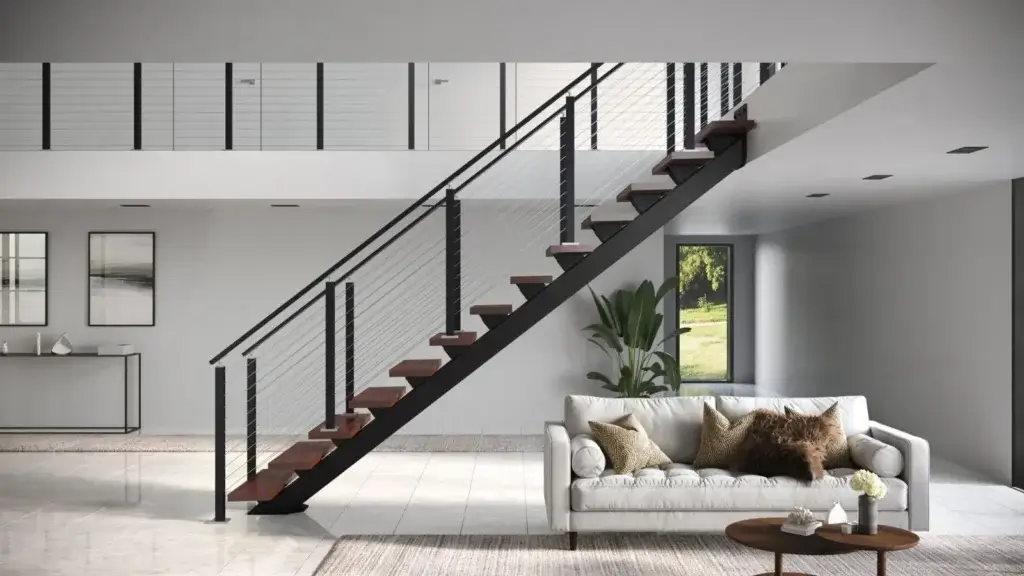
When comparing wood vs metal floating stairs, separate the walking surface from the supporting frame. Many Paragon floating stairs pair wood or metal treads with steel stringers; outdoor designs also include aluminum frames. Choosing wood treads does not mean giving up an engineered metal structure.
Wood treads bring natural grain and visual warmth. Metal treads create a more uniform, industrial appearance and can suit demanding environments when the material and finish are specified correctly. The right choice depends on the complete stair design, its location, and how you want to care for it.
Wood vs Metal Floating Stairs at a Glance
Choose wood treads for natural color, grain, and a warmer residential look. Choose metal treads for a consistent finish and an industrial or exterior design suited to the environment. Combine wood and metal when you want wood walking surfaces on an open metal frame.
Wood vs Metal Floating Stairs: What Are You Actually Choosing?
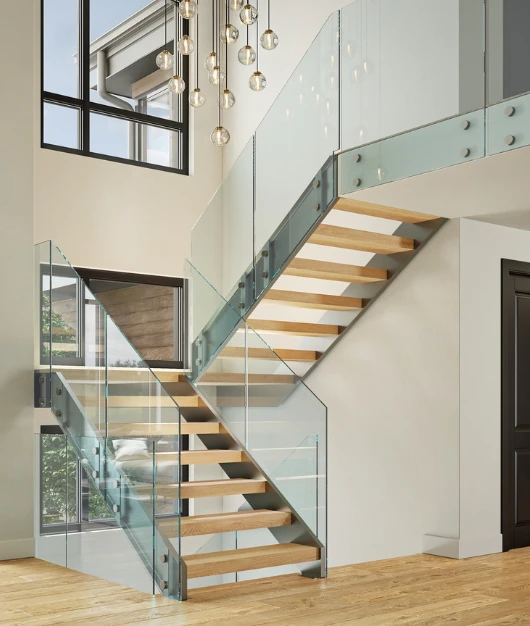
A tread is the horizontal surface you step on. A stringer is the sloping structural member supporting those treads. A hybrid staircase combines materials, commonly wood treads with a metal frame.
Paragon offers mono stringer stairs with one central support beam, dual stringer stairs with two beams, and modular floating stair systems. Frame selection and tread selection are related decisions, but they answer different questions.
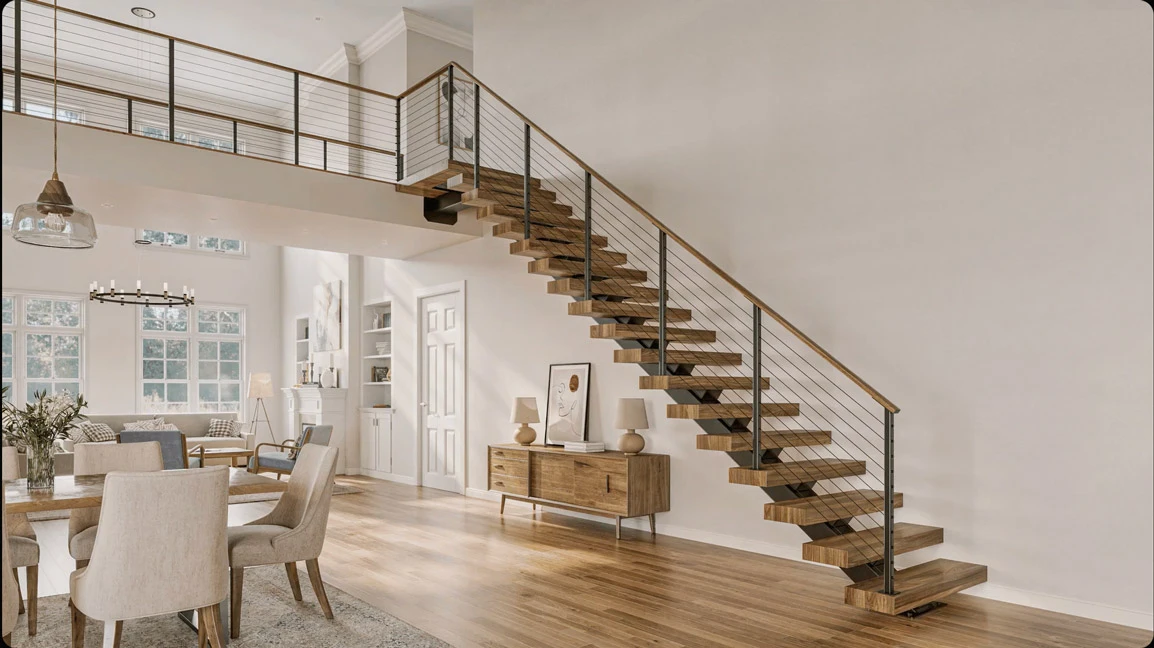
For example, The Haven Straight Stair is shown with red oak treads on a mono stringer frame. The Alden is shown with steel treads on a mono stringer frame. Compare the walking surfaces without treating one tread choice as proof of a stronger overall stair.
How Do Wood and Metal Treads Compare?
| Consideration | Wood treads | Metal treads |
|---|---|---|
| Appearance | Natural grain and color variation; species and finish change the look. | A more uniform finish; smooth or textured profiles can support a modern or industrial design. |
| Surface wear | Can dent, scratch, or show finish wear; species and finish influence performance. | Can scratch, dent, or lose coating at wear points; metal type and protection matter. |
| Routine care | Remove grit, clean with finish-compatible products, and address spills promptly. | Clean with coating-compatible products and check finish damage and exposed edges. |
| Finishing and assembly | Confirm whether treads arrive finished and follow the specified finishing and fastening requirements. | Confirm coating, surface texture, attachments, and any required touch-up procedure. |
| Underfoot experience | Often feels more familiar in residential interiors; finish and footwear affect grip. | Can feel firmer or cooler; texture, footwear, and the complete assembly affect comfort and sound. |
| Outdoor suitability | Standard interior treads should not be assumed suitable for exterior exposure. | Requires an exterior-appropriate metal, finish, and tread design; an interior steel finish is not automatically weather-rated. |
Which Wood Species Work Well for Floating Stair Treads?
Compare species for color, grain, and resistance to indentation, then confirm availability for the selected stair. Paragon’s published configurations include red oak on The Haven and white oak on The Sheridan Straight Stair with Lighting. Other species and profiles should be confirmed with a designer.
Wood species and Janka hardness
Janka hardness measures resistance to indentation. Higher values indicate greater indentation resistance under the test, rather than a stronger complete staircase or a scratch-proof finish. The figures below are approximate side-hardness values for wood at 12% moisture content from the USDA Wood Handbook.
| Species | Approximate Janka hardness | How to use the comparison |
|---|---|---|
| White oak | 1,360 lbf | Compare its indentation resistance with the grain and finish you prefer. |
| Northern red oak | 1,290 lbf | A reference for the red oak tread category; actual wood varies. |
| Hard maple or sugar maple | 1,450 lbf | The highest indentation resistance among these five reference species. |
| White ash | 1,320 lbf | Close to the oak examples on this test; confirm the exact ash species. |
| Black walnut | 1,010 lbf | Lower indentation resistance than the other four reference species. |
Source: USDA Wood Handbook Chapter 5, Table 5-3b. lbf means pounds-force. Values describe reference wood specimens, not Paragon tread load ratings. This table is a species comparison, not a list of options available on every Paragon model.
How thick should a wood tread be?
Tread thickness depends on the span, species, construction, support detail, and railing attachments. A solid wood tread and a wood cover over a steel tread are different assemblies. Ask for the actual tread section on your drawing instead of choosing a thickness for appearance alone.
A thicker-looking tread is not automatically required for every design, and a thin profile is not automatically unsafe. The selected tread and its connections must be designed as part of the complete stair system.
Which Lasts Longer: Wood or Metal Floating Stairs?
Separate structural life from walking-surface wear. A steel-supported stair with wood treads may share its frame type with a steel-tread design. Surface maintenance can differ even when both stair systems meet the same project requirements.
Wood tread durability
Wood can show dents, scratches, and wear in the walking path. Species hardness is one consideration, but the finish, household traffic, and moisture exposure also matter. Some solid wood treads can be refinished; confirm the construction and approved refinishing method before assuming every wood cover can be sanded repeatedly.
Wood also responds to changes in moisture. Wipe up spills, avoid soaking the surface, and follow the supplier’s care instructions. A finish protects the surface but does not make an interior wood tread suitable for every environment.
Metal tread durability and finish
Metal treads avoid some wood-specific maintenance needs, but their finish still needs care. Powder coating is a dry-applied protective and decorative finish, as described by the Powder Coating Institute. It does not make every underlying metal or stair configuration suitable for outdoor use.
Inspect scratches, chips, attachments, and exposed edges according to the product instructions. The appropriate response depends on the material and finish; an interior steel system and a powder-coated aluminum exterior system should not be treated as interchangeable.
What does Paragon’s warranty cover?
Paragon’s published warranty details include a lifetime warranty on metal fabrication, subject to the stated terms. That can apply to frames carrying wood or metal treads. Wood and finish coverage are separate; review the requirements and exclusions for your configuration and exposure.
Wood or Metal for Outdoor Floating Stairs?
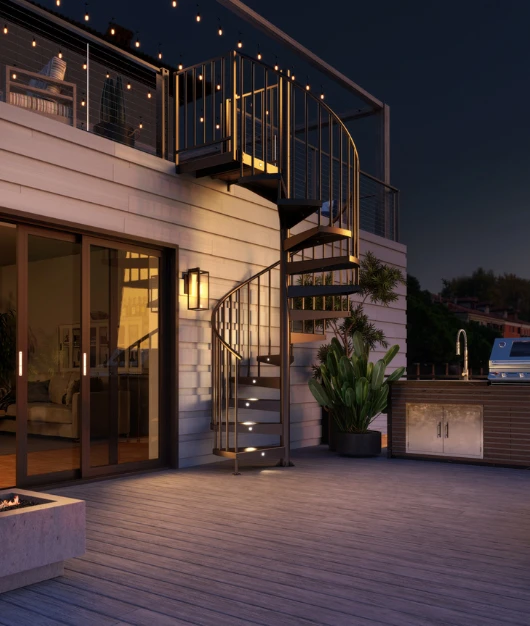
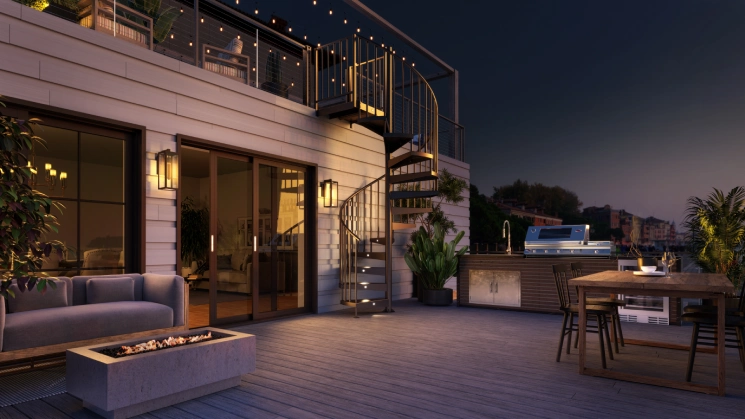
For an exposed deck, coastal home, or exterior connection, specify an outdoor stair system from the beginning. Paragon’s exterior options include aluminum structures and metal or composite tread configurations. Standard interior wood treads and interior steel finishes should not be selected on the assumption that a protective coating will make them equivalent.
The Shiloh Channel Side Stringer is shown with aluminum treads, while The Shiloh with Composite Treads offers a different walking-surface approach. Composite covers are an alternative material, rather than solid wood.
Paragon’s warranty page recommends galvanized steel or powder-coated aluminum outdoors. Exterior primed or powder-coated steel loses finish coverage; outdoor wood stairs and parts are excluded. Confirm the options and terms for your floating stair model.
For salt exposure and shoreline projects, review floating stairs for beach and shore houses with a designer. Include drainage, tread traction, cleaning, and local exposure conditions in that discussion.
Are Wood Floating Stairs Cheaper Than Metal?
Neither tread material is automatically cheaper. Compare quotes for the same floor height, width, layout, railing, frame, and finish. A difference between two complete stairs may come from their frame or railings rather than the tread material.
Wood pricing changes with species, dimensions, construction, and finishing. Metal pricing changes with the material, tread profile, coating, and fabrication. Structural members should be described by the applicable plate thickness, tube size, or other engineered section, rather than using sheet gauge as a blanket stringer specification.
For a useful quote comparison, ask what changes if only the treads change. Also compare a modular system with a custom frame if both can meet the project needs. Include delivery, preparation of the opening and supports, assembly labor, and long-term care when setting the budget.
Are Metal Floating Stairs Noisy?
Some metal walking surfaces can produce a sharper footstep sound than wood, especially with hard footwear. Actual noise depends on the tread design, attachments, frame, room acoustics, and how the stair is used. Wood treads do not guarantee a silent stair, and metal treads do not guarantee a loud one.
Discuss sound early if the stair is beside a bedroom, home office, or open living area. Ask about the proposed assembly and whether a comparable completed stair can help you assess the underfoot experience.
Are Wood or Metal Treads Safer for Kids and Pets?
Material alone does not decide safety. Review the complete stair, including tread dimensions, surface traction, guards, handrails, and lighting. A wood tread with a slick finish can be unsuitable for the same household that finds a textured metal tread comfortable, and the reverse can also be true.
For conventional residential flights, the 2021 IRC generally requires rectangular tread depths of at least 10 inches and riser heights no greater than 7¾ inches. At open-riser openings located more than 30 inches above the floor or grade below, a 4-inch-diameter sphere must not pass through. These requirements apply regardless of tread material; the locally adopted code controls.
References: 2021 IRC R311.7.5.2 tread guidance and R311.7.5.1 riser guidance.
Small pets may fit through openings permitted by residential code. For more detailed household planning, see Are Floating Stairs Safe for Kids and Pets? Compare railing options with the designer to confirm compatibility with the selected stair and its users.
Questions to Ask Before Choosing a Tread Material
- Will the stair be indoors, sheltered, or exposed to weather?
- Which frame and tread assembly fit the available space?
- Which wood species or metal tread profiles are available on that model?
- What are the tread dimensions, construction, and required finish?
- How will the surface perform with the household’s footwear and pet traffic?
- What cleaning, touch-up, or refinishing will be needed?
- Does the quote compare the same railing, layout, and floor height?
- Which warranty terms apply to the frame, treads, finish, and exposure?
Compare Tread Materials for Your Home
Paragon’s SMA-certified designers and in-house design and engineering teams can help you compare frame systems, tread materials, railing choices, and finishes. Bring photos of your flooring and room, finished floor-height measurements, and your priorities for care and daily use.
Build your floating stair or request a design consultation and project pricing.
FAQs About Wood and Metal Floating Stairs
Are wood floating stairs supported by wood or steel?
Wood usually describes the walking surface, rather than the complete structure. Many Paragon floating stairs use steel stringers with wood treads. Outdoor options also include aluminum frames, so confirm the actual frame and tread materials for the selected model.
Which is more durable: wood treads or metal treads?
Wood and metal treads have different surface-care needs. Wood can dent or show finish wear; metal coatings can scratch or chip. The supporting frame and connections determine structural performance. Paragon’s published lifetime metal-fabrication warranty is subject to its terms and is separate from wood and finish coverage.
Are wood floating stairs more expensive than metal?
Not always. Compare the same frame, width, floor height, layout, railing, and finish before attributing a price difference to the treads. Wood species, tread dimensions, metal profiles, and finishing can all affect the final quote.
What does Janka hardness tell me about a wood tread?
Janka hardness measures resistance to indentation. It helps compare wood species but does not rate a complete tread assembly, its load capacity, or the scratch resistance of its finish. Reference values are about 1,360 lbf for white oak, 1,290 lbf for northern red oak, and 1,450 lbf for hard maple.
Do metal treads need less maintenance than wood?
They can avoid wood refinishing needs, but metal still requires suitable cleaning and inspection of coatings and attachments. Exposure and finish selection matter. Wood care depends on its finish and construction, so compare the actual care instructions for both options.
Can I combine wood and metal in a floating staircase?
Yes. A hybrid floating staircase commonly uses wood treads on a metal frame. The Haven Straight Stair, for example, is shown with red oak treads on a mono stringer frame. Confirm species, tread profile, and railing compatibility for the selected configuration.
Can standard interior wood treads be used outdoors?
Do not assume interior wood treads are suitable for outdoor exposure. Specify an exterior stair system and confirm approved tread options and warranty terms. Paragon offers exterior floating configurations with aluminum treads or composite tread covers; its published warranty excludes outdoor wood stairs and parts.
Choose the Surface and Structure Together
Wood and metal treads can both work well when their finish, geometry, and supporting structure fit the project. Compare the actual assemblies so your choice reflects appearance, exposure, maintenance, and everyday use.


