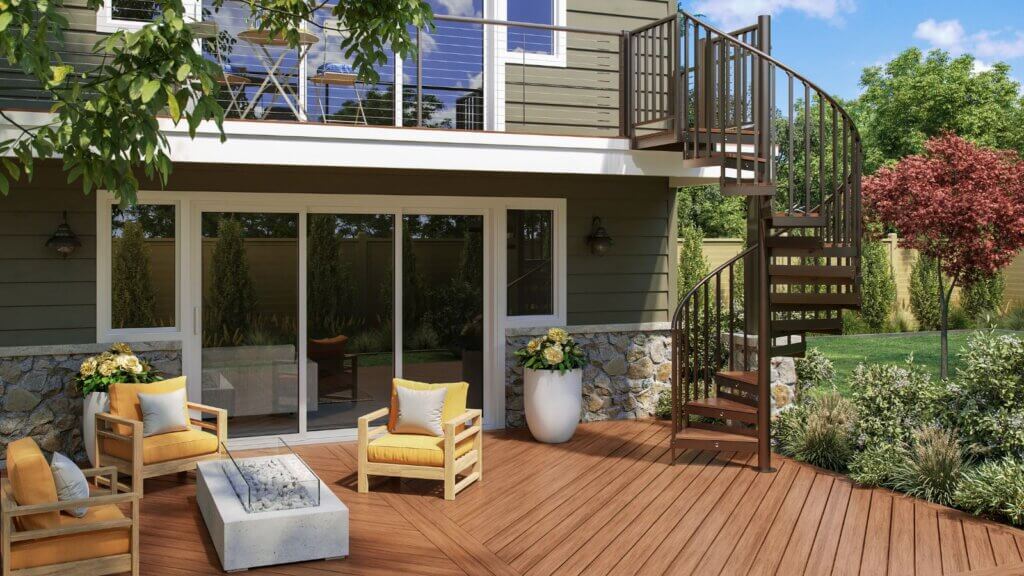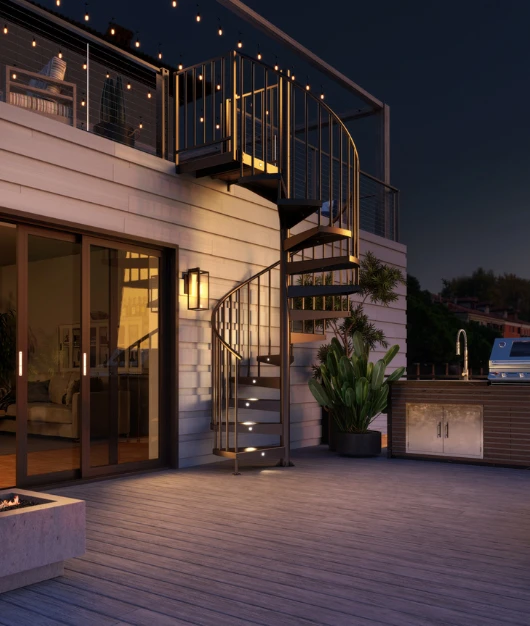
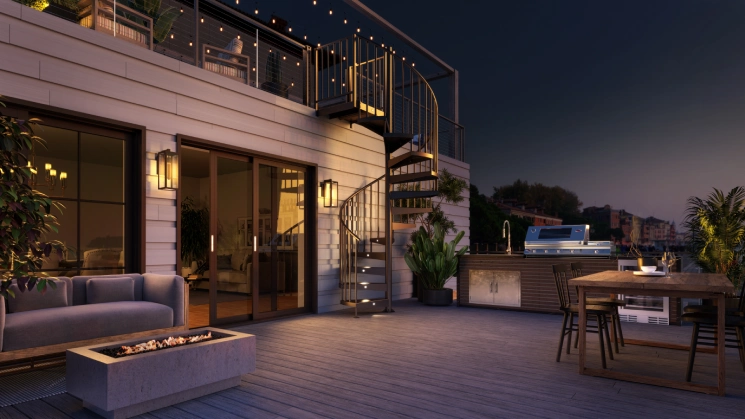

An outdoor spiral stair may look right on day one, but its long-term performance depends on what happens after rain, salty air, strong sun, and winter weather reach it. Choosing outdoor spiral staircase materials starts with those conditions, then moves to color and style. The decision also has two parts: the metal frame and finish, and the surface you walk on. Here is how to compare steel, galvanizing, aluminum, composite treads, and real wood without treating them as interchangeable options.
Outdoor Spiral Stair Materials at a Glance
- Begin with exposure: compare galvanized steel and aluminum for exposed or coastal sites.
- Check coated steel carefully: shelter does not establish exterior finish coverage.
- Separate frame and treads: composite is a walking surface on a supporting structure.
- Plan ongoing care: low maintenance still includes cleaning and inspection.
- Get the wood look outdoors: consider the Trex® Spiral Stairs Collection rather than assuming indoor wood parts suit a porch.
Why Material Matters More Than Style Outdoors
Exposure means the conditions reaching the stair: rain, humidity, salt deposits, sunlight, pool splash, and snow. A roof reduces direct rainfall but does not eliminate moisture, wind-driven water, or salt. Evaluate the actual site rather than relying on a covered-versus-uncovered label.
Compare corrosion protection, complete-stair weight, cleaning access, finish repairs, and tread drainage. Also check the supporting deck, roof, or foundation: a material choice does not establish structural capacity.
Paragon has designed and manufactured stairs since 1947. Its SMA-certified designers and in-house design and engineering teams can help compare configurations for the project’s conditions. Share site photos and describe the exposure before selecting a finish.
What Is the Best Material for an Outdoor Spiral Staircase?
For exposed or coastal outdoor spiral stairs, galvanized steel and aluminum are useful starting points. Select the complete system for salt, moisture, support conditions, and maintenance needs. Powder-coated steel needs product-specific exterior review, while composite treads provide a separate wood-look walking surface. A sheltered location does not automatically make indoor materials suitable.
Powder-coated steel
Powder coating is a cured protective finish over the underlying steel. It adds color, but damaged areas can expose steel to corrosion. Paragon’s warranty details exclude standard exterior steel primed or powder-coated finish coverage and contain model-specific conditions. Confirm the exact system rather than making it the default for a covered porch.
Galvanized steel
Hot-dip galvanizing coats steel with zinc, providing a barrier and sacrificial protection for the steel beneath. For a colored galvanized system, ask whether an approved additional coating is available and how that finish must be maintained.
Aluminum
Aluminum spiral stairs offer a lighter material option and do not develop iron rust. A natural oxide layer helps protect aluminum, but salt, trapped moisture, and finish damage still deserve attention. Compare actual assembly weights and connection loads for rooftop or deck projects.
Composite treads and real wood
Trex composite treads sit on a metal structure; they do not replace the frame. They provide a wood-look surface without seasonal wood painting, staining, or sealing. Real wood requires separate suitability review, and Paragon’s warranty excludes wood stairs and parts used outdoors.
Outdoor Spiral Staircase Material Comparison
Compare the function of each option before comparing finished quotes.
| Material or component | Where to consider it | Protection and care | Weight / specification note |
|---|---|---|---|
| Powder-coated steel | Only after exterior product and finish review. | Inspect coatings and repair exposed steel as specified. | Steel assembly; verify exterior warranty terms. |
| Galvanized steel | Exposed decks and moisture-prone sites. | Preserve zinc; rinse deposits and inspect. | Steel structure; confirm coating and connections. |
| Aluminum | Coastal, deck, or rooftop projects. | Clean deposits and check finish condition. | Lighter material; use actual assembly loads. |
| Trex composite treads | Wood-look exterior walking surfaces. | Product-specific cleaning; no seasonal wood refinishing. | Treads only; frame specified separately. |
| Real wood parts | Interior options; do not assume exterior suitability. | Finish and moisture requirements vary. | Outdoor use excluded by Paragon’s wood warranty. |
Compare like-for-like height, diameter, railing, treads, finish, and freight. Those choices can change the price enough that a universal material-only price tier is misleading.
How Does Climate Change Your Material Choice?
Covered porches and sheltered decks
Start with exterior suitability even under a roof. Ask how humidity, wind-driven rain, and cleaning runoff affect the selected frame and finish. Color preference comes after that review.
Coastal and salt-air sites
Compare galvanized steel and aluminum, including hardware, sheltered joints, and cleaning access. Neither is immune to corrosion in every condition. Describe actual salt exposure instead of assuming a fixed distance from the ocean guarantees performance.
Poolside, rainy, and snowy settings
Discuss pool chemicals, drainage, snow removal, and compatible deicers. Tread openings can help water pass through, but no tread eliminates ice or slippery deposits. Confirm the full assembly’s care requirements.
Rooftops and wildfire-regulated locations
For rooftops, review loads, anchors, waterproofing, and wind conditions with the project professional. In wildfire-regulated areas, verify the required tread and assembly performance with the building department. A metal frame alone does not establish compliance; California’s OSFM materials-listing resources can support product research where applicable.
What Is the Difference in Maintenance by Material?
For coated steel, inspect chips and use the specified repair system. A generic paint pen is not automatically the correct repair for every finish. For galvanized parts, avoid grinding or scouring away protective zinc.
White deposits on galvanized steel may be wet storage stain. Light staining can be mainly cosmetic, but prolonged wet conditions can consume zinc. The American Galvanizers Association recommends addressing retained moisture and poor airflow; heavy or recurring deposits need assessment.
For aluminum, rinse deposits and inspect coatings and accessible connections. For Trex, follow the identified board line’s care instructions. Routine soap-and-water cleaning does not mean every stain requires the same treatment. Use our outdoor stair cleaning guide to plan care for the treads and frame separately.
Choosing Treads: Grate, Composite, or Solid?
Frame material and tread surface are distinct decisions, but available combinations depend on the selected system. Review Paragon’s spiral stair tread types and confirm current exterior options with your designer.
Open-grate treads allow precipitation through their openings. Consider the space below, footwear, cleaning, and snow management; drainage openings do not establish a wind rating or make a roof connection adequate.
Composite treads coordinate with many decks and offer a solid wood-look surface. Direct sun can make composite hot, especially darker colors; do not assume every available tread has the latest heat-mitigating technology.
Solid metal treads offer another surface choice. Ask about texture, runoff, and compatibility with the frame and finish. Traction depends on condition and maintenance as well as the tread pattern.
Frequently Asked Questions
Can a steel spiral staircase be used outdoors?
Yes, with a system and protective finish suited to the exposure. Galvanized steel is an outdoor option. Do not assume ordinary powder-coated steel has exterior finish coverage; check the selected model’s requirements, maintenance instructions, and warranty.
Is aluminum or galvanized steel better for coastal stairs?
Both are options to compare. Aluminum is a lighter material that does not develop iron rust; galvanized steel uses protective zinc. Select the complete system for salt exposure, connections, cleaning access, and maintenance rather than assuming either is corrosion-proof.
Do composite spiral stair treads require sealing or staining?
Trex composite treads do not need seasonal wood sealing, staining, or painting. They still need product-specific cleaning, and the supporting metal frame needs separate care. Confirm the applicable tread and frame warranty terms for the selected configuration.
Can you use wood treads on an outdoor spiral staircase?
Do not treat indoor wood parts as exterior-ready because the location is sheltered. Paragon’s warranty excludes wood stairs and parts used outdoors. Discuss an approved composite or metal tread configuration for the outdoor project.
Match Your Stair to Your Site
Share your climate, site photos, and preferred care routine with a Paragon SMA-certified designer to compare outdoor spiral staircase options. Start with Build Your Stair or schedule a free consultation to review the frame, finish, and treads together.