

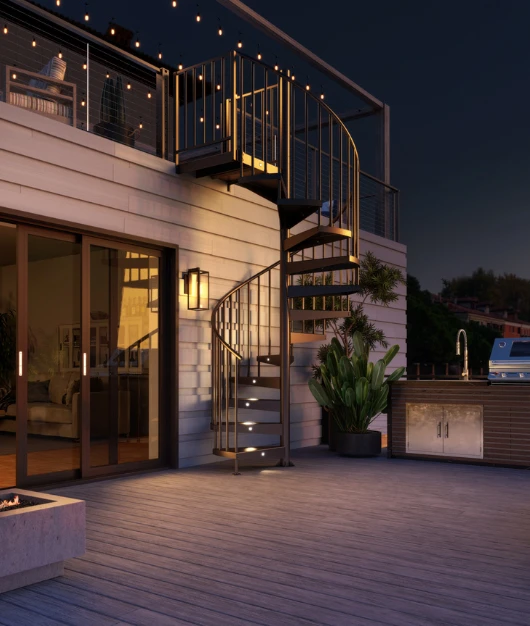
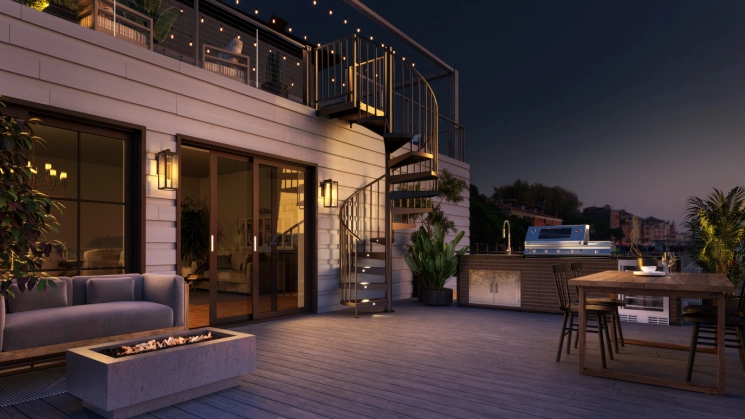
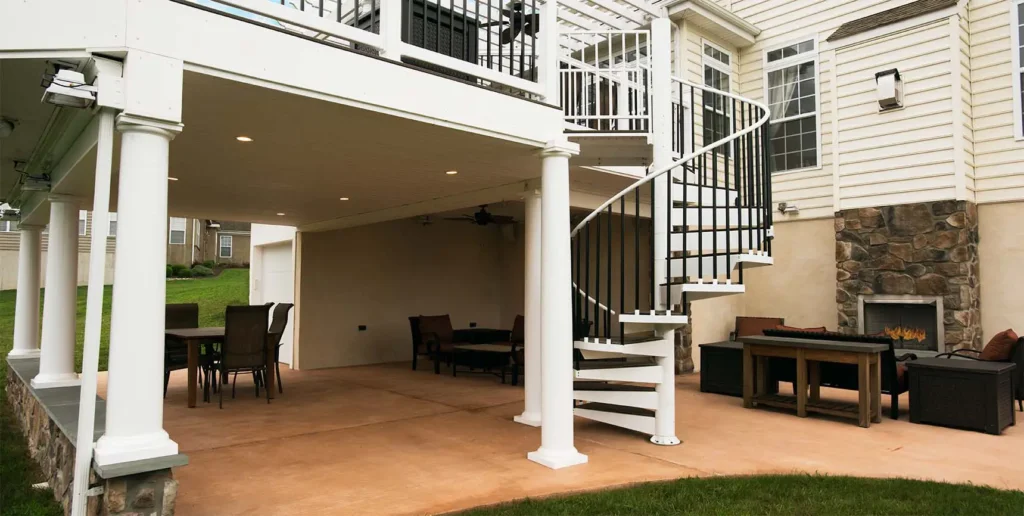
Outdoor stairs need to do more than connect levels. They must perform reliably through changing weather, frequent use, and years of exposure to the elements. That is why material choice, design details, and installation planning matter so much when selecting exterior access for a deck or patio.
Outdoor spiral stairs have become a popular solution for homeowners who want compact access without sacrificing durability or visual appeal. This guide explores how spiral stairs perform outdoors, what makes them safe for everyday use, and how they adapt to different climates and design styles.
Key Takeaways
- Outdoor conditions matter: Rain, snow, heat, and humidity all affect stair performance.
- Spiral stairs are naturally compact: A smaller footprint helps preserve deck and yard space.
- Material choice impacts durability: Aluminum and coated steel are common for exterior use.
- Safety features are built in: Continuous handrails and defined tread geometry support everyday use.
- Style is flexible: Outdoor spiral stairs can complement both modern and traditional designs.
What Outdoor Stairs Are Up Against
Exterior stairs experience far more stress than interior staircases. Weather exposure, temperature changes, and surface moisture all play a role in how materials age and perform.
Outdoor stairs must handle:
- Rain, snow, and humidity
- Freeze and thaw cycles
- UV exposure from direct sunlight
- Dirt, debris, and seasonal buildup
Because deck spiral stairs are often used daily, reliability is essential. A well-designed spiral stair is built to handle these conditions without constant maintenance.
Download the Outdoor Spiral Stair Planning Checklist
Use this checklist to make sure you’re considering materials, climate exposure, safety features, and installation details before choosing an outdoor spiral stair.
Durability Across Different Climates
One of the biggest advantages of spiral stairs outdoors is how adaptable they are to different environments. When built with exterior-ready materials, they perform well in a wide range of climates.
Cold and Snowy Climates
In colder regions, moisture and freezing temperatures are the biggest concerns. Materials that absorb water can crack, warp, or deteriorate over time.
Aluminum and properly coated steel resist these issues by:
- Not absorbing moisture
- Maintaining structural stability in freezing conditions
- Supporting finishes that protect against corrosion
Wet and Humid Climates
High humidity and frequent rain can accelerate rust and decay. Weatherproof outdoor stairs rely on materials that resist corrosion and finishes that seal surfaces effectively.
Aluminum spiral stairs are often favored in these environments because aluminum does not rust and performs consistently in damp conditions.
Hot and Sunny Climates
UV exposure can fade finishes and weaken materials over time. Powder-coated finishes help protect outdoor spiral stairs from sun damage while maintaining color consistency.
Safety Features Built into Spiral Stair Design
Safety is a top concern for any exterior stair. Spiral stairs are designed with several features that support everyday use when properly specified and installed.
Common safety elements include:
- Continuous handrails for consistent support
- Defined tread spacing for predictable footing
- Guardrails that help prevent falls
- Slip-resistant tread surfaces or covers
When sized correctly, spiral stairs provide a comfortable walking rhythm that many homeowners find easy to navigate.
Material Options for Outdoor Spiral Stairs
Material choice plays a major role in durability, maintenance, and appearance.
- Aluminum: Lightweight, corrosion resistant, and low maintenance. A popular choice for residential decks.
- Galvanized steel: Strong and durable, often used in utility or high-traffic applications.
- Powder-coated finishes: Add protection and help maintain appearance over time.
Aluminum spiral stairs are especially common for decks because they balance strength, weather resistance, and ease of installation.
Compare Outdoor Stair Materials
Explore material options designed for exterior performance and long-term durability.


