

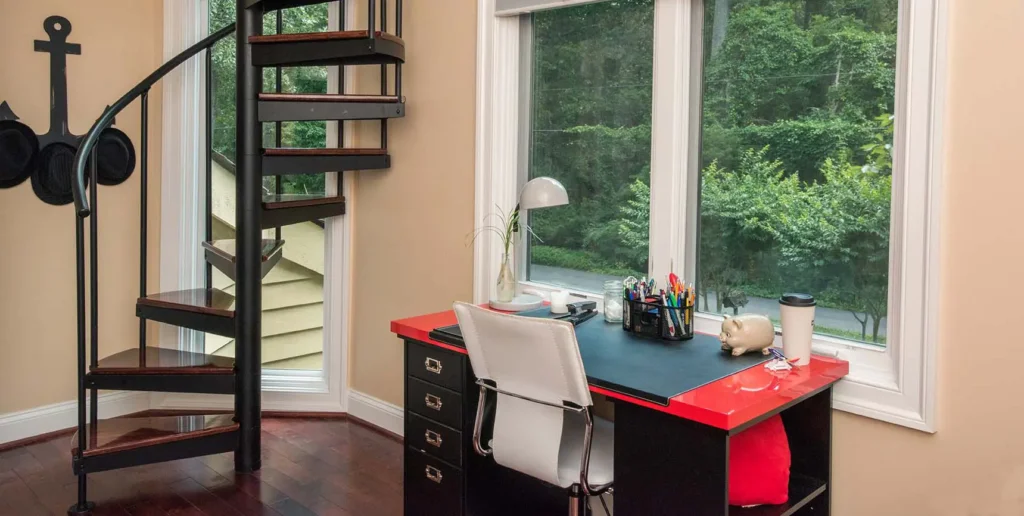
Spiral stairs are often chosen for their compact footprint and visual appeal, but they are not a one-size-fits-all solution. Certain layouts and project types naturally lend themselves to spiral stairs more than others.
Understanding where spiral stairs make the most sense helps homeowners decide if this style is a smart fit for their space.
Key Takeaways
- Spiral stairs work best in space-conscious layouts.
- They are commonly used as secondary access points.
- Outdoor applications benefit from compact design.
- Placement plays a major role in usability.
- They shine in projects where preserving space matters.
See Where a Spiral Stair Saves the Most Space
This footprint comparison shows when spiral stairs outperform traditional staircases and when a straight run may be the better option.
Decks With Limited Space
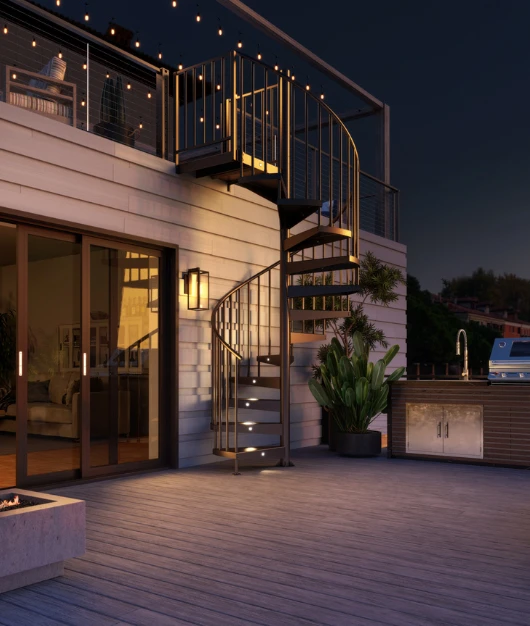
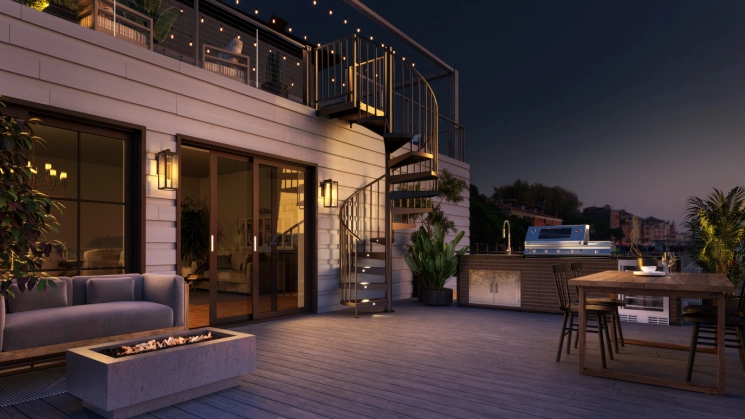
One of the most common places spiral stairs make sense is on decks. Traditional straight stairs require a long run that can take up valuable deck and yard space.
Deck spiral stairs offer a compact alternative that:
- Preserves usable deck area
- Keeps yard space open
- Creates a clean transition to the ground
This makes them especially appealing for small or multi-level decks.
Multi-Level Outdoor Spaces
Spiral stairs are well-suited for connecting multiple outdoor levels. Whether it’s a raised deck, patio, or garden level, a spiral stair allows vertical access without dominating the space.
Outdoor spiral stairs often work well in:
- Tiered decks
- Walk-out basement connections
- Elevated patios
Their compact footprint helps maintain openness in outdoor layouts.
Secondary Interior Access
Inside the home, spiral stairs are often used as secondary staircases rather than the primary staircase.
Common interior uses include:
- Loft access
- Bonus rooms
- Home offices
- Basement access
In these situations, a spiral stair provides access without taking over the floor plan.
Small Homes and Compact Layouts
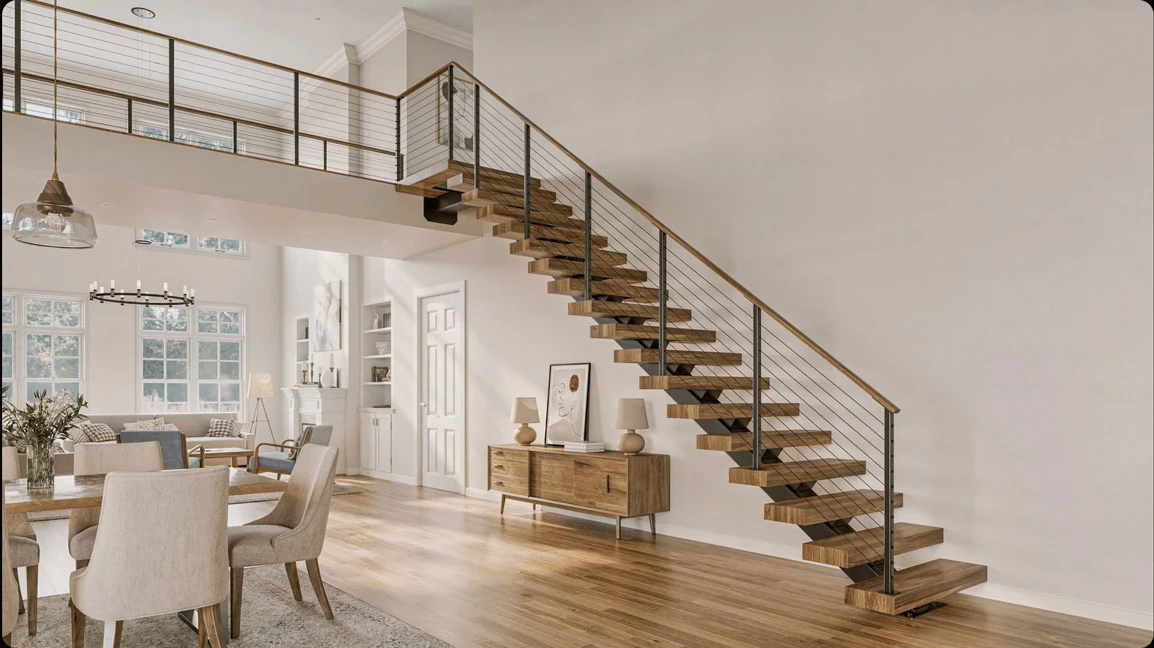
Homes with limited square footage often benefit from spiral stairs. Traditional staircases can consume a surprising amount of space, while spiral stairs keep the footprint tight.
Spiral stairs are often chosen when:
- Every square foot matters
- Open layouts are a priority
- A traditional stair feels oversized
Garages and Workshops
Garages, workshops, and utility spaces are another area where spiral stairs make sense. They provide vertical access while keeping floor space available for storage, vehicles, or work areas.
These spaces often prioritize:
- Function over form
- Compact access solutions
Spiral stairs fit well in these practical environments.
Projects Focused on Visual Impact
Beyond functionality, spiral stairs can act as a design feature. Their curved shape naturally draws attention and adds visual interest.
They are often used in:
- Modern interiors
- Architectural outdoor spaces
- Design-forward renovations
In these cases, the stair becomes part of the overall aesthetic.
When a Spiral Stair May Not Be the Best Fit
While spiral stairs excel in many situations, they may not be ideal for every project.
Homeowners may reconsider a spiral stair when:
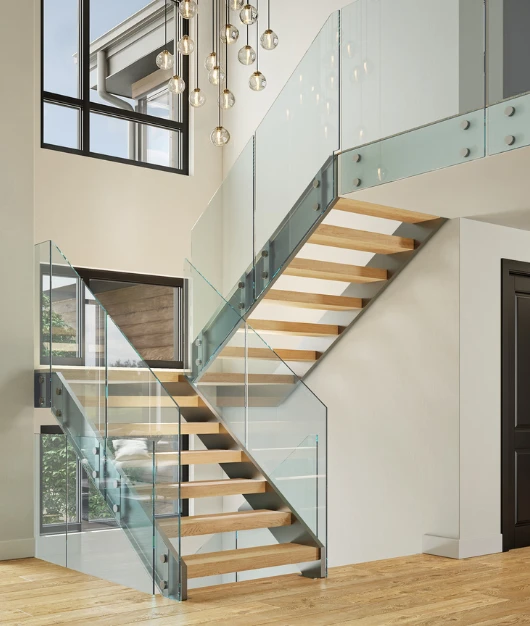
- The stair will serve as the main daily staircase
- Large furniture needs frequent movement between levels
Understanding these limitations helps set realistic expectations.
Matching the Stair to the Space
Spiral stairs work best when chosen intentionally. Evaluating layout, usage, and priorities helps determine whether a spiral stair enhances the space or complicates it.
Read More
See If a Spiral Stair Fits Your Space
Understanding where spiral stairs shine helps you decide if they are the right solution for your project.


