


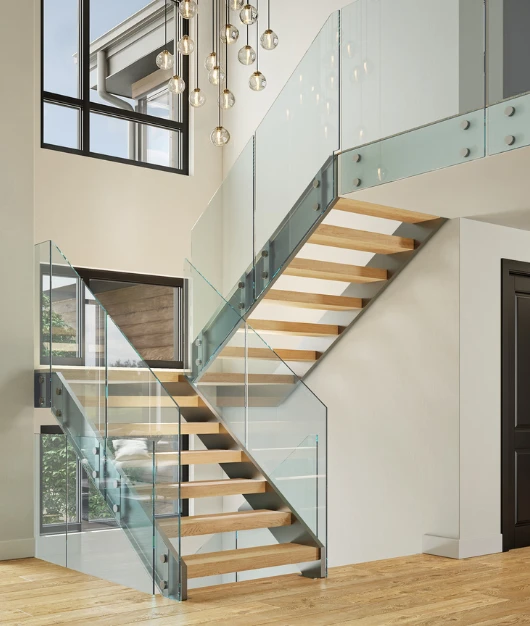

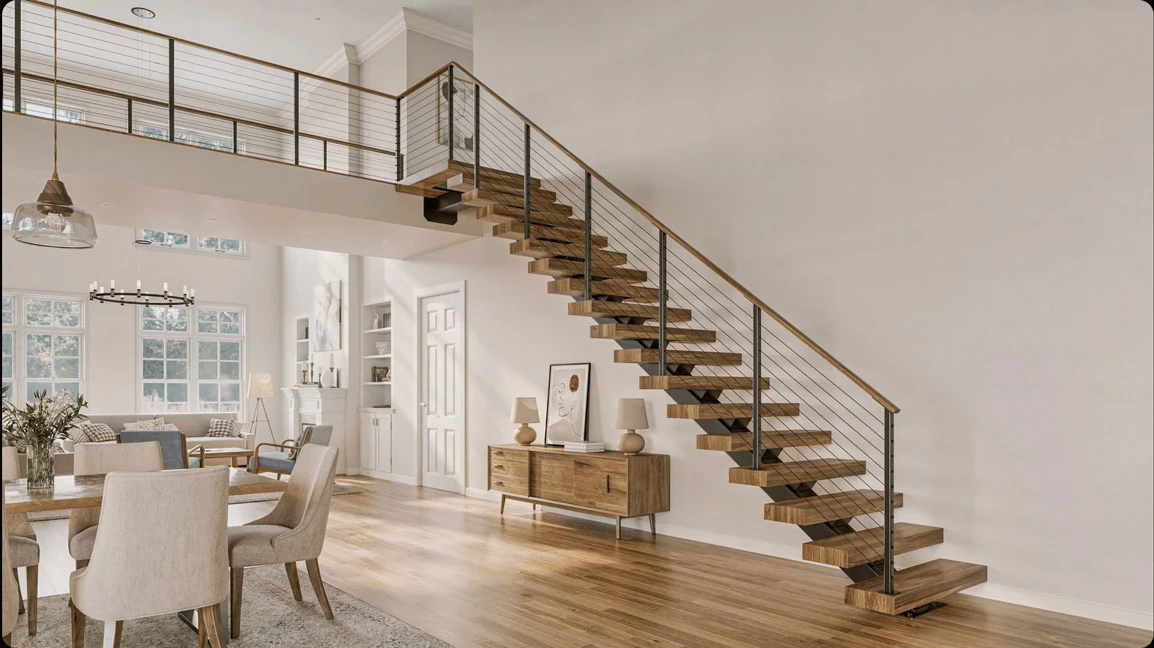

Spiral stairs are often chosen for their compact footprint and visual appeal, but successful projects start with thoughtful planning. Before selecting a stair, it helps to step back and consider how the stair will fit into your space, lifestyle, and long-term plans.
This guide outlines key considerations to think through before purchasing a spiral stair, helping you move forward with confidence.
Key Takeaways
- Early planning makes spiral stairs easier to integrate.
- Placement affects comfort and flow.
- Use and frequency matter as much as size.
- Indoor and outdoor needs differ.
- Thinking ahead helps avoid last-minute changes.
Where Will the Stair Go?
One of the first planning questions is placement. Spiral stairs can be positioned in many locations, but where the stair sits affects how it feels and how well it works.
Homeowners often consider:
- Deck edges versus center placement
- Interior corners versus open areas
- How the stair connects to walkways or doors
A well-placed spiral stair feels intentional rather than added on later.
How Will the Stair Be Used?
Usage plays a major role in planning. A stair used occasionally may prioritize compactness, while a stair used daily may benefit from more generous proportions and thoughtful placement.
Think about:
- Primary versus secondary access
- Who will use the stair
- How often it will be used
Matching the stair to its role helps balance comfort and space savings.
Indoor or Outdoor Application
Planning considerations differ depending on whether the stair is indoors or outdoors.
Indoor spiral stairs often focus on:
- Integration with interior finishes
- Visual impact within the room
Outdoor spiral stairs often focus on:
- Preserving deck and yard space
- Durability in changing weather
Outdoor spiral stairs are commonly chosen when space efficiency is a top priority.
Available Space and Layout
Understanding the available space helps confirm whether a spiral stair fits comfortably. Early planning focuses on general footprint and height rather than exact measurements.
Consider:
- Open floor or deck area
- Clearance around the stair
- Overhead space
These factors influence how the stair feels once installed.
How the Stair Affects Flow
Spiral stairs naturally draw attention, so it’s important to think about how they interact with movement through the space.
Good planning accounts for:
- Natural walking paths
- Furniture placement
- Views and sightlines
A spiral stair should support flow, not interrupt it.
Long-Term Considerations
Thinking ahead helps ensure the stair continues to work well over time.
Homeowners often consider:
- How needs may change
- Future renovations
- Maintenance expectations
Planning with the future in mind can prevent the need for changes later.
When to Start the Planning Process
Spiral stair planning works best when it happens early, especially for decks, renovations, or new builds. Early consideration allows the stair to be part of the overall design rather than a last-minute solution.
Moving From Planning to Selection
Once placement, use, and layout are clear, homeowners are better positioned to explore specific stair options. This step-by-step approach makes the selection process smoother and more confident.
Read More
Start Planning Your Stair
A little planning upfront goes a long way toward choosing a spiral stair that fits your space and your goals.


