

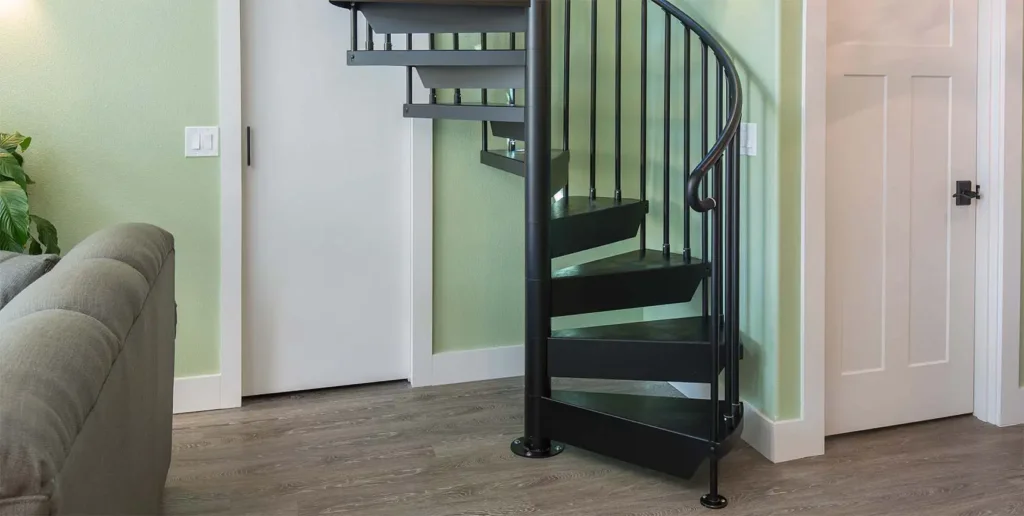
When choosing a staircase, space is often one of the biggest deciding factors. Stairs do more than connect levels. They influence layout, circulation, and how usable a space feels day to day.
Comparing spiral stairs and traditional straight staircases can help homeowners understand which option better supports their layout, especially when square footage is limited.
Key Takeaways
- Spiral stairs use significantly less floor space.
- Traditional stairs require more horizontal run.
- Layout and traffic patterns matter as much as size.
- Spiral stairs work best as secondary access.
- The right choice depends on how the space is used.
How Traditional Staircases Use Space
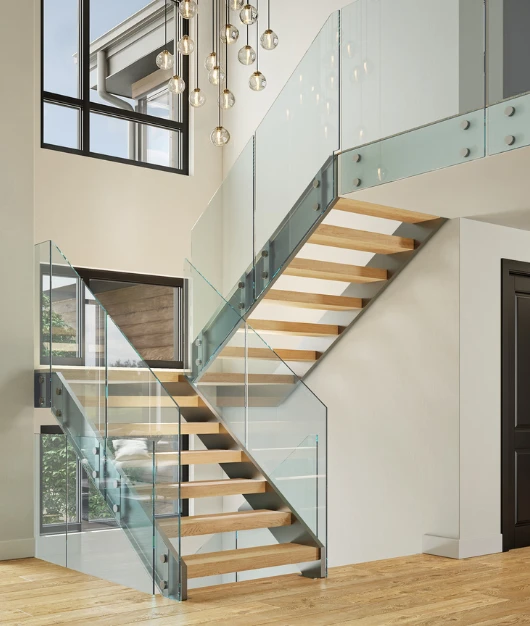
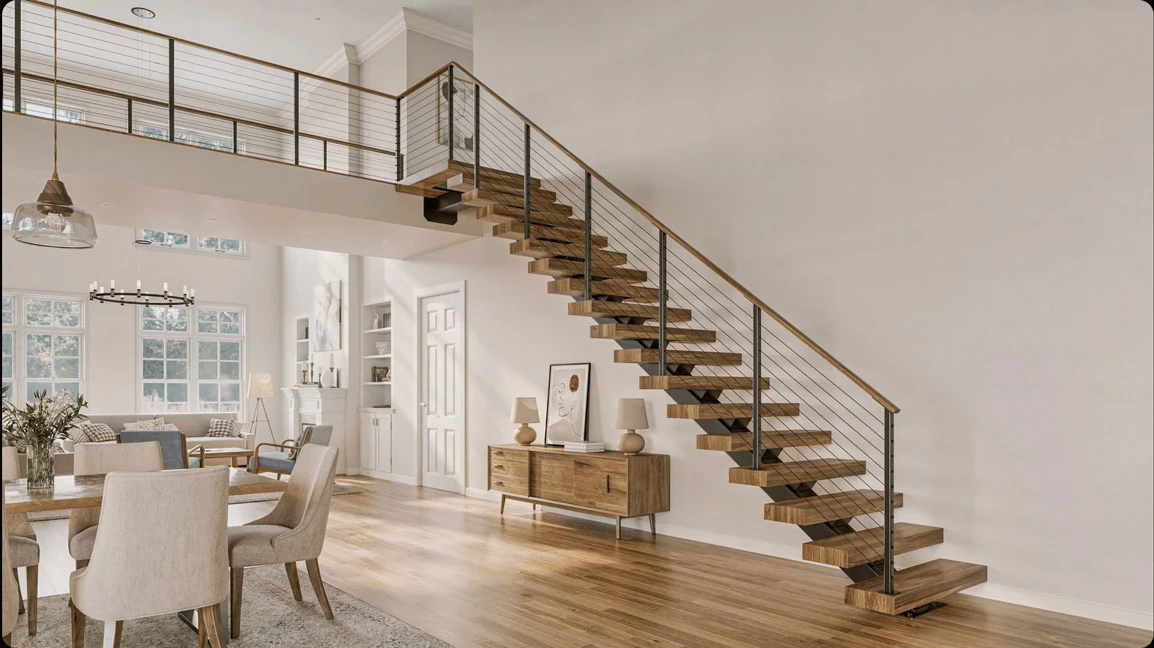
Traditional staircases rely on horizontal run. Each step extends outward, and most designs require a landing or transition area at the top or bottom.
Because of this, straight stairs often:
- Occupy a long footprint
- Limit furniture placement
- Divide rooms visually
- Reduce layout flexibility
In large homes, this footprint may not be an issue. In smaller layouts, however, it can quickly consume valuable space.
How Spiral Staircases Use Space
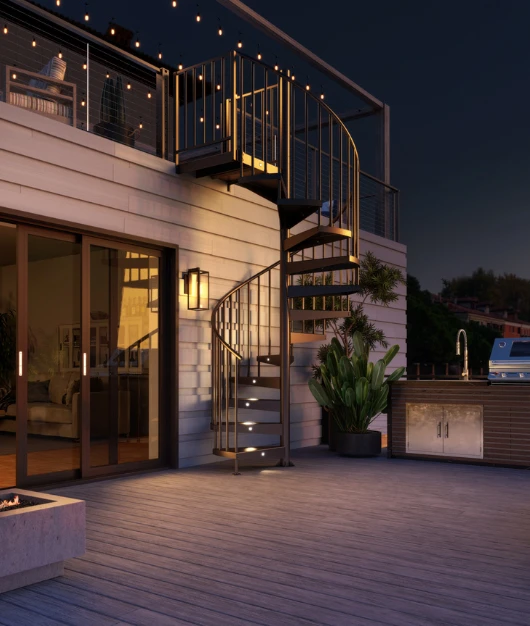
Spiral stairs organize movement vertically instead of horizontally. Steps wrap around a central column, keeping the stair within a defined circular footprint.
This design allows spiral stairs to:
- Use less floor area
- Fit into corners or tight spaces
- Preserve open areas for furniture or circulation
In compact homes and decks, this difference often has a noticeable impact on usability.
Footprint Comparison: Spiral vs Traditional
The biggest distinction between spiral and straight stairs is how much space they require on the floor.
In general:
- Traditional stairs spread across the room or deck
- Spiral stairs stay contained within a small footprint
This makes spiral stairs especially appealing where every square foot needs to work harder.
Impact on Layout and Furniture
Stair placement directly affects how a space can be arranged. Large stair runs often block walls, edges, or corners that could otherwise support seating, storage, or decor.
Spiral stairs help preserve:
- Deck seating zones
- Open living areas
- Clear walking paths
This flexibility makes them a strong option in multi-use spaces.
Outdoor and Deck Applications
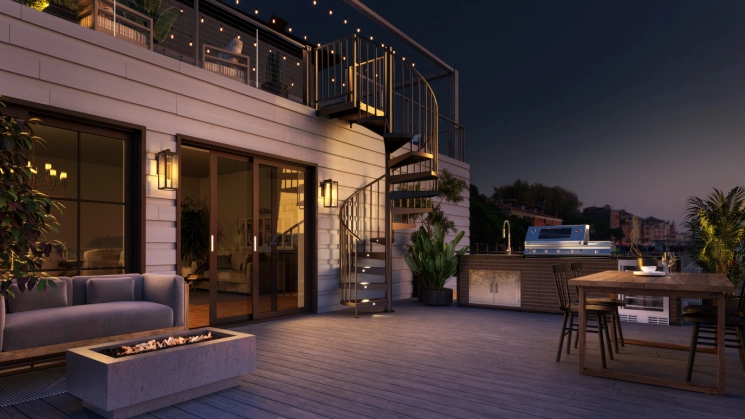
On decks, space efficiency is often even more critical. Long stair runs can reduce usable deck surface and extend into the yard.
Deck spiral stairs help by:
- Preserving deck edge space
- Minimizing yard impact
- Maintaining open layouts
This makes them a popular choice for raised decks and compact outdoor spaces.
Choosing Based on Space and Use
Spiral stairs clearly save space, but the best choice depends on how that space is used. Weighing footprint, circulation, and daily needs leads to better outcomes.
Read More
Find the Right Stair for Your Space
Understanding how stairs affect layout helps you choose an option that fits both your space and how you plan to use it.


