



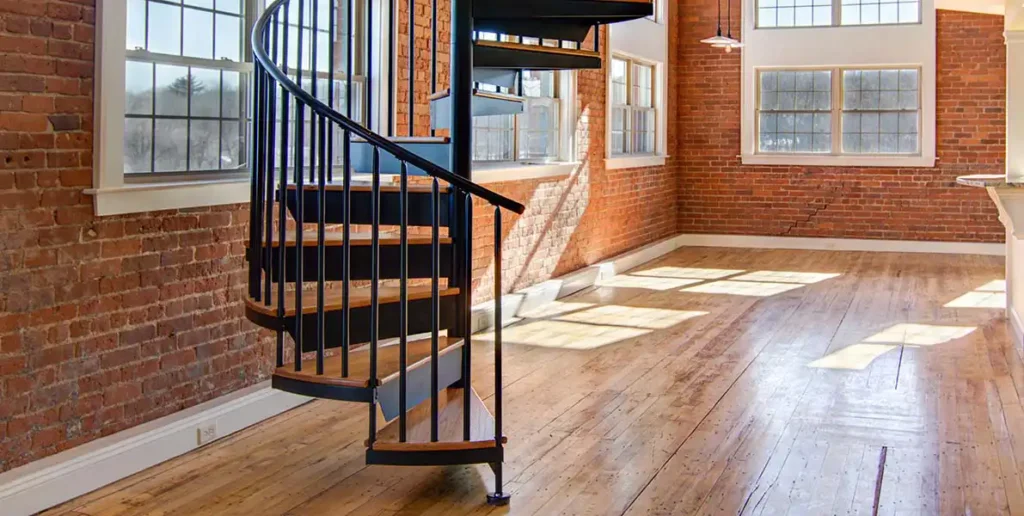
Spiral stairs are a popular alternative to traditional staircases, especially in homes where space, layout, or outdoor access is a priority. While they offer several advantages, they are not the right solution for every project.
Understanding the pros and cons of spiral stairs can help you decide whether this type of stair fits your space, lifestyle, and long-term needs.
Key Takeaways
- Spiral stairs save space compared to straight stairs.
- They work well as secondary or supplemental access.
- Compact footprints preserve layout flexibility.
- Spiral stairs are not ideal for every situation.
- Use case and placement matter more than aesthetics alone.
Download the Spiral Stair Buyer’s Guide
Get a clear, step-by-step guide to choosing the right spiral stair—covering sizing, diameter, materials, finishes, placement, and what to consider before you buy.
The Pros of Spiral Stairs
Space-Saving Design
One of the biggest advantages of spiral stairs is their compact footprint. Instead of extending across a room or deck, spiral stairs stack steps vertically around a central column.
This design helps:
- Preserve usable floor or deck space
- Keep layouts open
- Reduce the impact of stairs on surrounding areas
For smaller homes, decks, and outdoor spaces, this space efficiency is often the primary reason homeowners choose a spiral stair.
Flexible Placement Options
Because they require less horizontal space, spiral stairs can be placed in areas where straight stairs may not fit easily.
Common placements include:
- Deck corners
- Lofts and bonus rooms
- Walk-out basement access
- Garages and workshops
This flexibility allows homeowners to preserve layout options elsewhere in the space.
Visual Appeal
Spiral stairs naturally stand out due to their curved shape and vertical presence. When designed intentionally, they can function as a focal point rather than a purely functional element.
Many homeowners appreciate that spiral stairs:
- Add architectural interest
- Break up rigid layouts
- Feel more intentional than oversized straight stairs
Effective for Outdoor Access
Outdoor spiral stairs are commonly used to connect decks, patios, and yards. Their compact footprint minimizes impact on both the deck surface and the ground below.
For raised decks in smaller yards, spiral stairs often provide a cleaner transition between levels.
Defined Circulation
Spiral stairs create a clear, contained path between levels. This can help control traffic flow and reduce interference with seating or activity zones.
As a result, they often work well as secondary or supplemental access points.
The Cons of Spiral Stairs
Limited for Moving Large Items
The curved design of spiral stairs can make moving large furniture or bulky items more challenging.
Homeowners should consider:
- How often large items need to be moved
- Whether alternate access points exist
Learning Curve for Some Users
Spiral stairs may feel unfamiliar at first, especially for guests or those accustomed to traditional staircases. Most people adjust quickly, but comfort levels can vary.
Handrails and thoughtful placement help improve usability.
When Spiral Stairs Make the Most Sense
Spiral stairs tend to work best in situations where compact design and space efficiency matter more than wide access.
They are often a strong choice for:
- Deck-to-yard connections
- Lofts and secondary levels
- Garages or workshops
- Backyard studios or accessory structures
Making the Right Choice
Like any design decision, choosing a spiral stair comes down to understanding how the space will be used. Weighing the pros and cons early helps avoid layout compromises later.
Read More
Explore Spiral Stair Options
Understanding the tradeoffs helps you choose a stair that fits your space and how you plan to use it.


