

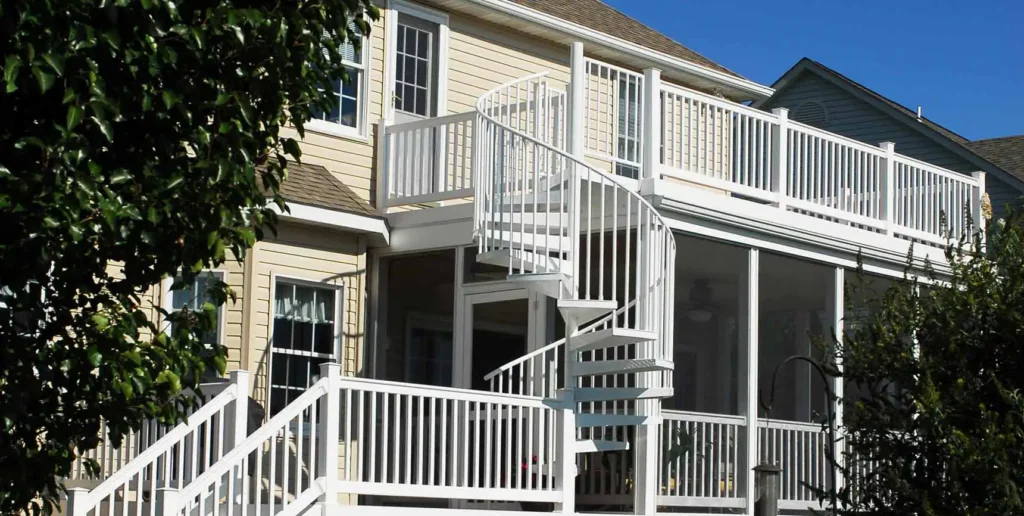
Decks are meant to extend living space outdoors, but poor design choices can quickly reduce how usable that space feels. One of the most common sources of wasted square footage is stair placement and stair design.
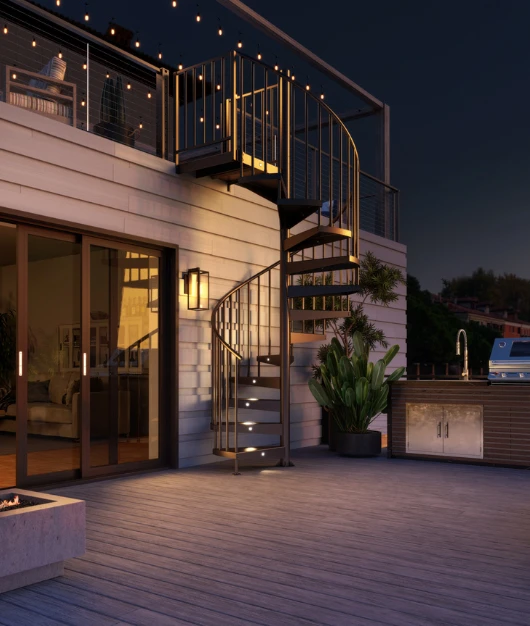
Understanding where decks lose space helps homeowners plan layouts that feel open, intentional, and easy to use. In many cases, deck spiral stairs can help solve these issues without sacrificing access.
Key Takeaways
- Stairs often consume more deck space than expected.
- Poor stair placement disrupts layout and flow.
- Straight stairs can block furniture zones.
- Compact stair designs preserve usable space.
- Intentional planning avoids costly redesigns.
Have Questions About Spiral Stairs?
This FAQ guide answers common concerns about comfort, safety, code requirements, maintenance, and everyday use—so you can avoid space-wasting mistakes with confidence.
Mistake 1: Oversized Straight Stairs
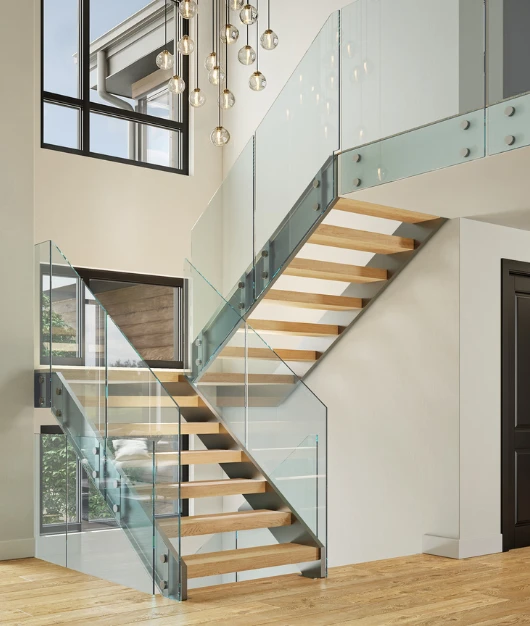
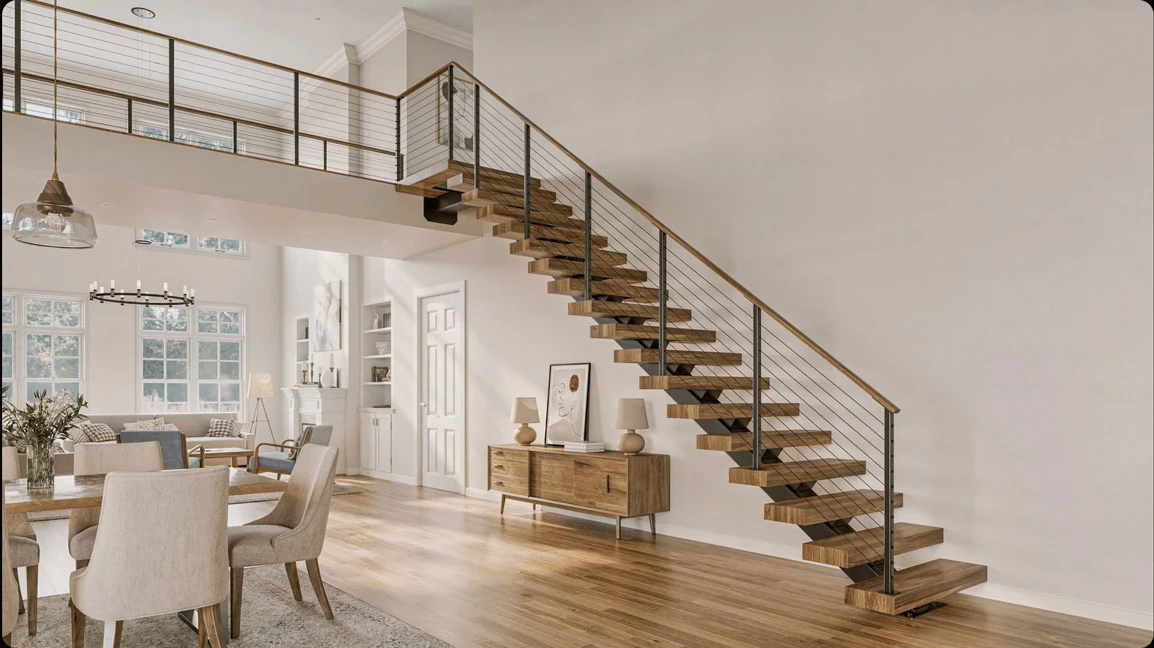
Straight-run stairs require horizontal space for each tread, landing, and transition. On smaller decks, this footprint can take up a significant portion of the usable area.
Common issues include:
- Reduced seating or dining space
- Blocked deck edges
- Limited layout flexibility
In compact layouts, the stair often becomes the dominant feature rather than a supporting element.
Mistake 2: Blocking Natural Walking Paths
Stairs should support how people move through a deck, not interrupt it. Poor placement can force people to walk around furniture or squeeze through narrow gaps.
When stairs block circulation:
- Traffic patterns feel awkward
- Congestion increases during gatherings
- Deck flow feels unplanned
Thoughtful stair placement keeps movement intuitive and unobstructed.
Mistake 3: Losing Valuable Deck Corners
Deck corners are often ideal locations for seating, planters, or visual balance. When straight stairs occupy these areas, the layout can feel constrained.
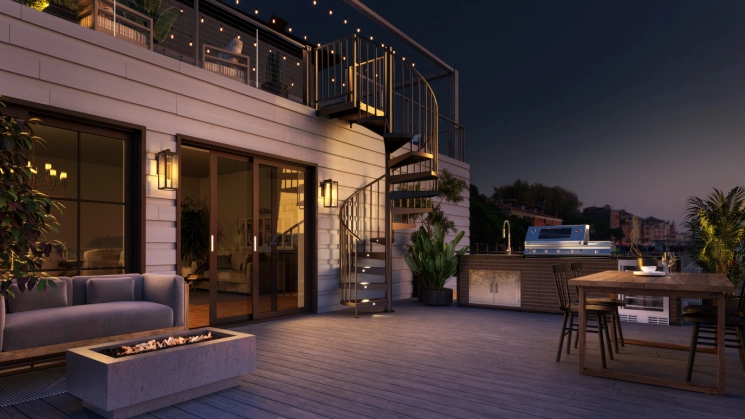
Spiral stairs work well in corners because they:
- Require less horizontal space
- Preserve deck edges
- Allow furniture to remain uninterrupted
Mistake 4: Forgetting About Yard Impact
Stair design affects more than the deck itself. Long stair runs extend into the yard and can limit landscaping, walkways, or play areas.
Yard-level issues include:
- Reduced usable lawn space
- Obstructed pathways
- Awkward transitions to patios or walkways
Compact stairs minimize ground-level impact and preserve yard functionality.
Mistake 5: Designing the Deck Around the Stairs
When stairs are treated as an afterthought, the deck layout often has to work around them. This leads to compromises that affect comfort and usability.
Better planning considers:
- Stair footprint early in the design
- How access supports daily use
- How furniture and circulation interact
Early planning allows stairs to support the deck rather than dictate it.
How Spiral Stairs Help Avoid These Mistakes
Outdoor spiral stairs address many common deck design issues by keeping access compact and predictable.
Benefits include:
- Smaller footprint on the deck surface
- Reduced impact on yard space
- Flexible placement options
- Clear, defined circulation
Because spiral stairs rely on vertical stacking rather than horizontal run, they integrate more easily into tight layouts.
When Straight Stairs Still Make Sense
Straight stairs are not always a mistake. In large decks with ample space, they can provide wide, comfortable access.
Straight stairs may be appropriate when:
- The deck has generous square footage
- The stair serves as the primary access point
- Moving large items is common
The key is choosing the stair that fits the space, not forcing a layout compromise.
Designing a Deck That Feels Open
Avoiding wasted space starts with understanding how stairs affect layout. Compact stair designs help preserve usable areas and support better flow.
Read More
Plan Your Deck With Space in Mind
Choosing the right stair design can help you make the most of every square foot.


