

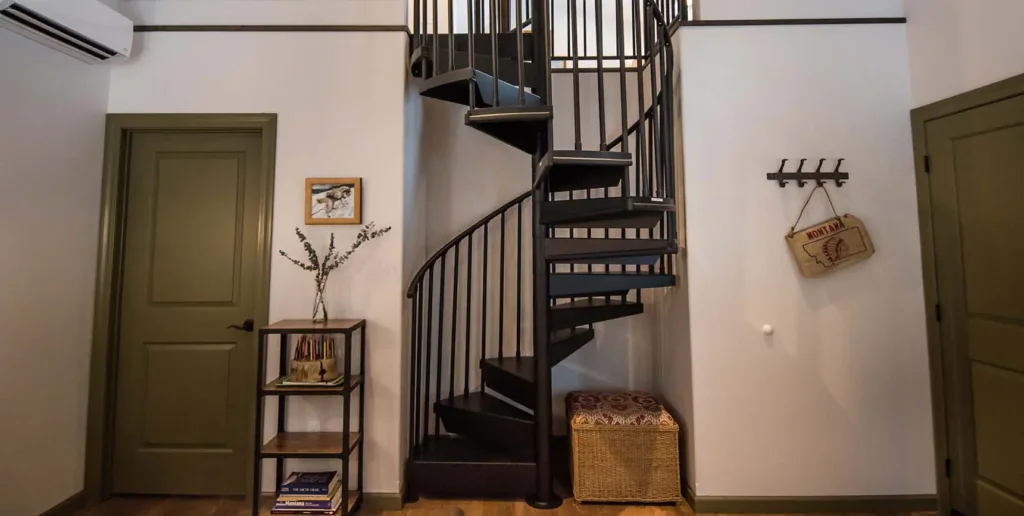
When planning stairs, most people focus on function first. But stairs do more than connect levels. They influence how a space feels, how people move through it, and how open or crowded a layout appears.
Spiral stairs approach circulation differently than traditional staircases. Their compact, vertical design can dramatically change the flow of a space, especially in homes where square footage and layout flexibility matter.
Key Takeaways
- Stairs influence how people move through a space.
- Compact stair designs reduce visual and physical clutter.
- Spiral stairs preserve open floor areas.
- Vertical circulation supports better layout flexibility.
- Intentional stair placement improves overall flow.
What “Flow” Really Means in Home Design
Flow describes how easily people move through a space and how natural that movement feels. Good flow allows rooms to feel connected without feeling crowded.
Poor stair placement can interrupt flow by:
- Blocking walking paths
- Creating visual barriers
- Forcing awkward furniture layouts
- Dividing spaces unintentionally
Because stairs occupy both floor and visual space, their design has an outsized impact on circulation.
How Traditional Stairs Affect Layout
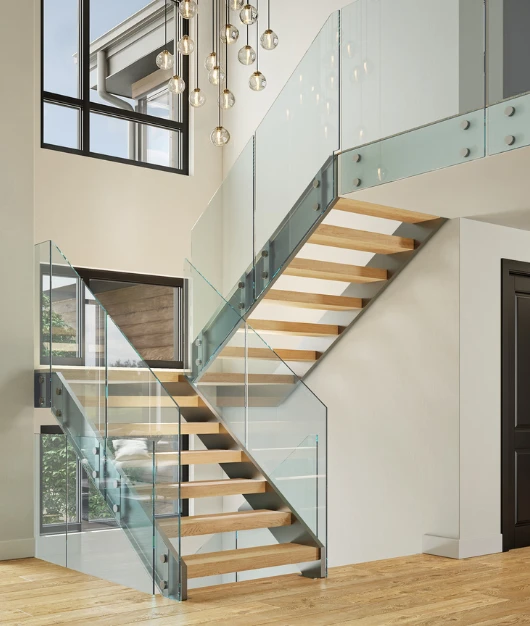
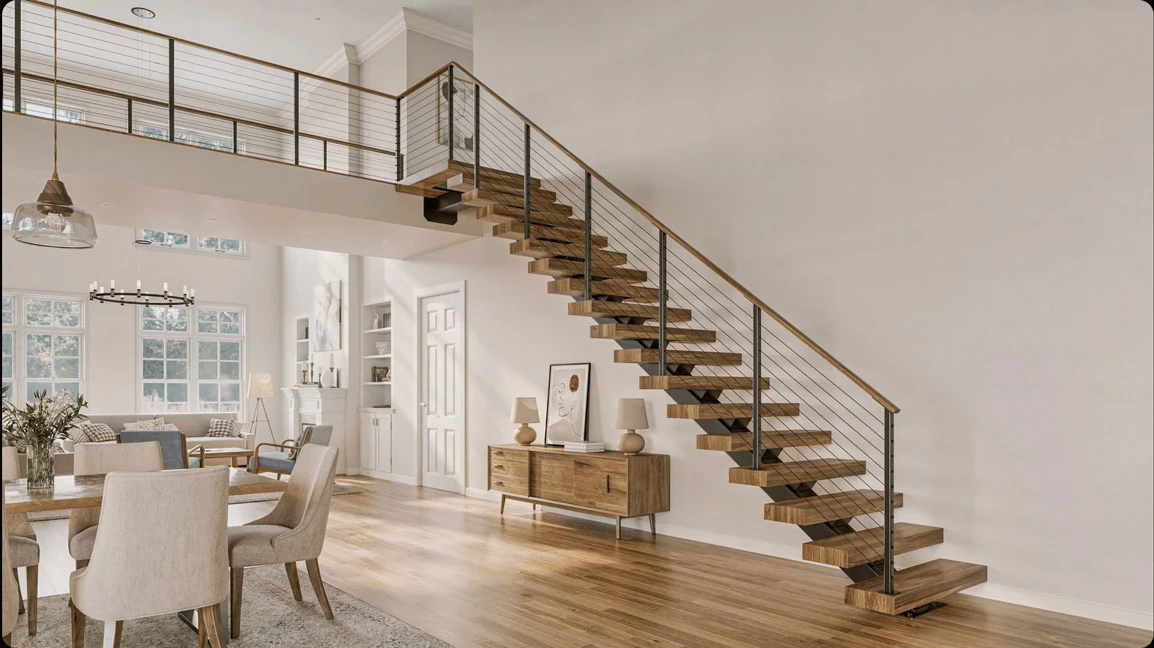
Traditional straight stairs rely on horizontal run. This means they extend outward into a room or deck, often consuming valuable space along walls or edges.
In many layouts, straight stairs:
- Limit furniture placement
- Reduce usable floor area
- Create long visual lines that divide spaces
While straight stairs work well in open plans with plenty of room, they can feel oversized in compact layouts.
Why Spiral Stairs Feel More Compact
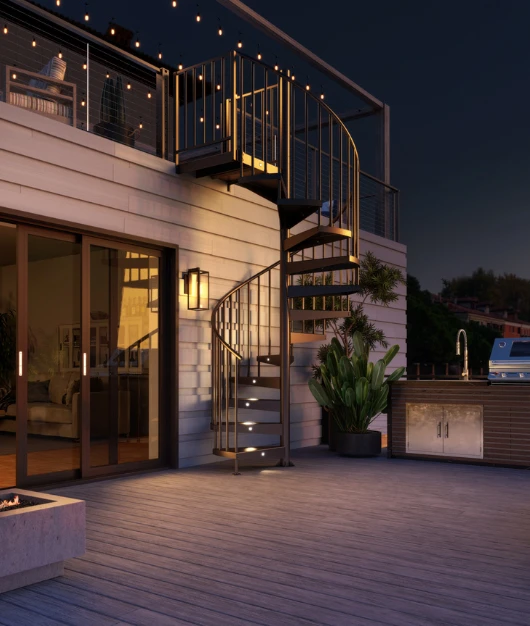
Spiral stairs organize movement vertically rather than horizontally. Instead of stretching across a space, they stack circulation within a defined footprint.
This design approach:
- Reduces the area dedicated to stairs
- Maintains open walking paths
- Allows furniture zones to remain intact
In smaller rooms or decks, this difference can significantly improve how the space feels and functions.
Download the Space-Saving Footprint Guide
See a clear top-down footprint comparison of spiral stairs vs. traditional stairs and understand how much open floor or deck space you can preserve.
Preserving Openness and Sightlines
Sightlines play a major role in how open a space feels. Large, linear elements can visually cut a room in half.
Spiral stairs help preserve sightlines by:
- Concentrating visual mass in one area
- Allowing views to pass around and through the stair
- Reducing long visual interruptions
This is especially noticeable in decks, lofts, and open-plan interiors.
Supporting Natural Movement Patterns
Good flow supports how people naturally move through a space. Spiral stairs often work well when circulation needs to stay predictable and contained.
Examples include:
- Deck-to-yard transitions
- Loft access in living spaces
- Secondary stair routes
By defining a clear entry and exit point, spiral stairs help movement feel intentional rather than improvised.
Making Multi-Use Spaces Easier to Arrange
Many modern spaces serve multiple purposes. Living areas may include work zones, seating, and circulation paths.
Compact stairs support multi-use layouts by:
- Reducing the footprint of circulation
- Allowing furniture to shift as needs change
- Keeping traffic away from activity zones
This flexibility is especially valuable in smaller homes or outdoor living areas.
Flow in Outdoor Spaces
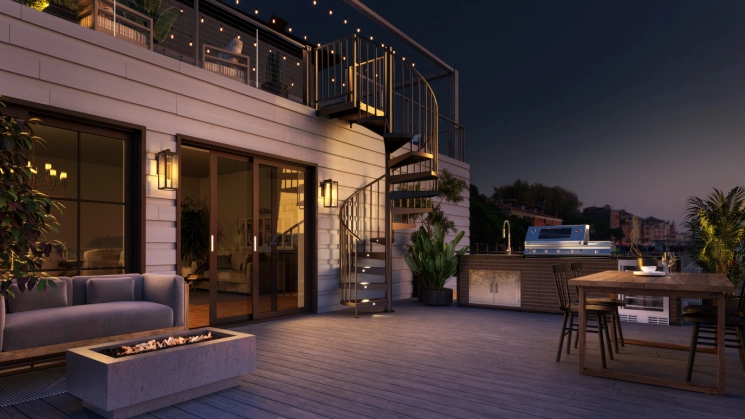
Outdoor layouts benefit just as much from good flow as interior spaces. On decks and patios, stairs often dictate how people move between levels and into the yard.
Deck spiral stairs help maintain outdoor flow by:
- Preserving deck edge space
- Keeping seating areas open
- Reducing congestion near access points
Designing With Flow in Mind
Spiral stairs change the flow of a space by reducing visual clutter, preserving open areas, and supporting natural movement. When chosen intentionally, they help spaces feel calmer, more open, and easier to use.
Read More
Design a Space That Moves Naturally
Thoughtful stair design can improve how your space looks, feels, and functions from day to day.


