


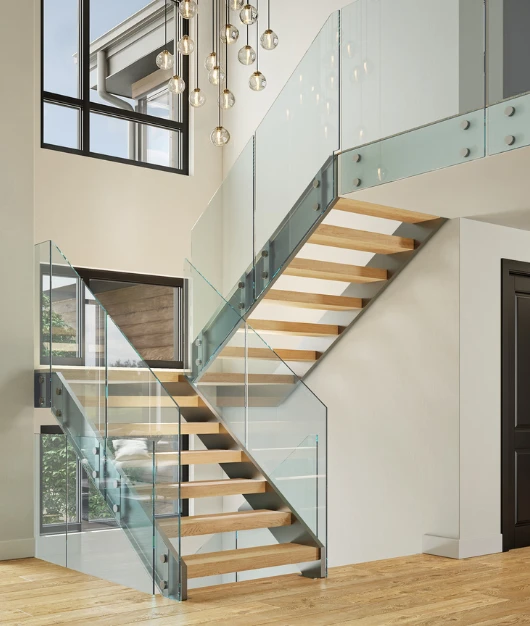

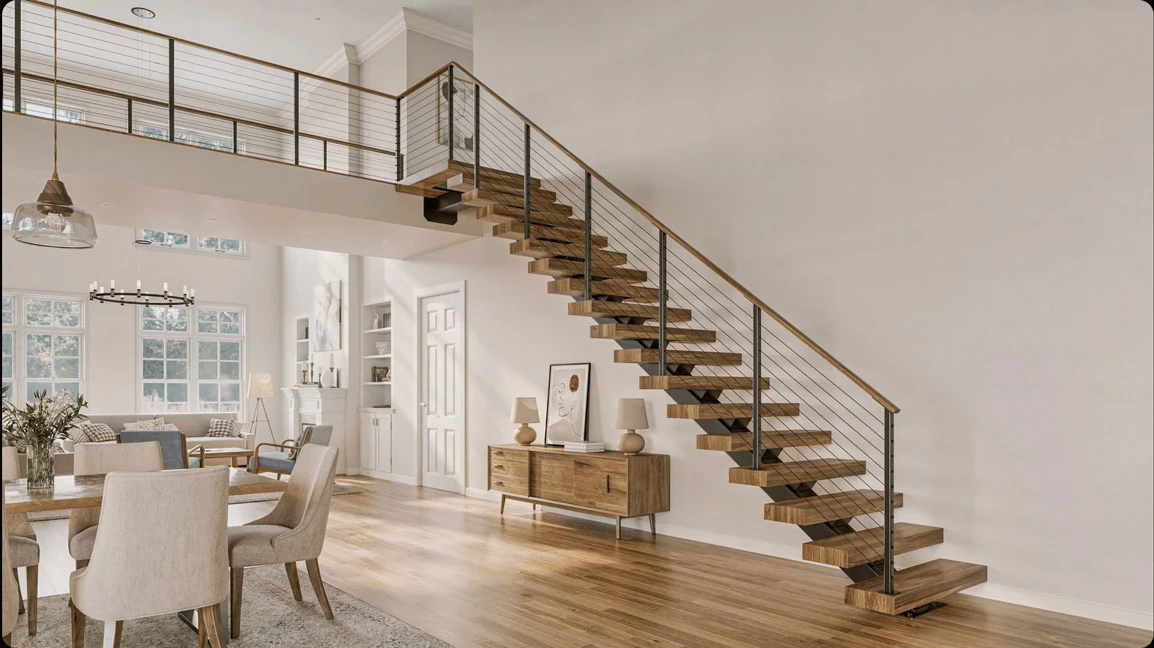

Multi-level decks add dimension, functionality, and visual interest to an outdoor space. They create natural zones for dining, lounging, and entertaining, but they also introduce a design challenge: how to move comfortably and efficiently between levels without overwhelming the layout.
Deck spiral stairs are often a smart solution for multi-level designs because they provide vertical access while keeping the footprint compact. This guide explores how spiral stairs support multi-level decks and when they make the most sense.
Key Takeaways
- Multi-level decks need efficient access: Poor stair placement can disrupt flow and reduce usable space.
- Spiral stairs are naturally compact: A smaller footprint preserves deck area on every level.
- Vertical movement matters: The right stair improves comfort and daily use.
- Placement affects layout: Spiral stairs work well in corners and transitions.
- Design stays intentional: Compact stairs can feel architectural rather than bulky.
Why Multi-Level Decks Need Smarter Stair Solutions
Multi-level decks often emerge from sloped yards, walk-out basements, or the desire to separate activity zones. While the layout adds interest, it also requires thoughtful circulation.
Traditional straight-run stairs can work, but they often:
- Take up significant horizontal space on each level
- Limit furniture placement near stair openings
- Create visual barriers between deck zones
In tighter layouts, these issues can make a multi-level deck feel crowded rather than intentional.
Download the Outdoor Spiral Stair Planning Checklist
This checklist helps you think through sizing, placement, materials, and installation details so your spiral stair supports your multi-level deck instead of disrupting it.
How Spiral Stairs Support Multi-Level Deck Design
Outdoor spiral stairs approach vertical movement differently. Instead of extending outward, they concentrate access within a defined circular footprint.
For multi-level decks, this offers clear advantages:
- Minimal space impact on upper and lower levels
- Flexible placement near deck edges or corners
- Clear walking paths between activity zones
- A clean visual transition between elevations
Because spiral stairs rely on vertical stacking rather than horizontal run, they integrate more easily into layered designs.
Common Multi-Level Deck Layout Challenges
Without careful planning, stairs can become the most disruptive element of a multi-level deck.
Common challenges include:
- Blocked sightlines between levels
- Awkward transitions between seating and circulation areas
- Reduced usable square footage near stair openings
- Congested traffic during gatherings
Compact stair solutions help reduce these issues by keeping circulation efficient and predictable.
Where Spiral Stairs Work Best on Multi-Level Decks
Spiral stairs are especially effective when placed:
- At deck corners where straight stairs would dominate the space
- Between primary and secondary deck zones
- Near walk-out basement doors
- Along deck edges where open space should be preserved
Thoughtful placement helps maintain a sense of openness while still providing easy access between levels.
Comfort and Flow Between Levels
Comfort is essential when stairs are used frequently. In multi-level layouts, stairs often serve as everyday connectors rather than occasional access points.
Spiral stairs provide:
- Continuous handrail support
- A consistent walking rhythm
- Predictable entry and exit points
Selecting the right diameter helps ensure the stair feels comfortable without sacrificing the compact footprint that makes it effective.
Material Considerations for Multi-Level Outdoor Stairs
Because multi-level decks expose stairs to weather on multiple sides, material choice becomes even more important.
Common options include:
- Aluminum: Lightweight, corrosion resistant, and low maintenance.
- Galvanized steel: Durable and well suited for high-traffic applications.
- Powder-coated finishes: Add protection and help maintain appearance over time.
Aluminum spiral stairs are often favored for multi-level decks due to their balance of strength, durability, and ease of installation.
Design Integration Across Deck Levels
Spiral stairs can help unify a multi-level deck by creating a consistent design language.
Ways to integrate the stair visually include:
- Matching stair finishes to deck railings
- Aligning stair placement with structural elements
- Using clean lines that complement modern layouts
- Keeping transitions visually open
When done well, the stair feels like a natural part of the architecture rather than an afterthought.
When Straight Stairs May Still Be the Right Choice
Straight stairs can still work well in certain multi-level designs, especially when:
- There is ample horizontal space
- Wide access is needed for moving furniture
- The layout favors long, linear transitions
- A traditional look is preferred
The key is ensuring the stair supports the deck layout instead of dictating it.
FAQ
Are spiral stairs practical for multi-level decks?
Yes. Spiral stairs are often used in multi-level designs because they provide efficient vertical access with minimal space impact.
How much space do spiral stairs need on a deck?
Space requirements depend on stair diameter and placement. Spiral stairs typically need far less horizontal space than straight-run stairs.
Do spiral stairs work outdoors year round?
With exterior-ready materials and finishes, spiral stairs perform well across changing seasons and climates.
Read More
Design a Multi-Level Deck That Flows
Compact stair solutions can make multi-level decks easier to navigate and more enjoyable to use.


