


Planning a new deck or upgrading an outdoor space? At some point, you will run into a big decision: Should you choose traditional deck stairs or deck spiral stairs? Most homeowners picture a straight run of steps because it feels familiar. But outdoor spiral stairs are becoming a go-to option for deck renovations, especially when space is tight, the layout is tricky, or you want a cleaner, more design-forward look.
This guide breaks down the real differences, with practical examples to help you pick the right solution for your deck, your yard, and your maintenance comfort level.
Key Takeaways
- Spiral stairs save space: A compact circular footprint keeps more deck and yard open for furniture, grills, and traffic flow.
- Traditional stairs feel familiar: Straight runs can be easier for moving large items and may feel more comfortable for some households.
- Outdoor materials matter: Aluminum spiral stairs are a favorite for low upkeep because they do not rust and hold finishes well.
- Cost depends on site conditions: Height, diameter, landings, and local code details affect pricing more than “spiral vs traditional” alone.
- Spiral is a design feature: A spiral can function like outdoor architecture, adding a focal point and improving resale appeal.
Quick Comparison: What’s the Real Difference?
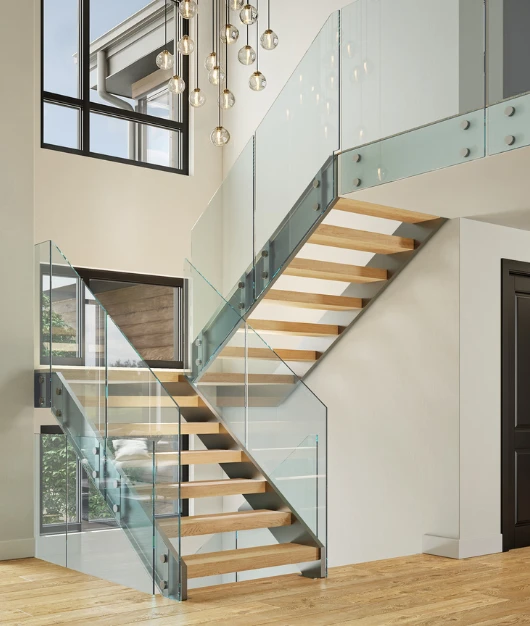
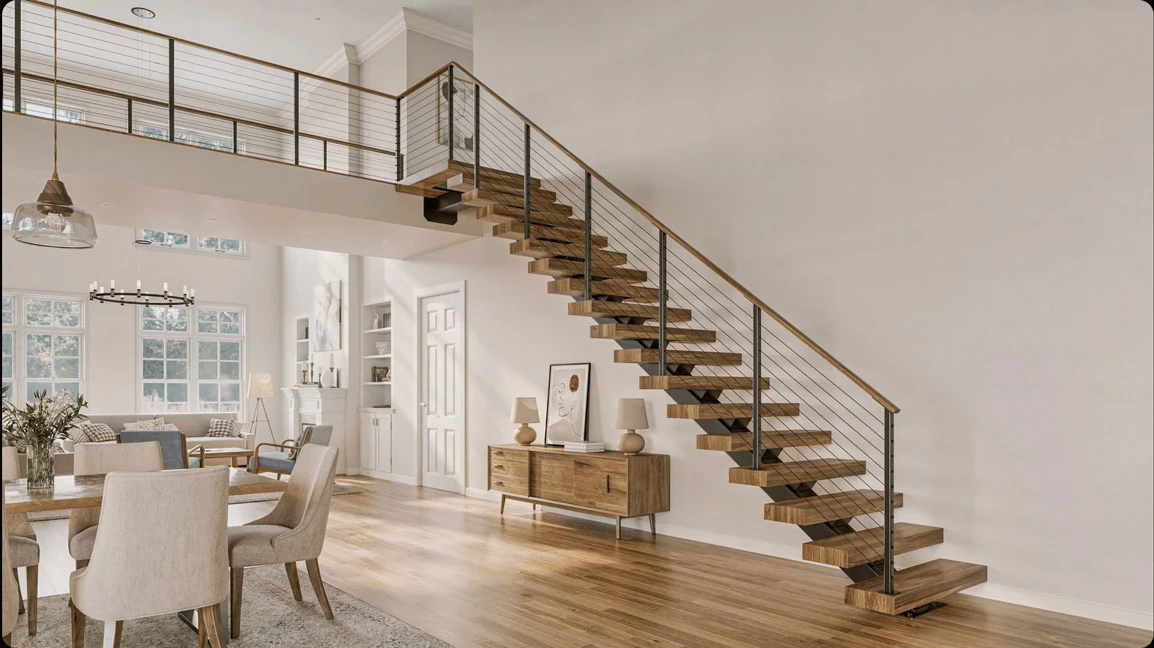
Traditional deck stairs are typically a straight run (or two runs with a landing) that extend outward into the yard. They work well when you have plenty of space and want a wide path down to grade.
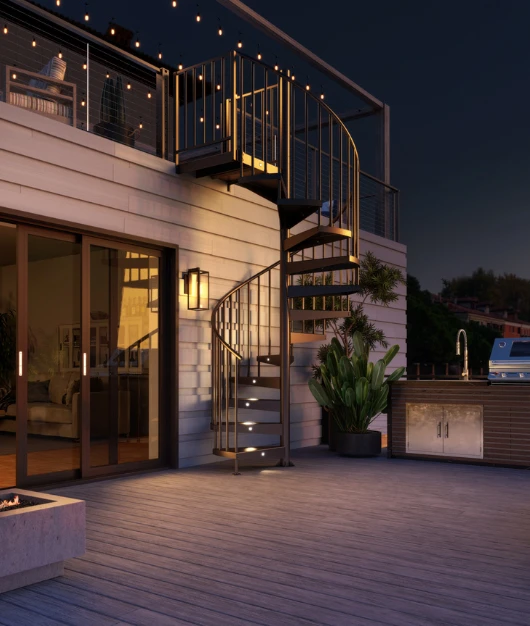
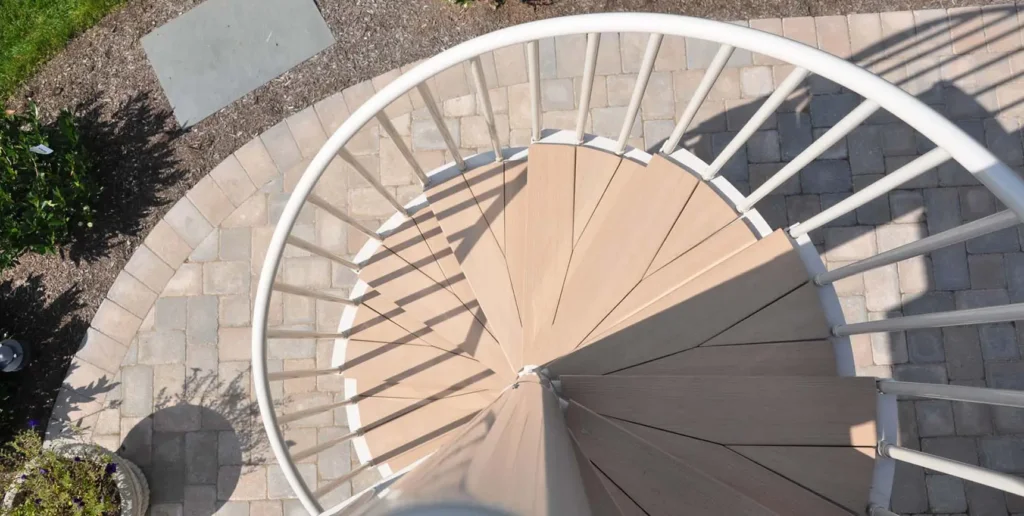
Deck spiral stairs work differently. Instead of stretching out, the stair stacks the travel path vertically around a center column. The result is a much smaller footprint on the deck and on the ground, which can open up layout options you may not realize you have.
Download the Spiral vs. Traditional Deck Stair Comparison
See a quick side-by-side breakdown of space efficiency, aesthetics, installation, and cost—so you can choose the right stair for your deck layout.
Deck Space and Footprint: Spiral vs. Straight Run
Deck design is basically a game of usable square footage. The more your stairs sprawl, the less room you have for seating, dining, and circulation.
A traditional stair run often needs:
- Longer horizontal space on the deck edge
- More yard space under the run
- A landing for taller deck heights (depending on layout and local requirements)
A spiral stair typically needs:
- A circular footprint defined by the stair diameter
- Clearance around the stair for safe entry and exit
- A clean landing area at the bottom so traffic flows naturally into the yard
Why this matters: If you are trying to fit a dining table, an outdoor sectional, a grill, and a clear path to the door, stairs can become the item that forces compromises. A spiral stair can free up the space that makes the deck feel like an outdoor room, not a platform with a staircase attached.
Planning Tip
Before you commit, measure your deck height and decide where you want people to enter and exit. Use a simple layout sketch with furniture to scale, then drop in a spiral footprint to see how much space you gain. Our measurement guide helps you map deck height and choose a diameter that fits your layout.
Want to See What a Spiral Looks Like on Your Deck?
Share your deck height and a few design preferences. We will recommend a diameter, discuss placement options, and help you build a stair that fits your layout.
Comfort and Everyday Use
Comfort is where your household habits matter. Some people love straight stairs because they feel wide, predictable, and easy to carry things on. Others prefer a spiral because it creates a smooth, contained path that feels secure, especially with a solid handrail.
Here is a practical way to think about it:
- Traditional stairs: Often wider and easier for moving bulky items like coolers, patio cushions, or planters.
- Spiral stairs: A compact travel path with continuous handrail support, great for daily up and down movement when space is limited.
Comfort Tip
If you want your spiral to feel more open, choose a larger diameter. More diameter typically means more walking room, and it can make the stair feel less tight during everyday use.
Safety and Code Considerations
Both stair types can be safe and code compliant when designed correctly. The key is planning around the details that inspectors and homeowners care about: tread dimensions, riser height, handrail requirements, and guard/baluster spacing.
Traditional stairs often make it easier to hit certain comfort expectations because you can build a wider run. Spiral stairs, however, can still meet residential requirements when the stair is designed with code in mind.
Next Step
Check local requirements early, especially if your deck is part of a permit project. Our building code overview is a helpful starting point before you finalize your plan.
Plan for Code Before You Buy
Review common requirements like tread width, riser height, baluster spacing, and handrail rules so your stair design stays inspection-friendly.
Materials and Maintenance Outdoors
Outdoor stairs live a harder life than indoor stairs. They deal with rain, snow, humidity, UV exposure, pool chemicals, and the everyday wear of shoes and pets.
Traditional deck stairs are often built from wood to match the deck, which can look great, but typically requires ongoing upkeep such as staining, sealing, and board replacement over time.
Spiral stairs are commonly built from outdoor-ready metals designed to handle weather with less maintenance. If your priority is “install it and stop thinking about it,” this category is worth serious consideration.
Aluminum Spiral Stairs: Low Maintenance Advantage
Aluminum spiral stairs are popular for decks because they do not rust, they are lighter to handle during installation, and they pair well with modern rail and deck styles. Many homeowners also like aluminum for one simple reason: it supports a low-upkeep lifestyle.
Benefits you can highlight in your deck renovation plan:
- No rust concerns: Great for wet climates and long-term durability.
- Clean look: Works with contemporary decks and crisp railing lines.
- Finish friendly: Powder-coated finishes can coordinate with deck rail colors.
Explore options here: Aluminum Spiral Stairs.
Galvanized Steel and Other Options
Galvanized steel is another proven outdoor choice, especially when you want a rugged, utility-forward build. Some homeowners choose steel for high-traffic rentals, workshop access, or harsher environments where durability is the main priority.
Compare materials here:
Looking for Low Maintenance Outdoor Access?
Browse outdoor-ready spiral stair options and compare materials, rail styles, and finishes.
Cost: What Impacts Price the Most?
Homeowners often ask, “Are spiral stairs more expensive than traditional deck stairs?” The honest answer is: it depends on what you are comparing and what your deck site requires.
Traditional wood stairs may look cheaper up front, especially if they are built during the original deck construction. But real cost includes maintenance over time. If you re-stain, replace boards, fix rot, or rebuild sections later, “cheaper” can become “repeat spending.”
Spiral stairs can range widely based on:
- Deck height: Taller height means more components and sometimes additional planning.
- Diameter: Larger diameter typically increases material cost, but also improves comfort.
- Landing needs: A landing platform, bottom pad, or specific exit direction can affect pricing.
- Rail style and options: Upgrades can change the final number more than the base structure.
Best Move
Price your stair the same way you plan the rest of the deck: based on the finished layout you want, not a generic average.
Design and Curb Appeal: Matching Your Deck Style
Traditional stairs tend to blend in. That can be a positive if you want the deck to feel quiet and simple. Spiral stairs, on the other hand, can become a design feature. The shape reads as intentional architecture.
Ways to make a spiral feel integrated:
- Match the stair finish to your deck railing color
- Use tread covers that coordinate with deck boards for a cohesive look
- Place the spiral where it “anchors” the deck corner and improves flow
Installation: Complexity, Time, and Site Prep
Traditional deck stairs are usually built on-site. That can be straightforward, but it depends heavily on contractor availability, wood quality, weather during build, and the long-term durability of the materials chosen.
Spiral stairs often arrive as modular kits designed for repeatable assembly. That helps keep the build process more predictable.
To prepare for either option, you will want to confirm:
- Finished floor-to-floor height
- Clearance around doors, rail posts, and deck framing
- Bottom landing location and path into the yard
- Local code details that impact handrail and guard requirements
Best Use Cases: When Spiral Wins (and When Traditional Wins)
Spiral stairs are often the best choice when:
- Your deck is small or narrow and every square foot matters
- You want to preserve yard space and landscaping below the deck
- You are building a multi-level deck and want a compact connector
- You want a low maintenance spiral stair that holds up outdoors with minimal upkeep
- You want the stair to look like a design feature, not an afterthought
Traditional stairs are often the best choice when:
- You have plenty of space for a wide run
- You frequently move large items up and down the stairs
- You want the stair to blend in and match a wood deck exactly
- Your layout needs a very specific wide landing or straight path to grade
FAQ
Do spiral deck stairs take up less space than traditional stairs?
Yes. A spiral stair typically uses a compact circular footprint, while traditional stairs often require a longer run that extends into the deck edge and the yard. This is why deck spiral stairs are popular for tight layouts and outdoor renovations focused on usable space.
Are aluminum spiral stairs good for outdoor decks?
They are one of the most popular options for outdoor use because aluminum does not rust and is well-suited for long-term, low-upkeep performance. If you are prioritizing durability and reduced maintenance, aluminum spiral stairs are worth a close look.
Will outdoor spiral stairs meet code?
Spiral stairs can meet residential code when designed correctly. The details matter, including tread dimensions, handrail rules, and spacing. Review our building code overview and check your local requirements.
How do I choose the right spiral diameter?
Start with your deck clearance and how you expect the stair to feel in daily use. Larger diameters typically feel more comfortable and open. Use the measurement guide to plan your height and diameter.
Read More
- Outdoor Spiral Stairs: Explore materials, styles, and exterior-friendly options.
- Spiral Stair Diameter Guide: Choose the right size for comfort and fit.
- Featured Projects: See real installations for deck and backyard inspiration.
Ready to Design Your Deck Spiral Stair?
If you want to keep more deck space open and reduce outdoor maintenance, a spiral stair may be the cleanest upgrade you can make. Build your design and get pricing based on your deck height and options.


