



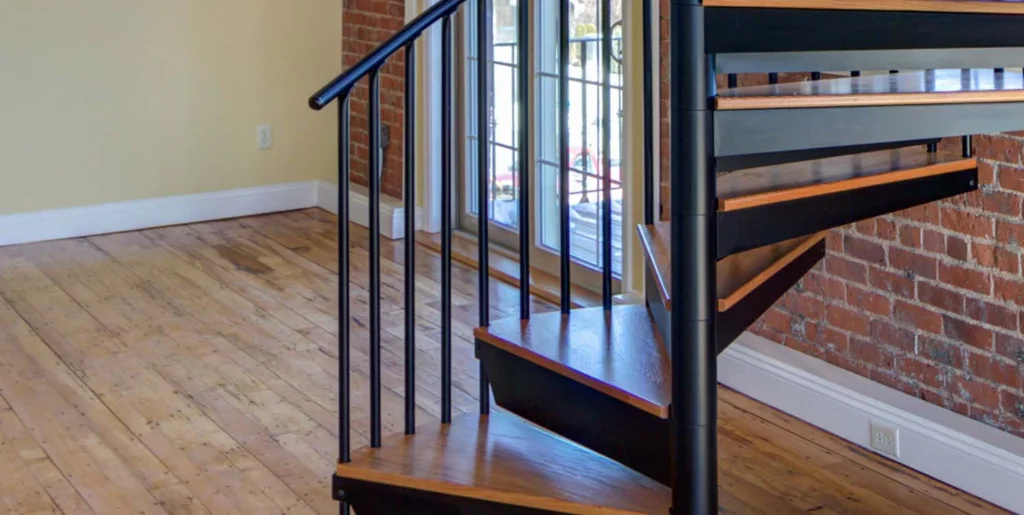
Spiral stairs are known for saving space, but passing inspection takes more than picking the right diameter.
Clear walking width, tread geometry, rise, headroom, and railing details all have to line up with code, or projects can stall during permitting or inspection.
This guide answers the most common code and compliance questions about spiral stairs, so you know what to check before you order and how to avoid last-minute surprises.
Key Takeaways
- Diameter drives compliance: A 5′ spiral stair is commonly used to meet the required 26″ clear walking path.
- Tread, rise, and headroom matter most: 7 1/2″ tread depth at the walking line, 9 1/2″ max riser height, and 6′ 6″ minimum headroom are frequent checkpoints.
- Railing rules vary locally: Guardrail height, baluster spacing, and handrail profile are often interpreted by the inspector.
- Local approval is key: Always confirm requirements with your local building department before ordering.
What Building Code Applies to Spiral Stairs?
Most residential spiral stair requirements are based on widely adopted building codes, but enforcement and interpretation vary by city, county, and state. Some jurisdictions follow the IRC closely, while others adopt local amendments or stricter rules for railings and openings.
If your stair is part of a permitted project or affects egress, code compliance will almost always be required.
What Diameter Spiral Stair Is Typically Code Compliant?
A common requirement for spiral stairs is a minimum 26″ clear walking path measured at and below the handrail. In practice, this usually means selecting a 5′ diameter spiral stair or larger.
Smaller diameters may work in non-code or secondary-use situations, but should always be verified with your local inspector.
How Is Tread Depth Measured on a Spiral Stair?
Spiral stair tread depth is measured differently than straight stairs. Code typically requires a minimum tread depth of 7 1/2″, measured 12″ from the narrow edge of the tread.
This measurement reflects the walking line where most users place their feet, not the tight inner edge near the center column.
Do Spiral Stair Treads Have to Be Uniform?
Yes. Spiral stair treads are required to be uniform and identical in size. Consistent tread geometry helps reduce trip risk and improves overall stair comfort.
What Is the Maximum Riser Height for Spiral Stairs?
The maximum allowable rise between treads is commonly 9 1/2″. Staying within this limit is one of the most important factors inspectors check during plan review and installation.
How Much Headroom Do Spiral Stairs Need?
Spiral stairs typically require at least 6′ 6″ of headroom, measured vertically from the edge of the top platform to the tread below.
Headroom conflicts often come from tight openings, ceiling framing, soffits, or beams, so this is a measurement worth confirming early.
Do Spiral Stairs Need a Landing or Platform?
Landing and platform requirements depend on how the stair connects to the upper level and how local code is enforced.
In general, the landing width must be at least equal to the required stair width. Since spiral stairs often reference the 26″ walking path requirement, platforms should meet or exceed that dimension. Many code-focused platforms start wider to provide added clearance.
What Are the Baluster Spacing Rules?
Balusters and guardrail openings are typically designed to prevent a 4″ sphere from passing through. Some codes allow slight variation, but many inspectors enforce stricter spacing.
This rule applies to stair railings as well as loft and balcony guardrails.
How Tall Does the Guardrail Need to Be?
A common minimum guardrail height is 36″, though some jurisdictions require 42″, especially for lofts or elevated openings. This is one of the most common local variations, so it should always be confirmed before ordering.
What Are the Handrail Requirements?
Handrails are required on the wider side of the tread and must fall within a specific height range, commonly 34″–38″ measured vertically from the tread nosing.
Handrail grip size also matters. Paragon requires a 2″ clearance around your diameter to ensure comfortable and safe use of your handrail.
Do Handrails and Guardrails Have Load Requirements?
Yes. Rail systems are commonly required to meet a concentrated load requirement, often referenced as 300 lbs. Some building departments may request documentation or calculations to verify compliance during plan review.
What Common Issues Cause Inspection Problems?
Most spiral stair inspection issues stem from a few repeat scenarios:
- Choosing a diameter that does not meet the required walking path
- Headroom conflicts caused by framing or ceiling elements
- Guardrail height or baluster spacing that does not match local interpretation
- Tread or riser geometry that does not align with code measurement methods
Download the Spiral Stair Code Basics Guide
Want a clear reference before you submit for permits or place an order? This guide breaks down the most common spiral stair code requirements so you know what inspectors look for.
Plan for Code Compliance From Day One
Spiral stair code compliance does not have to be complicated. When you verify walking path, tread depth, rise, headroom, and railing details early, you can avoid most permitting and inspection delays.
If your project requires approval, confirm local requirements first, then choose specifications that align from the start. That approach keeps installs smoother and inspections simpler.


