




Choosing the right spiral stair is about more than style. Dimensions affect comfort, safety, code compliance, and how the stair fits into your floor plan. A spiral stair that is sized correctly feels natural to use and works seamlessly within your space.
This guide walks through the key spiral stair dimensions to consider so you can choose a spiral staircase that fits your layout, meets code requirements, and feels comfortable day to day.
Key Takeaways
- Diameter drives comfort: Larger diameters provide more usable walking space.
- Tread depth affects safety: Measurements are taken at the walking line.
- Headroom is critical: Ceiling height must allow safe clearance throughout the stair.
- Riser height impacts ease of use: Shorter risers feel less steep.
- Codes influence design: Residential requirements guide minimum dimensions.
Download the Spiral Stair Planning Checklist
Planning a spiral stair? This free checklist helps you organize key details before choosing dimensions or placing an order.
- Measurements to gather before selecting a stair size
- Ceiling height and headroom considerations
- Code and layout questions to confirm early
Start With How the Stair Will Be Used
Before selecting dimensions, consider how the spiral stair fits into everyday life.
Ask a few key questions:
- Is this a primary stair or secondary access?
- Will it be used multiple times per day?
- Will children or guests use it frequently?
- Will items like furniture or storage bins be carried up and down?
How the stair is used directly affects ideal diameter, tread depth, and riser height.
Spiral Stair Diameter Explained
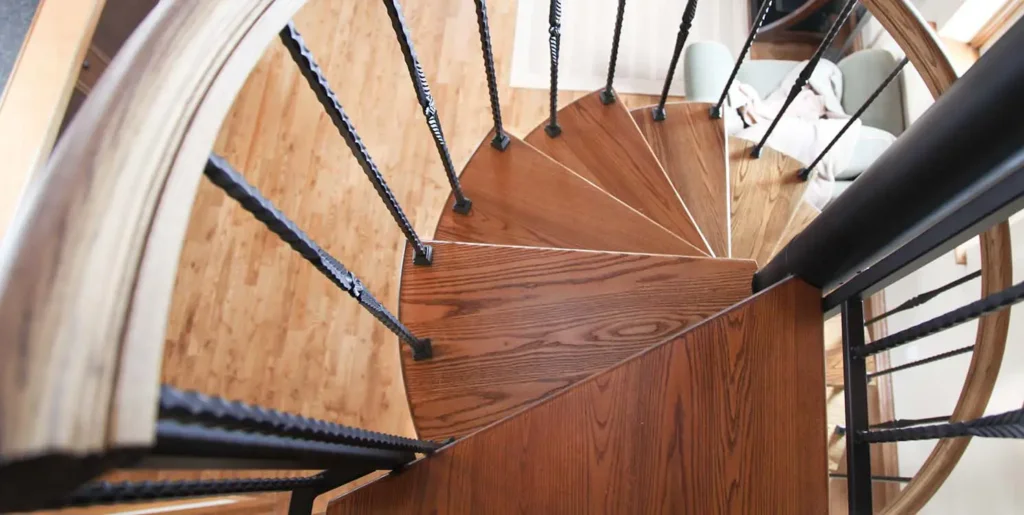
The diameter of a spiral stair is measured from the outside edge of one tread to the outside edge on the opposite side.
Common Spiral Stair Diameters
- 5 ft diameter (60 inches): Best for tight spaces and occasional use.
- 6 ft diameter (72 inches): A popular option that balances comfort and footprint.
- 7 ft diameter and larger: Ideal for primary stairs and frequent use.
Larger diameters provide more walking room and feel less steep, especially for daily use.
Tread Depth and the Walking Line
Tread depth on spiral stairs is measured at the walking line, typically located 12 inches from the narrow end of the tread.
Most residential codes require a minimum tread depth of 7.5 inches at the walking line
Deeper treads improve stability and comfort when climbing or descending.
Headroom Requirements
Headroom is the vertical clearance from the tread surface to the ceiling or obstruction above.
Typical residential requirements include a minimum headroom of 6 feet 6 inches
Low headroom is one of the most common planning mistakes, especially near floor openings or beams.
Riser Height and Stair Steepness
Riser height affects how steep the stair feels underfoot.
Most spiral stairs are designed with riser heights between 7 and 8.5 inches
Shorter risers feel easier to climb but require more total treads to reach the same height.
Building Code Considerations
Spiral stair dimensions are influenced by residential building codes.
Code requirements may address:
- Minimum diameter
- Tread depth at the walking line
- Maximum riser height
- Minimum headroom
- Handrail requirements
Always confirm local code requirements before finalizing stair dimensions.
Choosing the Right Size for Your Space
The best spiral stair size balances available floor space with comfort.
General guidance:
- Occasional use: Smaller diameters can work well
- Daily use: Larger diameters improve comfort
- Main living areas: Size up when possible
When space allows, a slightly larger stair almost always feels better long term.
FAQ
What is the best spiral stair diameter for daily use?
A 6 foot diameter or larger is typically recommended for stairs used every day.
How is tread depth measured on a spiral stair?
Tread depth is measured at the walking line, about 12 inches from the narrow end of the tread.
Do spiral stairs have headroom requirements?
Yes. Most residential codes require a minimum of 6 feet 6 inches of headroom.
Read More
Find the Right Spiral Stair Dimensions With Confidence
Understanding diameter, tread depth, and headroom helps ensure your stair fits comfortably and meets code.


