Free Shipping! Ships within 3 Business Days.
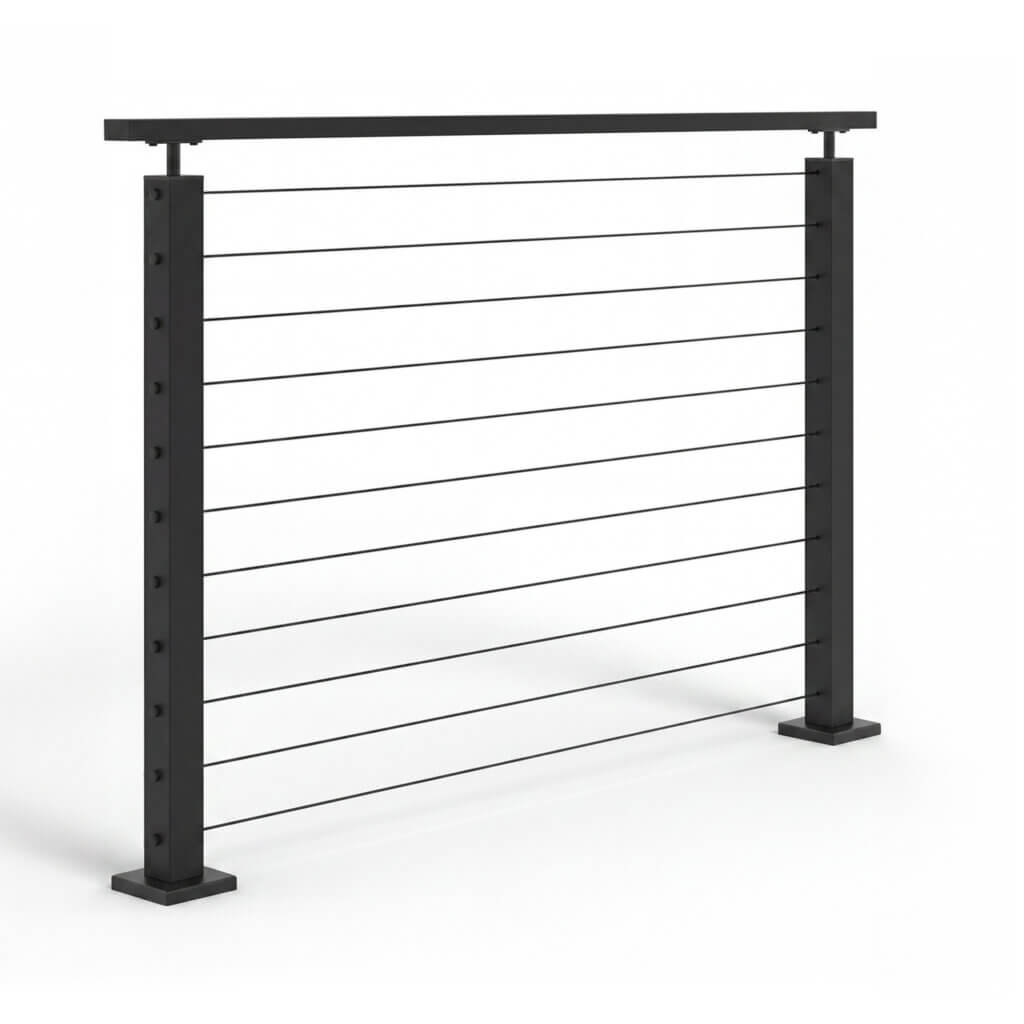
Lynx Railing Systems - Black Posts with Black Cable Infill
$880.00 – $2,040.00
Customize & Buy
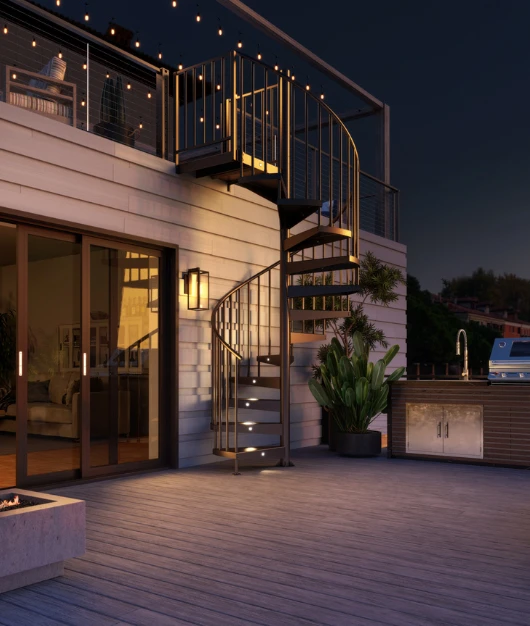
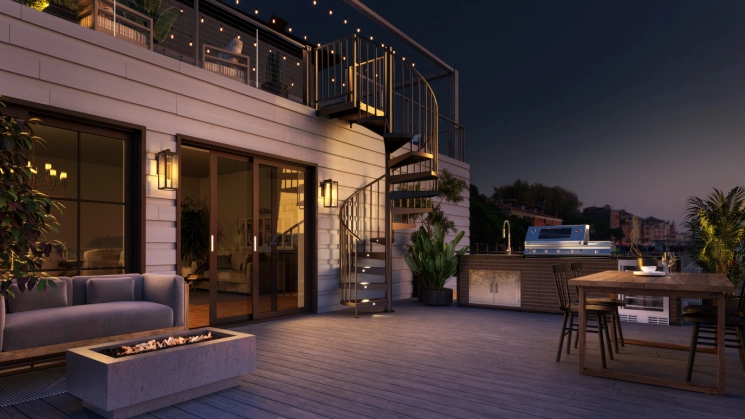
New: The Trex® Spiral Stairs Collection Is Here


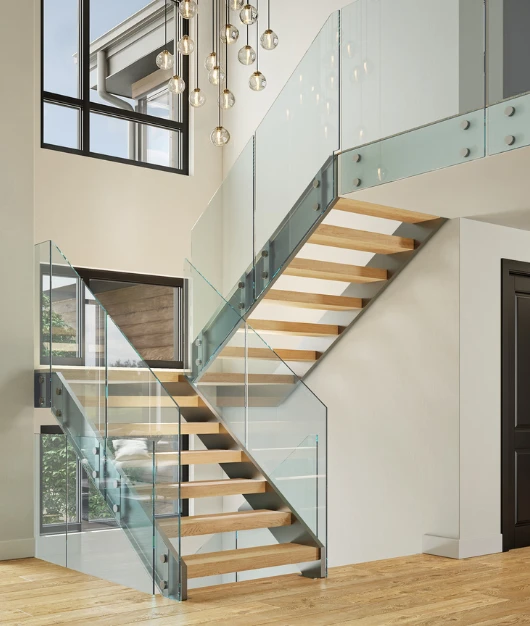
Our Build Your Stair tool lets customers dive into an interactive experience, exploring and selecting from all our custom options to create their dream staircase.
Transform Your Home’s First Impression
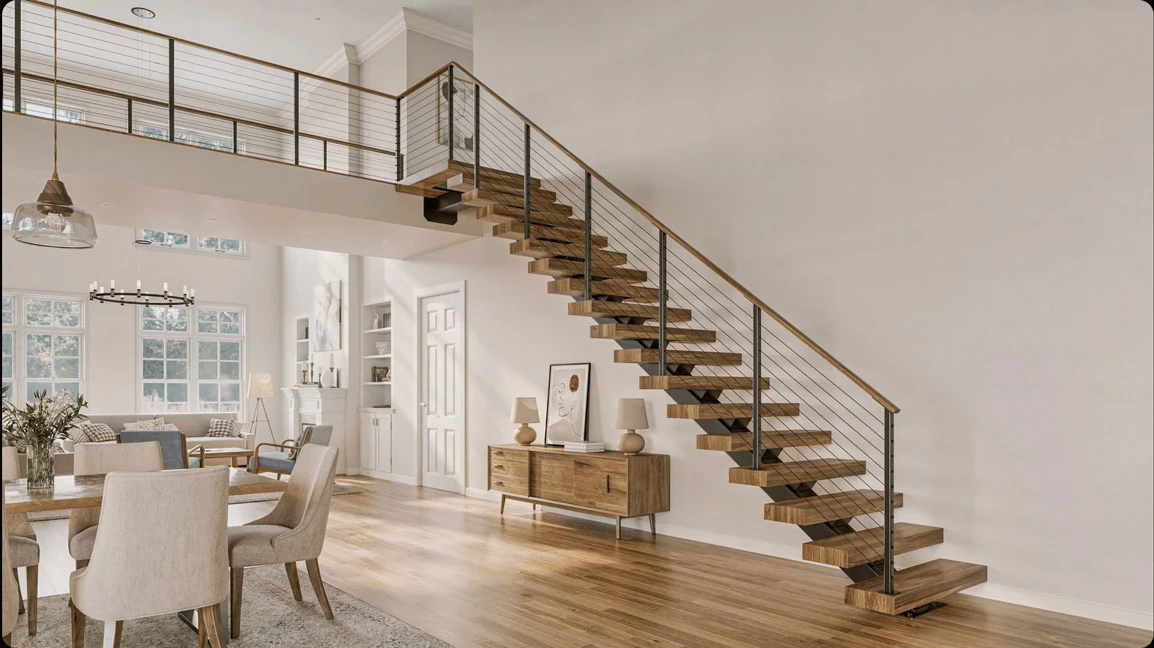
Add architectural structure and modern style to your front or back porch with low-maintenance, ultra-durable cable railing systems.
Free Shipping! Ships within 3 Business Days.
Free Shipping! Ships within 3 Business Days.
No products match the selected filters.
Porch Railing Solutions
Porch railing kits create a welcoming transition between indoor and outdoor spaces while improving safety and architectural character.
GUIDE
An overview of railing system types, key considerations, and how to select the right configuration for your space.

GUIDE
Compare aluminum, cable, and glass railing options, including performance differences and design considerations.

COMPARISON
Understand the differences between cable and glass infill systems, including visibility, maintenance, and overall application.
Porch rails perform your home’s first impression and its most vital entry safety job at the same time: they frame your front elevation while keeping family and guests safe on elevated perimeters. Paragon porch railing kits are engineered to your home’s exact architecture—perimeter runs, wraparound corners, column terminations, and entry guards—in rust-free aluminum, hot-dip galvanized steel, and hand-forged iron. Manufactured to measure and backed by a lifetime warranty, our prefabricated front porch handrails and guards ship directly to your site ready to install.
Choosing porch rails involves matching your railing design to your home’s exterior architecture. Because the front porch is a central focal point of curb appeal, selecting the right material and infill pattern sets the visual tone for the entire property.
Unlike hollow vinyl sections or stock big-box retail kits that flex under pressure, solid metal construction ensures your front elevation retains a permanent, architectural look.
Porch structures must meet strict safety regulations established by national building codes. Municipal inspectors pay close attention to elevated entry perimeters during pre-sale walk-throughs and home permit reviews.
Core building code triggers for front porch railings include:
Inspection Note: Building codes are enforced by your local Authority Having Jurisdiction (AHJ). Even on low porch platforms under 30 inches, adding an exterior railing is one of the most effective ways to prevent slips and ensure entry safety for visiting relatives.
A porch perimeter railing must withstand daily outdoor exposure while providing complete safety along the porch edge. A decorative top cap board on a porch is not enough; open elevated edges require a dedicated, code-compliant guardrail structure.
Anchoring hardware must be selected based on your porch surface construction:
When selecting a porch railing, using pre-drilled base plates with decorative post trim caps hides exposed fasteners while protecting anchoring hardware from trapped water and rust.
Because porch railings face continuous exposure to rain, snow, UV rays, and temperature swings, material durability dictates how often you will need to repaint or service your entry system.
Achieving a cohesive look across your front porch requires matching your porch perimeter and entry railing components. Running identical baluster spacing, top rail shapes, and powder-coat colors across the flat porch guard ties your home’s entry together into a single architectural feature.
Paragon pre-engineers specialized corner and termination posts that handle complex layouts, such as wraparound porches or corners that anchor into front columns. If your property also features an elevated back deck or side entryways, explore our dedicated deck railing and general outdoor railing systems for property-wide style consistency.
Upgrading your front entry does not require field welding, expensive custom metal shops, or cutting stock retail sections on site. Paragon delivers factory-built systems made to your exact porch dimensions.
Your front porch is the handshake your home gives the street. Upgrade your entry with a custom, code-compliant porch railing kit engineered for your exact porch geometry and home style.
Get Your Free Consultation or design your layout using our interactive online tools today.
Under the International Residential Code, a protective guardrail is required if your porch floor sits higher than 30 inches above the surrounding ground level. Additionally, if your front steps have four or more risers, at least one continuous handrail is required regardless of the porch height.
Handrails along front entry steps must sit between 34 and 38 inches measured vertically from the tread nosings to the gripping surface. Flat porch floor guardrails must stand at least 36 inches high for residential single-family homes or 42 inches high for commercial spaces under the IBC.
Powder-coated aluminum is the leading low-maintenance material because it cannot rust, rot, or decay. Unlike wood or raw iron, aluminum requires no painting or staining—only an occasional wash with mild soap and water to clear off salt residue, pollen, or dirt.
Total cost depends on overall linear footage, number of corners or posts, step rise and run measurements, material choice (aluminum vs. galvanized steel vs. forged iron), and decorative options. Contact Paragon today for a direct-from-manufacturer quote tailored to your project.