

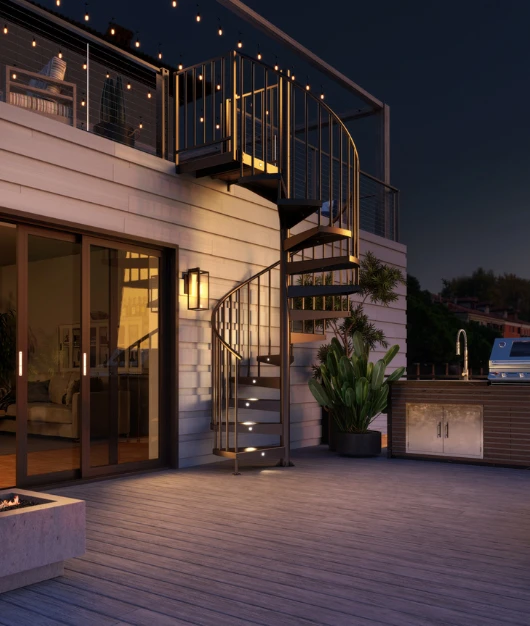
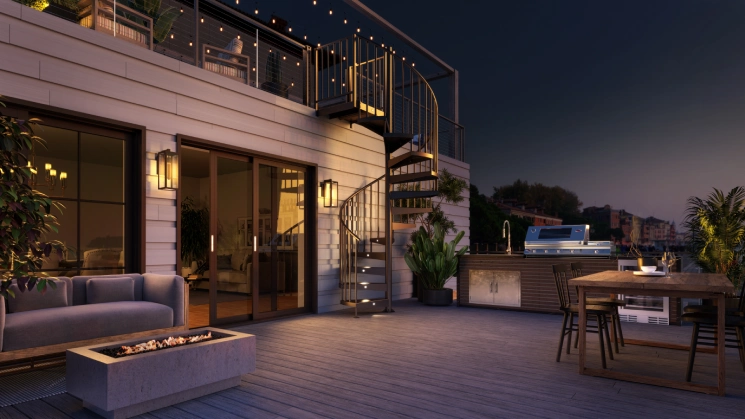
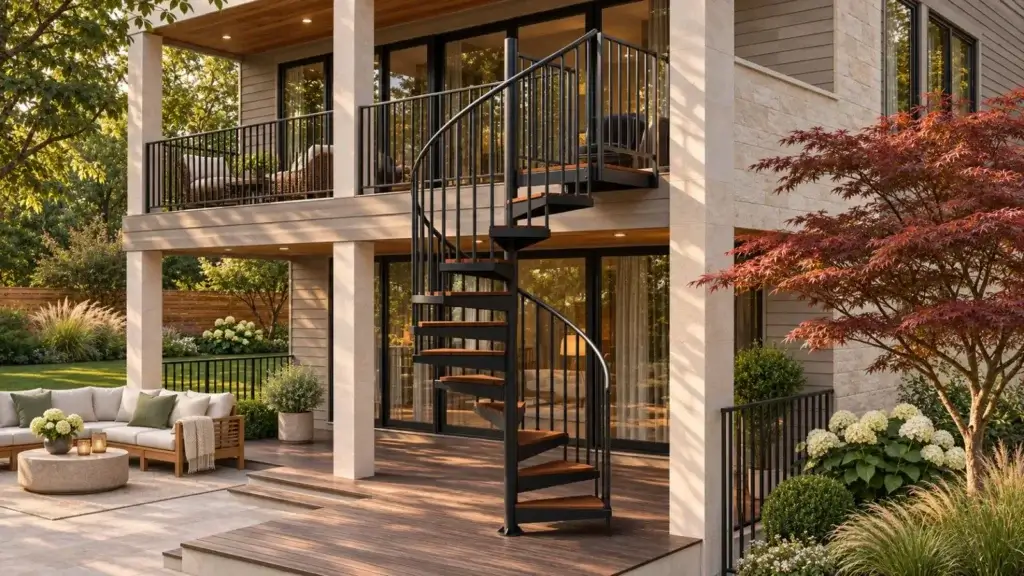
Yes, aluminum gets hot in the sun. If you are picturing bare feet on a deck stair in August or a hand reaching for a poolside rail, the useful question is how to manage that heat. Finish color, tread design, and shade all affect comfort. Before choosing outdoor spiral stairs, look at the surfaces people touch and the sunlight they receive.
At a Glance
- Aluminum, steel, composite, and wood can all get hot in direct sun.
- Lighter finishes generally absorb less sunlight than comparable darker finishes.
- Powder coating protects and colors the surface; it does not make stairs heatproof.
- Plan shade, tread selection, and handrail comfort together.
Do Aluminum Stairs Get Hot in the Sun?
Yes. Aluminum stairs exposed to direct sun can become uncomfortable to touch or walk on barefoot. The actual temperature depends on the finish, sunlight, airflow, and component design. Aluminum alone does not tell you how hot a stair will become, and a light finish cannot guarantee barefoot comfort.
Temperature and touch are different. Aluminum conducts heat readily. When it is hotter than your skin, it can transfer heat into your hand or foot faster than wood at the same temperature. This is why two equally hot surfaces can feel different.
Shade reduces incoming solar energy, and moving air can help a hot surface lose heat. Neither provides a universal cooling time. Concentrate on the choices you control: finish, contact surfaces, and placement.
Does Powder-Coated Aluminum Get Hotter in the Sun Than Raw Aluminum?
Either surface can be hotter; “coated” versus “raw” is not enough to predict the result. Mill finish means the aluminum has its unpainted manufacturing surface. Powder coat is a dry finish applied to prepared metal and cured with heat.
Two properties matter: solar absorptance, how much sunlight a surface absorbs, and thermal emittance, how readily it releases heat as infrared radiation. Shiny bare aluminum can reflect sunlight well but emit thermal radiation poorly. A coating changes both properties.
A lighter coating generally absorbs less sunlight than a comparable darker one, although pigment formulation matters too. Does black aluminum get hot in the sun? Yes, and a dark finish can increase heating. Review Paragon’s finish and color options; custom colors may carry an additional cost.
Powder coating also supports appearance and surface protection. Exterior durability depends on the coating chemistry and preparation. Being oven-cured does not make a coating cool to touch or prove that it outlasts every liquid paint.
Which Parts of an Outdoor Stair Actually Get Hot?
Prioritize the handrail and treads, because hands and feet contact them during normal use. Sunlit balusters, the center column, and other supports can heat up too.
A grate tread has openings rather than a continuous solid walking surface. Those openings allow drainage and airflow, but do not establish a lower surface temperature or barefoot comfort. Check the texture and opening pattern as well as heat exposure.
For children, pool users, and pets, check the whole route. Shaded lower treads do not guarantee a shaded upper platform.
How Do Aluminum, Steel, and Galvanized Stairs Compare in Direct Sun?
No stair material is a universal heat winner. Compare the actual finish and exposure before ranking materials. This table describes general tendencies, not measured Paragon product temperatures.
| Material / finish | Heat in direct sun | How it feels to touch | Best use |
|---|---|---|---|
| Powder-coated aluminum, light color | Generally less heating than comparable dark finishes. | Can still feel hot. | Exterior projects prioritizing a lighter finish. |
| Powder-coated aluminum, dark color | Generally more solar heating than comparable light finishes. | May be uncomfortable on exposed rails and treads. | Dark aesthetics with deliberate shade planning. |
| Bare / mill-finish aluminum | Reflectivity and weathering affect temperature. | Conductive metal can feel hot quickly. | Compatible systems with an unpainted appearance. |
| Powder-coated steel | Coating properties and exposure matter. | Can become uncomfortable; no automatic advantage over aluminum. | Applications with an appropriate corrosion-protection system. |
| Hot-dip galvanized steel | Zinc finish and surface condition affect heating. | Still a potentially hot metal surface. | Durable exterior designs with a metallic finish. |
| Trex composite tread | Can get hot; board color and product matter. | Different heat transfer from metal, not a barefoot guarantee. | Compatible stairs coordinating with composite decking. |
| Wood tread | Can heat up; species, finish, and exposure matter. | Generally transfers heat more slowly than metal. | Comparison only; confirm exterior suitability with the manufacturer. |
For broader material selection, compare the aluminum and galvanized systems in Paragon’s stair materials and finishes guide. Consider corrosion exposure, weight, maintenance, and appearance alongside heat.
How Can You Keep Outdoor Aluminum Stairs Cooler?
Reduce solar exposure and choose contact surfaces deliberately. These six decisions can help manage heat, without promising a surface that always stays cool.
- Start with a lighter finish. Compare available colors and ask about solar-performance data for the specified coating.
- Plan afternoon shade. Consider the house, a deck cover, or another suitable shade source without obstructing the stair route.
- Evaluate grate treads. Review airflow, drainage, texture, and footwear needs. Request product-specific evidence before assuming they run cooler.
- Compare composite tread options. The Trex® Spiral Stairs Collection offers a different walking surface, but composite still heats up. Confirm the actual board and color offered.
- Review vinyl handrail options. A compatible vinyl handrail or approved sleeve can change contact comfort, but vinyl can also heat up. Compare handrail materials for your stair system.
- Plan for hot-day use. Wear appropriate footwear and do not assume a sunlit surface is suitable for bare feet. Keep access clear instead of adding loose mats or improvised rail wraps.
Frequently Asked Questions
Which metal doesn’t get hot in the sun?
No common stair metal stays cool under all sunny conditions. Aluminum, steel, and galvanized steel can all become hot. Finish, exposure, airflow, and component geometry affect the result; choosing a different metal alone does not guarantee a comfortable surface.
How hot does aluminum get in the sun?
Aluminum can become uncomfortable or too hot to touch in direct summer sun, especially with a dark finish. There is no single temperature for every stair. Sun intensity, air temperature, wind, finish, and component design all matter.
Does cast aluminum get hotter than extruded aluminum?
Neither manufacturing method guarantees a cooler surface. Alloy, finish, shape, thickness, and exposure affect thermal behavior. A heavier component generally takes more energy to change temperature, but casting versus extrusion alone does not predict its maximum temperature.
Do Trex composite treads get hot?
Yes. Trex composite treads can get hot in direct sun, particularly in darker colors. Composite transfers heat differently from metal, but it is not automatically comfortable barefoot. Check the specific board product and color, and wear appropriate footwear on hot days.
How long does powder coating last in the sun?
There is no universal lifespan. Exterior durability depends on the coating formulation, pretreatment, application, exposure, and care. Ask for the specified coating’s UV-performance information and warranty. An oven-cured finish is not automatically fade-proof or cool to touch.
Choose Your Finish and Treads Before You Build
Heat comfort starts with finish color, tread selection, handrail treatment, and placement. Paragon has manufactured stairs since 1947. Talk through options for your climate with an SMA-certified designer during a free consultation.
Start with Build Your Stair or request quick pricing.


