

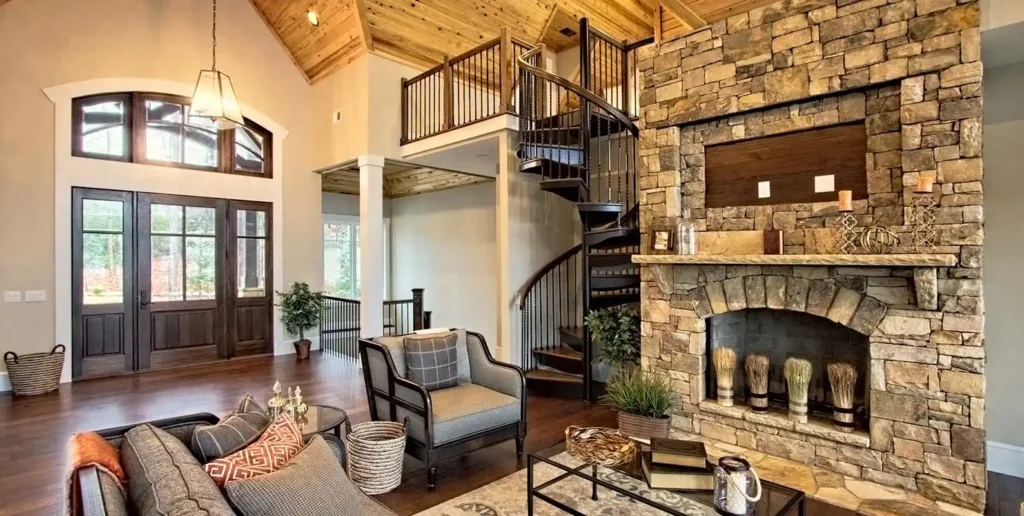
Stairs are often treated as a purely functional necessity. But when designed thoughtfully, they can become one of the most visually interesting elements in a space.
Spiral stairs offer a unique opportunity to combine access and design. Their curved form, compact footprint, and vertical presence allow them to act as architectural features rather than background elements.
Key Takeaways
- Spiral stairs can function as focal points.
- Compact design keeps layouts visually open.
- Material and finish choices influence style.
- Spiral stairs work across modern and traditional spaces.
- Design-forward stairs still support everyday use.
Why Stairs Matter in Overall Design
Because stairs connect levels, they often sit in prominent locations. Their size, shape, and placement affect how a space is perceived.
When stair design is overlooked, it can:
- Disrupt visual balance
- Block sightlines
- Compete with furniture or architectural features
When stairs are designed intentionally, they enhance the space rather than interrupt it.
The Sculptural Quality of Spiral Stairs
Spiral stairs naturally draw attention because of their curved geometry. Unlike straight stairs, which emphasize horizontal lines, spiral stairs create vertical movement and visual rhythm.
This sculptural quality allows them to:
- Act as a focal point
- Add architectural interest
- Break up rigid layouts
In open spaces, a spiral stair can become a defining design element.
Design Without Visual Bulk
One of the biggest design advantages of spiral stairs is their ability to feel substantial without appearing heavy.
Their compact footprint:
- Reduces visual clutter
- Preserves openness
- Keeps spaces feeling balanced
This makes spiral stairs especially appealing in rooms or decks where maintaining a sense of openness is important.
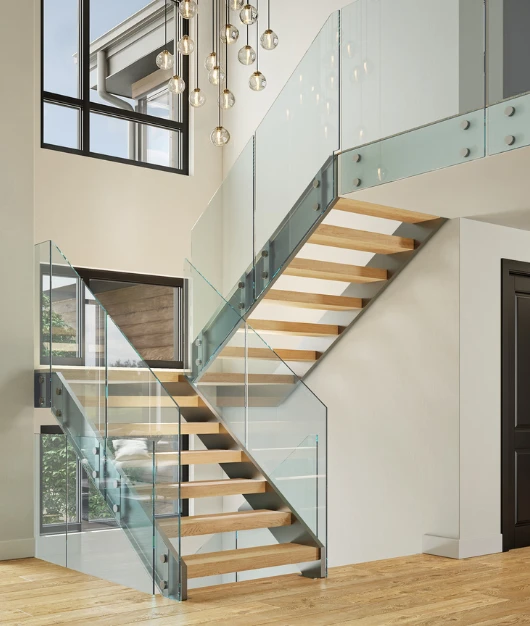
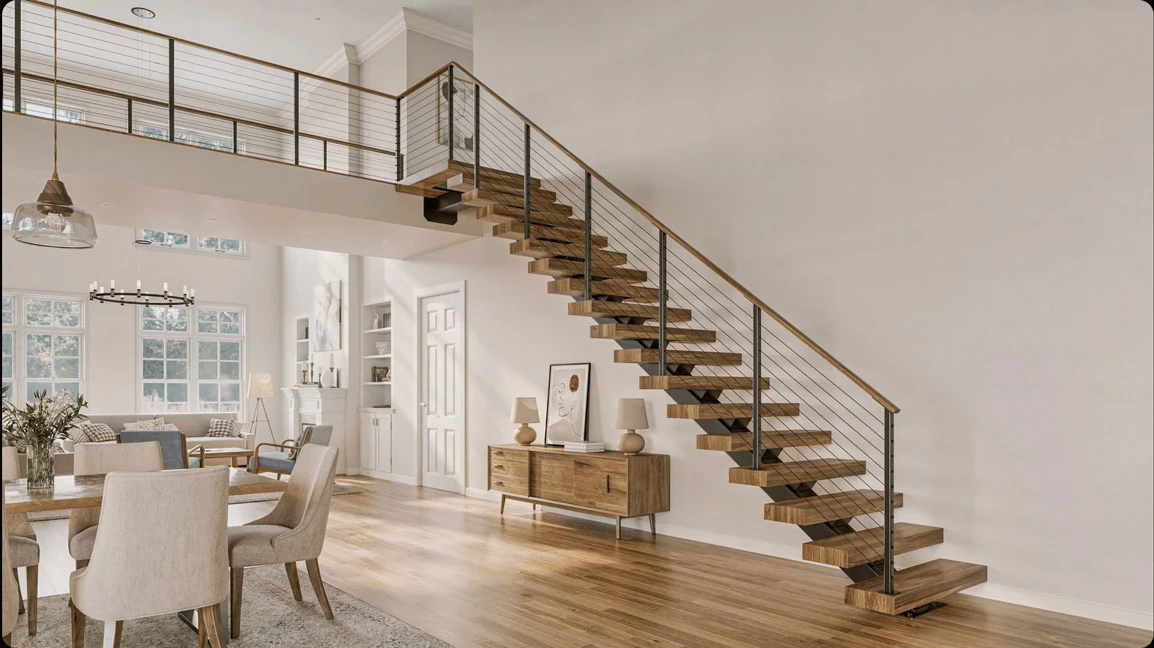
Compare Spiral vs. Traditional Stair Design
See how spiral stairs differ from traditional straight stairs in footprint, visual weight, and layout impact—so you can choose a stair that enhances your space.
Material and Finish Influence Style
The material and finish of a spiral stair play a major role in how it fits within a design.
For example:
- Metal finishes can feel modern and clean
- Wood treads can add warmth
- Neutral colors help stairs blend into their surroundings
- Darker finishes can create contrast and emphasis
These choices allow spiral stairs to complement a wide range of architectural styles.
Modern and Traditional Spaces Alike
While spiral stairs are often associated with modern design, they are equally effective in traditional settings when paired with the right finishes and proportions.
Spiral stairs can support:
- Contemporary homes
- Classic architectural styles
- Industrial-inspired spaces
- Transitional designs
The key is aligning the stair’s materials and detailing with the surrounding environment.
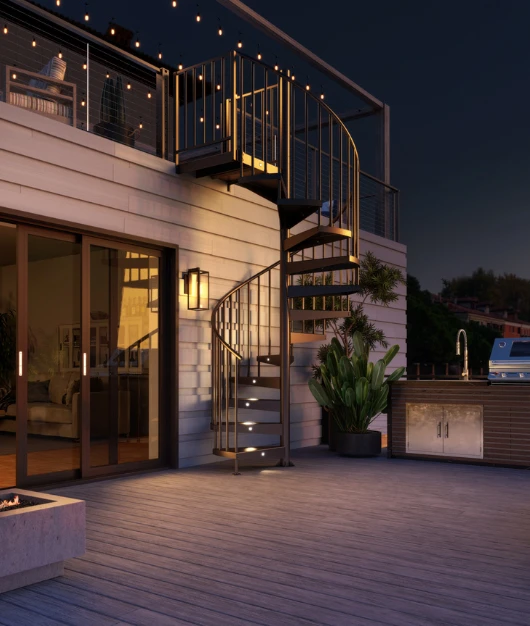
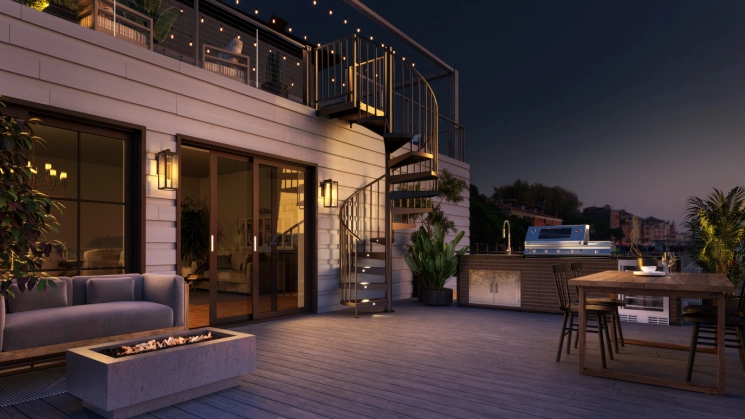
Outdoor Spaces Benefit From Design-Forward Stairs
Design considerations extend beyond interiors. In outdoor living areas, stairs are often visible from multiple angles and distances.
Deck spiral stairs designed with aesthetics in mind can:
- Enhance the overall look of a deck
- Maintain open sightlines
- Blend with railings and finishes
When outdoor stairs are both functional and attractive, they elevate the entire space.
Balancing Design and Practical Use
While design matters, spiral stairs still need to support everyday use. Comfort, safety, and durability remain essential considerations.
Thoughtful design balances:
- Visual appeal
- Comfortable dimensions
- Clear circulation paths
- Reliable construction
A well-designed spiral stair delivers both form and function.
Download the Spiral Stair FAQ Guide
Have questions about comfort, safety, maintenance, or everyday use? This FAQ guide covers the most common concerns homeowners have when considering a spiral stair.
Making Stairs Feel Intentional
Spiral stairs feel most successful when they are treated as part of the design from the start rather than added as an afterthought.
Early planning allows:
- Better placement
- Cleaner integration
- More cohesive design results


