

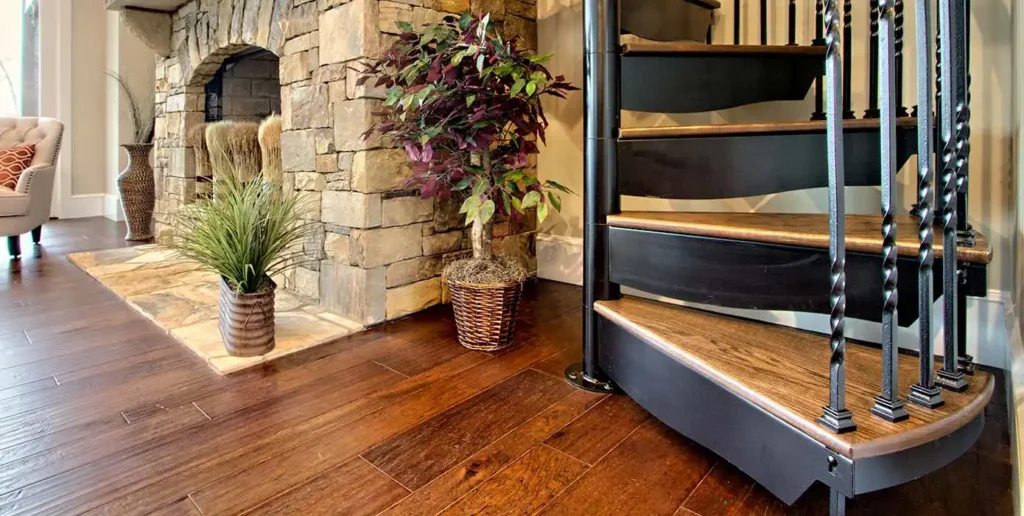
One of the biggest decisions homeowners face when choosing a spiral stair is material. Both metal and wood spiral stairs offer distinct advantages, and the right choice depends on how the stair will be used, where it will be installed, and the overall look you want to achieve.
Understanding the differences between metal spiral stairs and wood spiral stairs helps narrow down the option that best fits your space.
Key Takeaways
- Material choice affects durability, style, and maintenance.
- Metal stairs are commonly used outdoors.
- Wood stairs are often preferred for interior spaces.
- Maintenance expectations vary by material.
- The right choice depends on use and environment.
Why Material Matters
The material of a spiral stair influences more than appearance. It affects how the stair holds up over time, how much maintenance it requires, and where it can be installed.
Choosing the right material helps ensure the stair performs well in its intended environment.
Metal Spiral Stairs
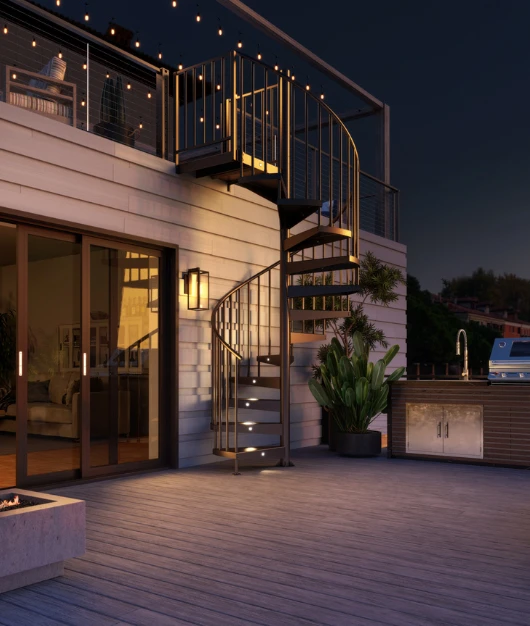
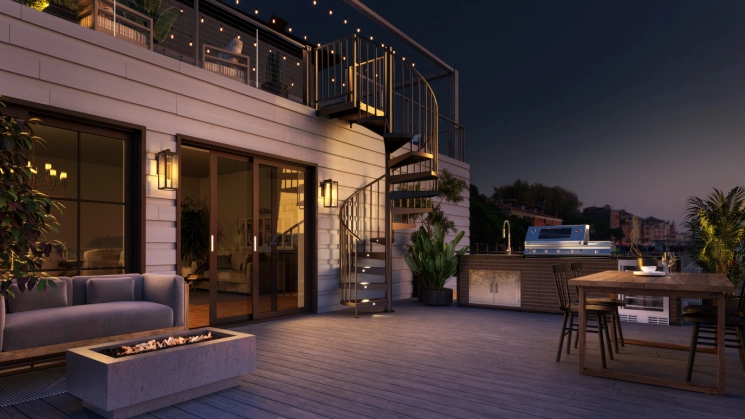
Metal spiral stairs are commonly chosen for their durability and versatility. They are often used in both indoor and outdoor applications.
Where Metal Spiral Stairs Work Best
Metal stairs are frequently used in:
- Decks and outdoor spaces
- Garages and workshops
- Industrial or modern interiors
- Secondary access points
Outdoor spiral stairs are typically made from metal due to its ability to handle exposure when paired with appropriate finishes.
Benefits of Metal Spiral Stairs
Metal spiral stairs offer several practical advantages:
- Strong and durable construction
- Suitable for exterior use
- Clean, modern appearance
- Lower visual bulk in many designs
These qualities make metal a popular choice for compact layouts and outdoor applications.
Things to Consider With Metal
While metal is durable, homeowners should still consider:
- Finish quality
- Long-term maintenance expectations
- How the stair complements surrounding materials
The right finish helps metal stairs blend into the overall design.
Wood Spiral Stairs
Wood spiral stairs are often chosen for their warmth and traditional appeal. They are most commonly used indoors.
Where Wood Spiral Stairs Work Best
Wood stairs are typically used in:
- Interior living spaces
- Lofts and bonus rooms
- Homes with traditional or transitional styles
Wood is not used outdoors without significant protection due to moisture exposure.
Benefits of Wood Spiral Stairs
Homeowners often choose wood for:
- A warm, natural appearance
- Compatibility with interior finishes
- A more traditional look and feel
Wood can help a spiral stair feel integrated into interior living spaces rather than purely functional.
Things to Consider With Wood
Wood stairs may require:
- More maintenance over time
- Careful placement away from moisture
- Coordination with interior finishes
These factors are important when planning long-term use.
Indoor vs Outdoor Considerations
One of the clearest distinctions between metal and wood spiral stairs is where they are typically used.
In general:
- Metal stairs are better suited for outdoor environments
- Wood stairs are better suited for interior spaces
Environment plays a major role in determining which material performs best.
Style and Design Preferences
Material choice also affects the overall aesthetic of the space.
Metal spiral stairs often support:
- Modern or industrial designs
- Minimalist outdoor spaces
Wood spiral stairs often support:
- Traditional interiors
- Warm, residential environments
Matching the stair material to the surrounding design helps create a cohesive look.
Choosing the Right Material
The best spiral stair material depends on where the stair will be installed, how it will be used, and what style fits your home.
Considering durability, maintenance, and appearance together leads to a more confident decision.
Read More
Compare Your Options
Choosing the right material helps ensure your spiral stair fits both your space and your lifestyle.


