


Outdoor living spaces do not need to be large to feel open and comfortable. In many cases, how a space is designed matters more than its actual size.
Thoughtful design choices can help decks, patios, and yards feel more expansive, functional, and inviting. From layout planning to circulation, even small decisions can have a noticeable impact.
Key Takeaways
- Design choices influence how large a space feels.
- Clear circulation paths improve openness.
- Compact elements preserve usable areas.
- Sightlines and layout affect perception.
- Stair footprint plays a major role in deck design.
Prioritize Clear Walking Paths
A space feels larger when movement through it is natural and unobstructed. Narrow or awkward walkways can make even large decks feel cramped.
To improve circulation:
- Keep primary walking paths clear
- Avoid forcing movement around furniture
- Plan access points intentionally
Clear circulation reduces visual clutter and improves flow.
Choose Compact Stair Designs
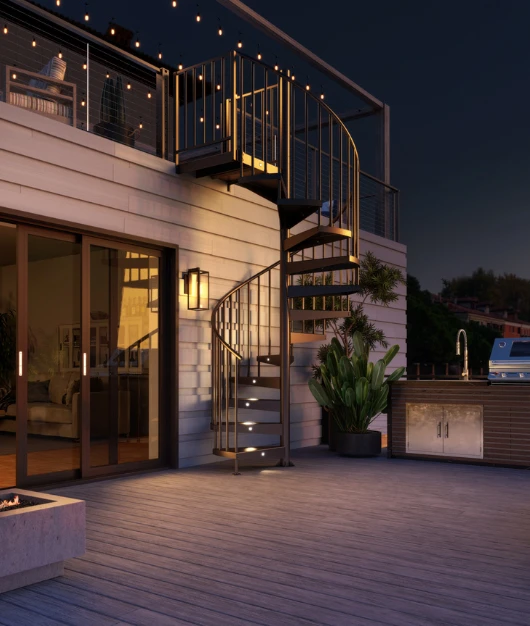
Stairs are one of the most impactful design elements in outdoor spaces. Oversized stair runs can consume valuable deck and yard space.
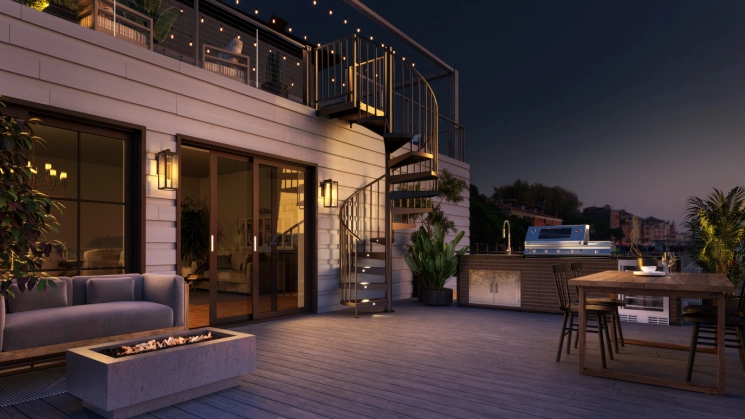
Deck spiral stairs help by:
- Reducing the footprint on the deck surface
- Minimizing ground-level impact
- Preserving layout flexibility
Compact stair designs allow more of the deck to be used for seating, dining, or movement.
See How Stair Design Affects Space
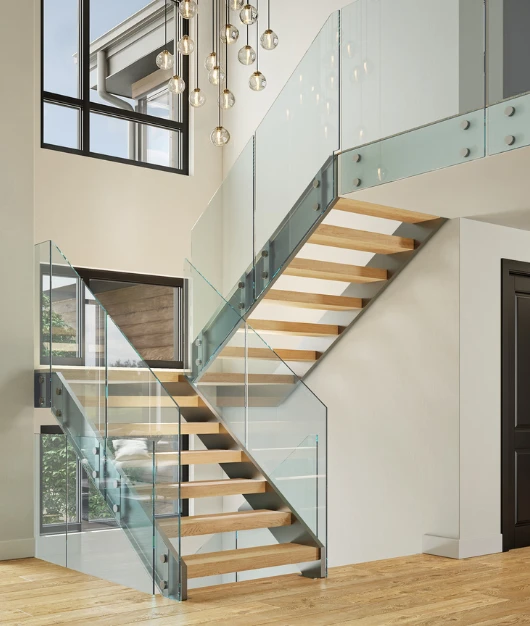
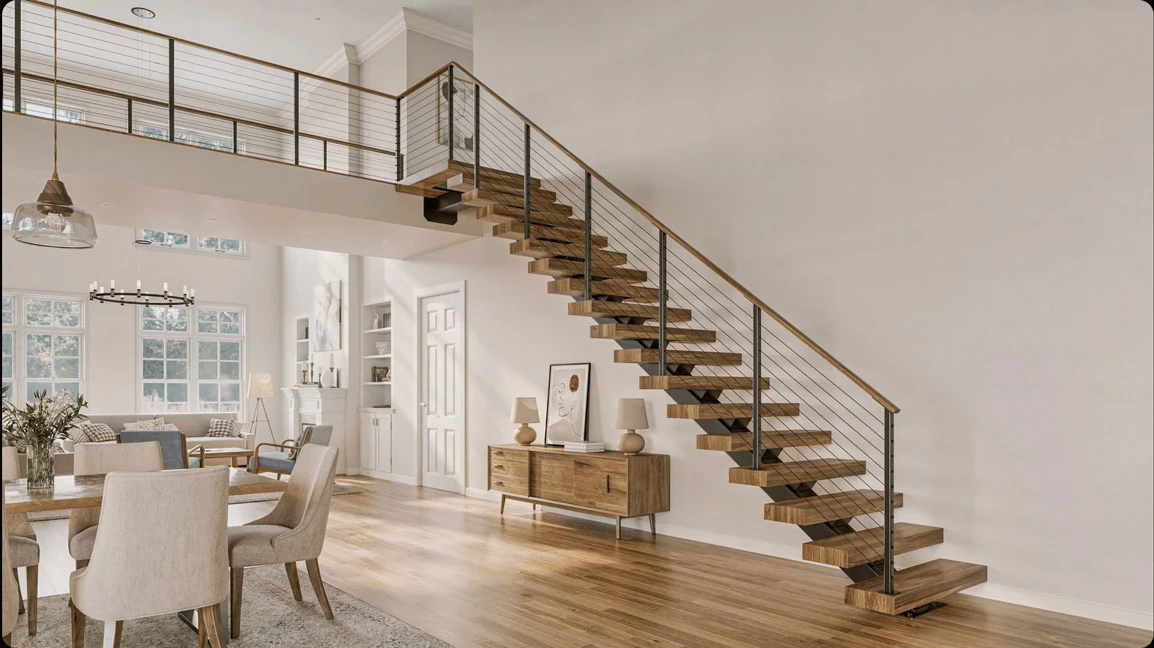
This comparison guide shows how spiral stairs and traditional stairs use space differently—helping you make design choices that keep outdoor areas feeling open.
Keep Sightlines Open
Sightlines affect how spacious a space feels. Long, uninterrupted views help areas feel open and connected.
Design choices that support open sightlines include:
- Placing large elements thoughtfully
- Avoiding visual barriers where possible
- Using vertical elements efficiently
Spiral stairs often help maintain sightlines because they concentrate visual mass in one area rather than stretching across the space.
Design Vertically When Possible
Using vertical space efficiently allows outdoor areas to remain open at ground level.
Vertical design strategies include:
- Compact stair solutions
- Multi-level decks
- Defined access points between elevations
Vertical circulation helps maximize usable square footage without expanding the footprint.
Avoid Overcrowding the Deck Surface
Filling every corner of a deck with furniture or features can make the space feel smaller.
Instead:
- Leave open areas for movement
- Choose furniture scaled to the space
- Allow breathing room between zones
Compact access solutions help preserve this openness.
Consider Yard-Level Impact
Design decisions on the deck affect the space below. Long stair runs can limit landscaping options and usable yard areas.
Compact stairs:
- Preserve lawn and garden space
- Maintain clean transitions to walkways
- Support flexible yard layouts
This makes the entire outdoor area feel larger and more usable.
Balance Function and Simplicity
Spaces feel bigger when every element serves a clear purpose. Avoiding unnecessary complexity helps maintain a sense of openness.
Simple, intentional design supports:
- Ease of use
- Visual clarity
- Flexible layouts
Designing for Comfort and Openness
Making an outdoor space feel bigger is about thoughtful planning, not adding more features. Compact design choices, including stair selection, play a key role in preserving openness.
Read More
Make the Most of Your Outdoor Space
Thoughtful design choices can help even compact outdoor areas feel open and comfortable.


