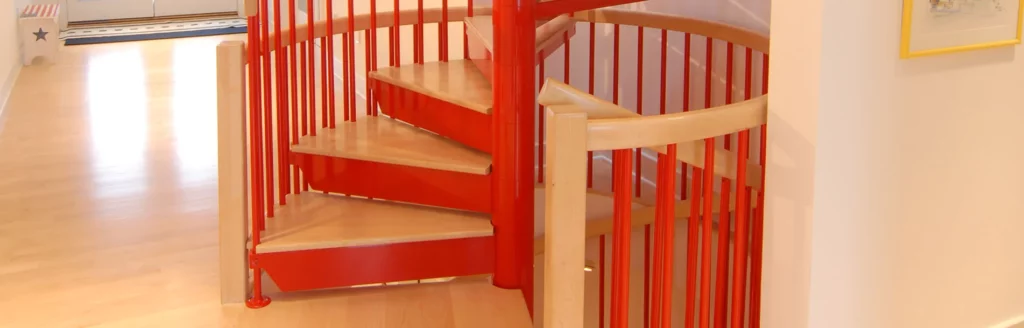


You have a tight loft opening or a deck connection to work around, and one question keeps coming up: are spiral staircases adjustable if the fit needs a change? Many component-based systems offer useful flexibility during assembly. The important distinction is between positioning the supplied parts as designed and changing the stair’s dimensions. Knowing which is which helps you order with confidence and avoid leaving critical decisions until the components arrive.
Quick Answer: Yes, Within the System’s Design
Some spiral staircases allow rotation, platform positioning, tread alignment, and height setup during assembly. The available adjustments depend on the model, supplied components, and approved layout. Diameter, component selection, and structural requirements must be resolved before ordering; an adjustable system does not make every on-site change acceptable.
Are Spiral Staircases Adjustable, or Is Everything Fixed at the Factory?
In many spiral stair systems, tread collars fit over a center column, the structural pole supporting the stair. Components are positioned and secured during assembly. That construction can provide setup flexibility, but the tread shape, connection hardware, railing, and support requirements constrain the final arrangement.
Paragon’s assembly manuals show model-specific procedures. For example, Econo instructions describe positioning treads and securing their hubs to the column. Econo Plus instructions use calculated spacer arrangements to establish the height between walking surfaces.
Paragon’s in-house design and engineering teams help configure the system around the project information. When requesting a configured quote, provide finished floor-to-floor height, opening dimensions, and the intended entry and upper exit. Setup flexibility works best when those details are understood early.
What Can You Adjust During Assembly?
Rotation direction and entry position
Compatible component systems allow treads to be positioned around the column before they are secured. However, total rotation and direction must work with the tread geometry, handrail, platform, headroom, and approved connections. Confirm the intended arrangement before ordering rather than assuming any stair can turn either way.
Use Paragon’s rotation convention: approach the lower entry facing upward. The hand reaching the outer handrail identifies Left-Hand Up or Right-Hand Up. Show the lower UP arrow and upper exit on a top-down sketch.
Landing orientation and tread alignment
Some platforms are positioned during assembly to meet the upper floor. The attachment, opening, doors, and guard arrangement determine which positions are workable. Tread alignment follows the system’s instructions; angular spacing is not a free adjustment to force the bottom step into a convenient corner.
Height within the approved configuration
Adjustment may use tread sleeves, spacers, or another specified method. The Kinetic, for example, uses height-adjustment spacers. Obtain the approved rise range and setup for the actual order. A platform connection is not a substitute for distributing the rise correctly through the stair.
What Must Be Resolved Before Manufacturing or Order Release?
Confirm diameter and clear walking width, tread quantity and geometry, column specifications, materials, finishes, and railing requirements. Those choices determine which configurations the supplied components can achieve. Adding or removing a tread is a design change requiring review, not a routine fit adjustment.
Selected 2021 IRC spiral references include a maximum 9½-inch riser, minimum 26-inch clear width, and minimum 6¾-inch tread depth at the walkline under R311.7.10.1. The 2021 IBC spiral provision uses a 7½-inch tread-depth minimum at a point 12 inches from the narrow edge.
The walkline is the reference path used for tread-depth evaluation. The IRC measurement rule locates it 12 inches from the inside of the turn, not the outer handrail. Changing tread angles can affect usable depth. Confirm the adopted code, complete geometry, and permitted use with the building department.
Are Prefab Spiral Stair Kits More Adjustable Than Custom Stairs?
The labels alone do not tell you. A prefab kit may offer a stated rise range, while a custom order may use adjustable components or a more fixed assembly. Compare the actual system, dimensions, and instructions.
The Express, available through Paragon’s Quick Ship collection, uses adjustable sleeves. That makes it a useful example of a kit with height-setting flexibility, but its compatible range and components still need confirmation. It does not mean exact finished-floor information is unnecessary.
Custom configurations can address site-specific dimensions, finishes, and connections. Ask which dimensions are established during fabrication and which are set during assembly. Neither custom nor prefab should be assumed to allow unlimited platform angles, rotation reversals, or later height changes.
Adjustable On-Site vs. Resolved Before Manufacturing
Use this comparison when reviewing a proposed system. The model’s current manual and approved drawing determine the actual adjustment options.
| Variable | Possible assembly adjustment | Confirm before ordering |
|---|---|---|
| Rotation and entry position | On compatible systems, within the approved layout. | Direction, tread geometry, upper exit, and rail compatibility. |
| Platform orientation | Positioning where the system permits. | Opening, supports, guards, and connection details. |
| Tread alignment | Set and secured under the manual’s procedure. | Required spacing and usable tread depth. |
| Height / rise per step | Within the approved sleeve or spacer setup. | Finished rise, range, riser count, and components. |
| Diameter | No routine field resizing. | Required footprint and clear width. |
| Tread quantity | No unreviewed additions or removals. | Complete stair configuration. |
| Column | Only work specified for that component. | Size, connections, and approved preparation. |
| Treads and finishes | Supplied components assembled as specified. | Material, width, finish, and exposure suitability. |
| Railing and balusters | Assembly positioning or fitting as instructed. | Profile, infill, guard requirements, and geometry. |
Frequently Asked Questions
Can you adjust spiral stair height after it is installed?
Do not treat a completed stair as freely adjustable. A height change may affect risers, rails, platform connections, and headroom. Ask Paragon to review the model and revised finished-floor height before loosening components or changing the setup.
Can you change rotation direction on-site?
Some compatible systems allow direction to be established during assembly, but the supplied handrail, platform, and geometry must support it. Confirm the intended direction with the designer before ordering. Reversing a completed stair requires a separate review.
Can a prefab spiral stair kit be cut down to fit?
Only make cuts specified by the current instructions for that model or approved by the manufacturer. Some assembly tasks include component fitting, but that does not authorize arbitrary column shortening or tread removal. Use finished floor-to-floor height, not ceiling height, to assess fit.
What if my floor height was measured incorrectly?
Send the corrected finished-floor measurement, order details, and photos before proceeding. The designer can check whether the approved adjustment range accommodates the change or whether revised components or engineering are needed. There is no universal tolerance that absorbs every small error.
Find the Right Adjustment Range for Your Project
Share your height, opening, and entry-and-exit sketch with a Paragon SMA-certified designer to review a suitable configuration. Start with Build Your Stair or schedule a free consultation to confirm which adjustments your selected system provides.